Exocare Veterinary Medical Center

Category: Small & Exotic Pet

Your exotic pet experts. Access specialized care, diet & habitat guidelines for rabbits, hamsters, birds, reptiles and other unique small animals at Exocare Veterinary Medical Centre.

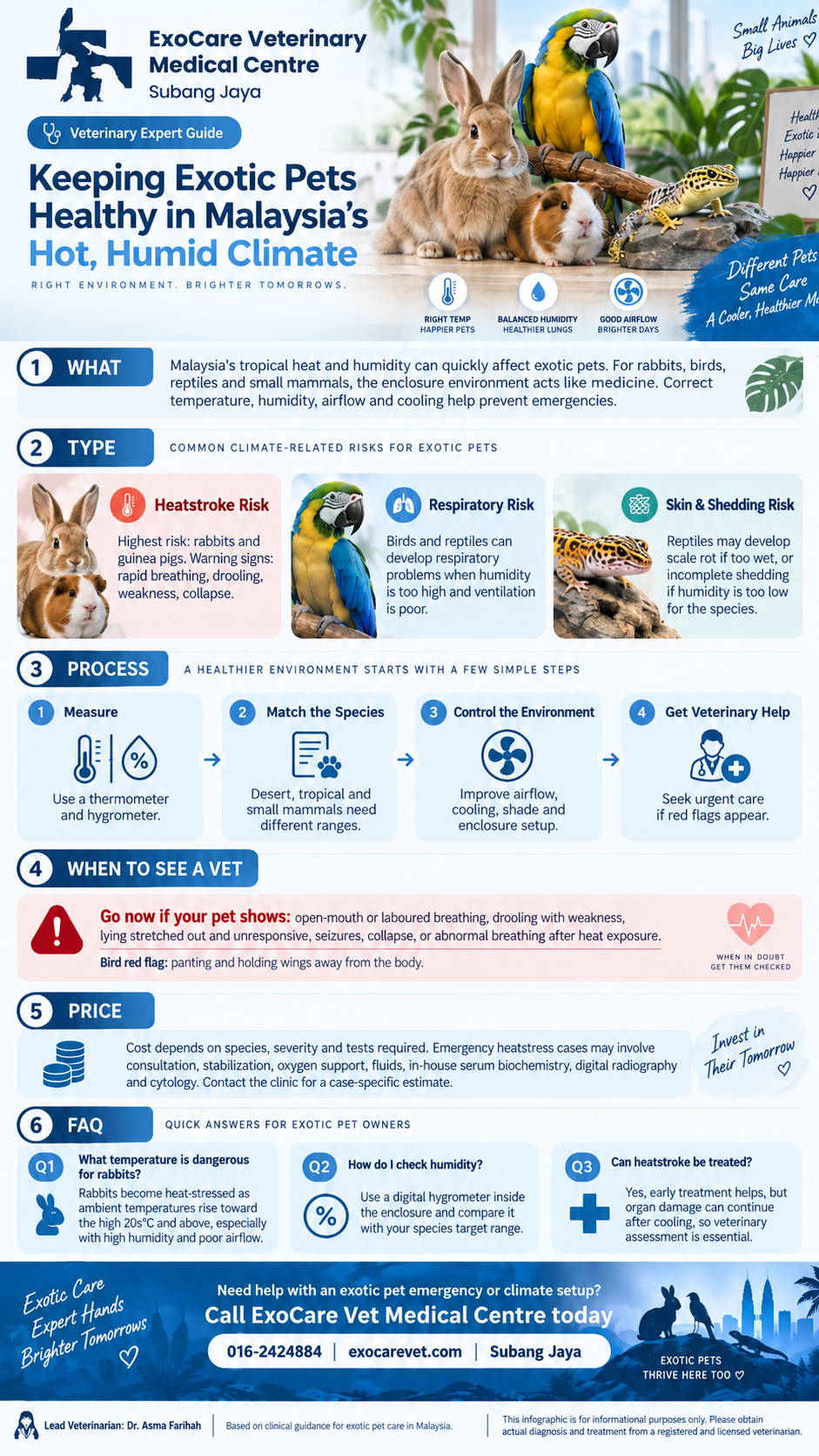
  • Keeping Exotic Pets Healthy in Malaysia’s Hot, Humid Climate

    Keeping Exotic Pets Healthy in Malaysia’s Hot, Humid Climate

    • A clinical guide to protecting exotic pets such as reptiles, birds, small mammals from Malaysia’s persistent heat and humidity.
    • Heatstroke and humidity-driven respiratory and skin infections are among the most common climate-related emergencies our team treats.
    • A home comfortable for humans can be lethal for a rabbit, or too humid for a desert reptile and prey species hide the early warning signs.
    • Match each species’ thermal gradient and humidity range precisely, control airflow and cooling, and monitor with instruments, not guesswork.
    • If your exotic pet shows any sign of heat stress or breathing difficulty, contact ExoCare Vet Medical Centre, Subang Jaya, immediately.

    For conventional pets like dogs and cats, maintaining good health usually revolves around vaccinations, nutrition, and routine check-ups. However, keeping exotic pets healthy requires something more fundamental: precise control over their daily habitat and microclimate.

    Reptiles, birds, rabbits, and small rodents are sensitive to subtle changes in their environment. In Malaysia, where ambient temperatures frequently reach 30–35°C and humidity sits between 70% and 90%, managing temperature, airflow, and moisture levels is the single most important part of caring for exotic pets.

    Why Climate Control Is Critical for Exotic Pets
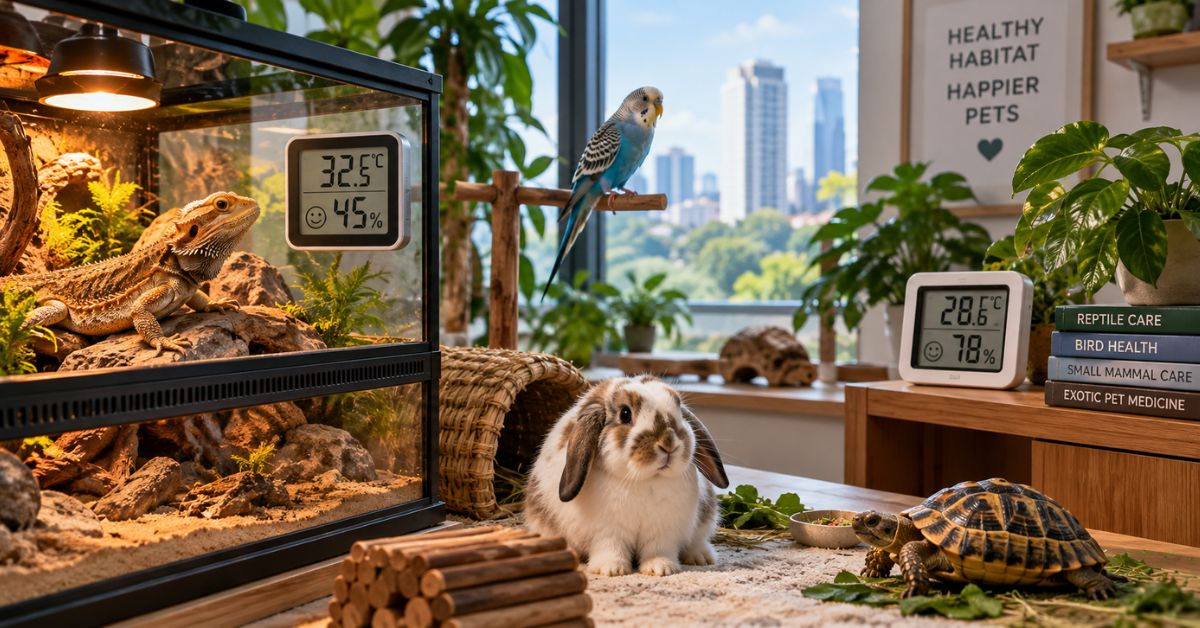
    exotic pets

    Every species of exotic pet has evolved to thrive in specific environmental conditions:

    • Reptiles (Ectothermic): Reptiles rely entirely on external heat to drive their metabolism, digestion, and immune system. Without a proper warm-to-cool heat gradient, their bodies cannot digest food or fight off illnesses effectively.

    • Birds (Sensitive Respiratory Systems): Birds possess air sacs alongside their lungs, making their breathing remarkably efficient but also extremely sensitive to airborne mold, bacteria, and heat stress.

    • Small Mammals (Low Heat Tolerance): Rabbits and guinea pigs cannot sweat efficiently to cool down. They rely mainly on their ears and shallow breathing to dissipate body heat, making them highly vulnerable to heatstroke in humid weather.


    Key Climate Risks in Malaysia’s Tropical Weather

    Operating an enclosure in a tropical country creates three main clinical challenges that every owner of exotic pets should monitor:

    Emergency Heatstroke (Hyperthermia)
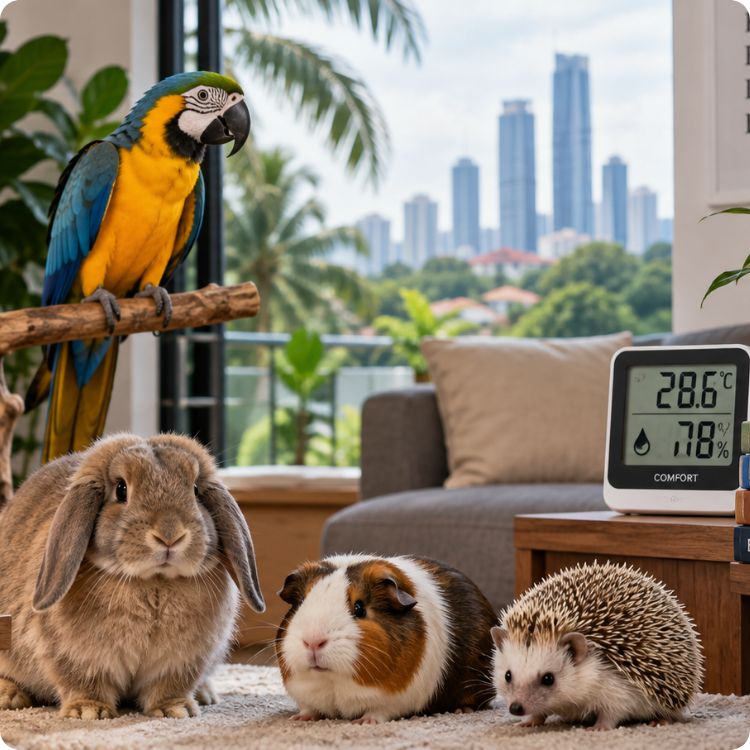
    exotic pets

    Heatstroke is a life-threatening medical emergency. For rabbits and guinea pigs housed in warm, poorly ventilated rooms during hot afternoons, body temperatures can rise to dangerous levels within hours.

    Warning signs include:

    • Rapid, heavy, or open-mouth breathing.

    • Drooling and weakness.

    • Lying flat and unresponsive on the enclosure floor.

    • Wings held wide away from the body or panting (in birds).

    Humidity-Driven Respiratory Infections

    While tropical species appreciate high moisture, persistent high humidity paired with poor ventilation creates an ideal environment for bacteria and mold to grow. Inhaling mold spores (Aspergillus) leads to serious fungal respiratory infections in birds and reptiles.

    Skin and Shell Issues in Reptiles

    Humidity must match the specific species, not just the local weather:

    • Too Moist for Arid Species: Desert reptiles (like bearded dragons or leopard geckos) kept in high humidity can develop scale rot, a severe bacterial skin infection.

    • Too Dry for Tropical Species: Tropical reptiles (like crested geckos or rain-forest tortoises) kept in dry air experience dysecdysis (retained shed skin), which can constrict around toes and tail tips.


    Creating the Right Home Setup
    exotic pets

    Preventing climate-related illness starts with setting up proper enclosure controls rather than guessing how the room feels:

    1. Establish a Measured Thermal Gradient: For reptiles, create a distinct warm basking zone at one end and a cooler retreat at the other. Always check both zones using digital thermometers rather than relying on human perception.

    2. Monitor Humidity with a Digital Hygrometer: Place a hygrometer inside the enclosure to ensure humidity stays within your pet’s ideal target range.

    3. Ensure Active Airflow: Good ventilation prevents damp, stagnant air from building up. For small mammals like rabbits, ensure their living area stays cool, well-ventilated, or gently climate-controlled during peak afternoon heat.

    4. Avoid Unsafe Cooling Methods: If you suspect your pet is overheating, move them to a cool, shaded area and gently dampen their ears or paws with cool (not ice-cold) water. Ice water can cause blood vessels to constrict, trapping heat inside the body.


    Debunking Common Climate Myths

    Myth 1: “If the room feels comfortable to me, my pet is fine.”

    Fact: Humans regulate temperature through sweating, which exotic animals cannot do. A room temperature of 28°C with high humidity can easily trigger heat distress in a rabbit, even if it feels acceptable to you.

    Myth 2: “All reptiles need high humidity because Malaysia is humid.”

    Fact: Humidity needs depend entirely on the animal’s natural origin. Arid species need drier air inside their enclosures to prevent fungal and skin diseases.

    Myth 3: “A simple desk fan is enough to cool an overheated rabbit.”

    Fact: Fans move air, but they do not lower ambient temperatures. Because small mammals do not sweat, fan airflow alone will not prevent heatstroke if the room remains hot and stagnant.

    “The mistake I see most often is owners applying one setting to every animal because ‘Malaysia is hot and humid.’ A desert reptile and a forest gecko can live in the same house and need completely opposite conditions. Buy a thermometer and a hygrometer before you buy the animal. Those two instruments prevent more disease than any medicine I can prescribe.”

    Dr. Asma Farihah (Senior Veterinary Specialist, ExoCare Vet Medical Centre)


    When to Seek Immediate Veterinary Care

    Contact an exotic veterinary clinic immediately if you notice any of these emergency red flags:

    • Collapse, unresponsiveness, or inability to stand.

    • Open-mouth breathing, loud wheezing, or heavy abdominal lifting.

    • Excessive drooling accompanied by extreme weakness (in rabbits or guinea pigs).

    • Visible skin ulcers, red patches, or stuck shed constricting the toes (in reptiles).

    ExoCare Vet Medical Centre (Subang Jaya)

    • Operating Hours: Monday & Wednesday – Sunday: 11:00 AM – 7:00 PM (Closed Tuesdays).

    • Location: Subang Jaya, Selangor.

    • What to Bring: Transport your pet in a secure, well-ventilated carrier kept away from direct sunlight. Sharing details about your enclosure’s recent temperature and humidity readings helps our medical team evaluate their condition quickly.


    Frequently Asked Questions

    What temperature is dangerous for rabbits in Malaysia?

    Rabbits are most comfortable in cooler conditions and become heat-stressed as ambient temperatures climb toward the high 20s°C and above, particularly with high humidity and poor airflow. In practice this means most Malaysian homes need active cooling or air-conditioning for rabbits during the hottest parts of the day. Watch for laboured breathing and lethargy as early warnings.

    How do I know if my enclosure humidity is correct?

    Use a digital hygrometer placed inside the enclosure and compare the reading against your species’ target range. Signs the humidity is wrong include incomplete shedding or retained skin (too dry) and skin ulcers or persistent respiratory signs (too wet). If unsure, bring photos of your setup to a consultation.

    Can heatstroke be treated, or is it always fatal?

    It can be treated, and early cases often recover but survival depends heavily on how quickly cooling and veterinary support begin. Because organ damage can continue after cooling, any suspected heatstroke should be assessed by a vet even if the animal seems to improve. Certain stabilisation and diagnostic fees are non-waivable as they involve immediate laboratory and equipment use.


    Conclusion

    In Malaysia, keeping an exotic pet healthy is, above all, an exercise in climate control. Match each species’ temperature and humidity needs precisely, guarantee ventilation and cooling, and use instruments to monitor rather than trusting how the room feels. Do that, and you prevent the majority of the emergencies our team sees. If your pet is showing heat stress, breathing difficulty or skin problems, don’t wait for it to worsen. A prey species that looks “a bit off” may already need help.


    References

    AAHA, “Heatstroke in Pets: Signs, Risks, and What to Do”. Accessed at: https://www.aaha.org/resources/heatstroke-in-pets/

    Royal Veterinary College (RVC), “Heatstroke in dogs and cats — prevention, symptoms and first aid”. Accessed at: https://www.rvc.ac.uk/small-animal-vet/teaching-and-research/fact-files/heatstroke-in-dogs-and-cats

    Merck Veterinary Manual, “Management and Husbandry of Reptiles”. Accessed at: https://www.merckvetmanual.com/exotic-and-laboratory-animals/reptiles/management-and-husbandry-of-reptiles

    Veterinary Partner (VIN), “Hyperthermia (Heat Stroke): First Aid”. Accessed at: https://veterinarypartner.vin.com/default.aspx?pid=19239&id=4951333


    This article has been medically reviewed based on clinical protocols by:

    Dr. Asma Fariha (MVC No. 3362).

    Senior Veterinary Specialist, ExoCare Vet Medical Centre, Subang Jaya.

    ExoCare is a referral veterinary medical center specializing in the medical, surgical, and critical care of small animals, exotic pets, avian species, reptiles, rodents, and amphibians in Malaysia.


     

    exotic pets

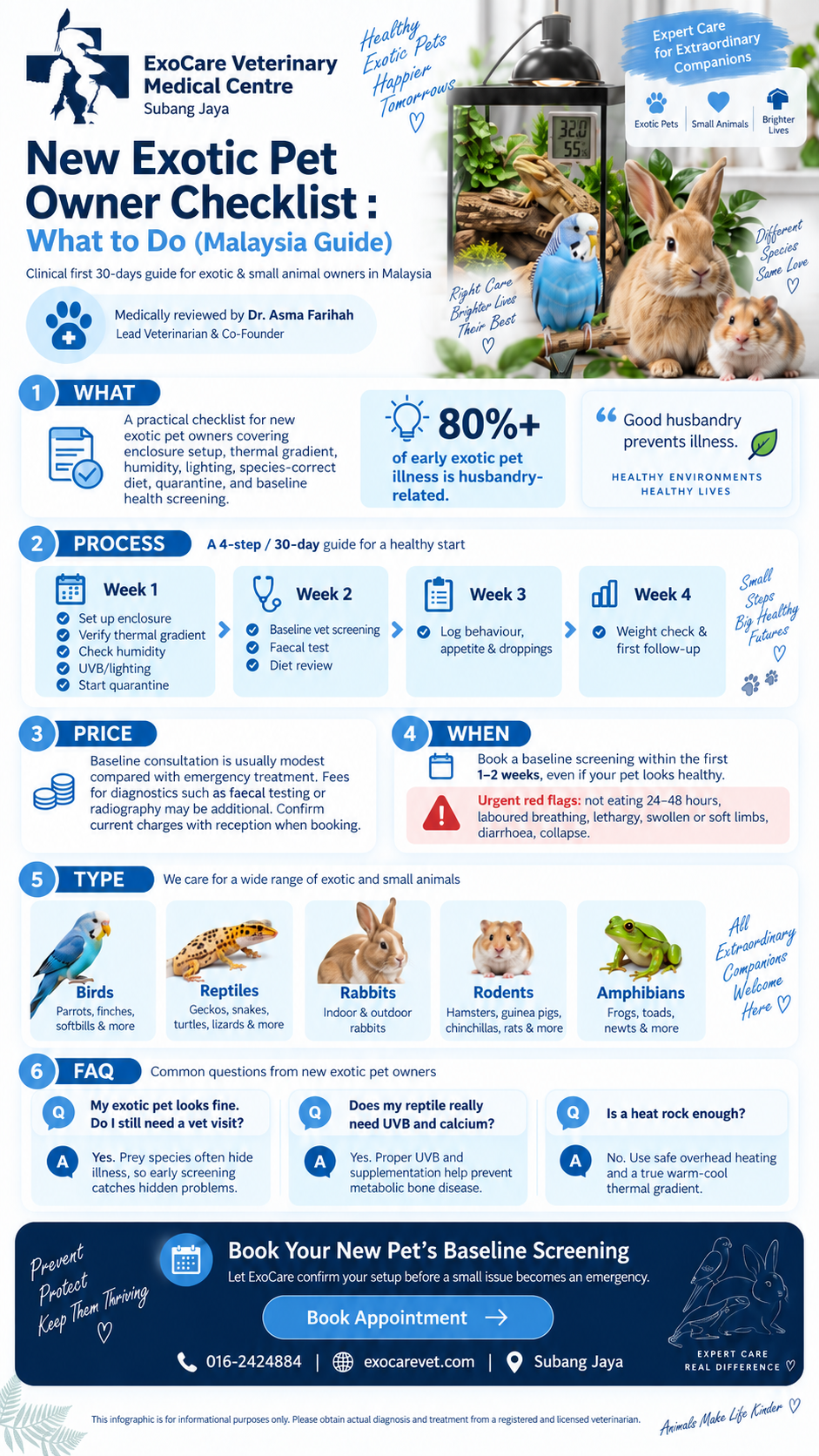
  • New Exotic Pet Owner Checklist : What to Do (Malaysia Guide)

    New Exotic Pet Owner Checklist : What to Do (Malaysia Guide)

    • A clinical first-30-days checklist for new exotic pet owner, covering enclosure setup, thermal gradients, species-correct diet, quarantine & a baseline vet screening.
    • Over 80% of exotic pet illnesses our team sees are husbandry-related, not infectious.
    • Birds, reptiles, rabbits and rodents instinctively mask illness, so by the time symptoms show, the animal is often already critical.
    • Establish correct temperature, humidity & diet before the animal arrives, quarantine new arrivals within the first two weeks.
    • Book a new-pet baseline screening at ExoCare Vet Medical Centre, Subang Jaya, the most important step to catch hidden problems early.

    Bringing home a new bird, reptile, rabbit, or small rodent is an exciting experience. However, every new exotic pet owner quickly learns that these unique companions have very different needs compared to cats and dogs. In exotic pet care, health depends heavily on husbandry. The everyday management of temperature, humidity, lighting and diet.

    In fact, over 80% of the health issues treated in exotic veterinary practice stem from minor, unintentional errors in home setup rather than infectious diseases. Getting your setup right within the first 30 days is the most effective way to keep your new companion healthy for years to come.

    Also Read: 8 Pet Emergency Symptoms You Cannot Ignore (Expert Review)

    Habitat Setup: Build It Before the Pet Arrives

    exotic pet owner

    Here’s the rule I repeat to every new client: the enclosure should be fully built, powered on, and holding stable readings for a few days before the animal moves in. Not the same afternoon. A habitat you’re still troubleshooting while a stressed animal watches from a carrier is a habitat that’s already failing.

    For reptiles

    Reptiles are ectothermic. They can’t generate their own body heat, so they borrow it from their surroundings to run digestion, immune function, everything. The classic beginner mistake is heating the whole tank to one “correct” number. That leaves the animal no way to self-regulate.

    Every reptile enclosure needs a measured thermal gradient, a warm end and a cool end:

    • Basking zone: a warmer area under an overhead heat source, where the animal loads up on warmth to digest a meal.
    • Cool zone: a shaded retreat at the far end, so it can move away and cool down on its own terms.

    Check both ends with digital thermometers. Don’t eyeball it, and please don’t rely on those adhesive dial strips. One more thing: skip heat rocks. I’ve treated more than one gecko for deep belly burns from a heat rock that ran hotter than its label ever admitted.

    For birds and small mammals

    Rabbits, guinea pigs, hamsters, and birds need room to actually move. Prioritise a spacious, well-ventilated cage, dust-free bedding, and this part gets overlooked, a quiet spot in the house. Away from the TV, away from the kitchen. Cooking fumes, especially anything from an overheated non-stick pan, can kill a bird faster than most owners believe.

    Managing Malaysia’s Tropical Climate

    exotic pet owner

    This is where care advice copied from a US or UK website quietly fails a Malaysian exotic pet owner. Our climate isn’t their climate, and the humidity that keeps one species thriving is the same humidity that puts another in my consult room.

    • Arid species vs. our air: ambient humidity of 70–90% suits tropical geckos and tortoises nicely. For desert-adapted species like bearded dragons and leopard geckos, that same damp air invites respiratory infections and scale rot. These animals often need a drier microclimate than your living room naturally offers.
    • Heatstroke in small mammals: rabbits and guinea pigs shed heat poorly and can’t sweat it off. A hutch near a sunlit window on a still Malaysian afternoon becomes an oven. Every hot season we lose rabbits to heatstroke that a fan, better ventilation, or an air-conditioned room would have prevented. Keep them cool. This is not optional here.
    • Mould and fungi: our humidity turns seeds, nuts, and wooden cage furniture into a breeding ground for mould. Mouldy feed exposes birds to Aspergillus, a fungal respiratory infection that’s stubborn to treat and easy to prevent. Store all food in airtight containers somewhere cool and dry.


    Nutrition: Avoiding Common Diet Mistakes

    exotic pet owner

    Malnutrition in exotics is quiet. It builds for months, sometimes years, and by the time you can see something wrong, the damage is often well advanced. Species-specific feeding isn’t fussiness, it’s the difference between a bird that lives four years and one that lives fourteen.

    • Birds: an all-seed diet is high in fat and short on Vitamin A and calcium. Over time that drives fatty liver disease and a weakened immune system. A good base is formulated pellets, topped up with fresh, bird-safe vegetables.
    • Reptiles (UVB & calcium): most diurnal reptiles need proper UVB lighting to make Vitamin D3, which is what lets them absorb calcium from food. Skip the UVB or the calcium and you get Metabolic Bone Disease, a painful, deforming softening of the bones that I see far too often, and almost always in an animal that “seemed fine” until it wasn’t.
    • Small herbivores: rabbits and guinea pigs need unlimited fresh grass hay (Timothy hay is ideal). It keeps the gut moving and wears down teeth that never stop growing. Pellets and greens are extras, not the foundation.


    The First-Visit Baseline Health Screening

    Prey animals hide illness. It’s instinct. In the wild, the one that looks sick gets picked off first. So your exotic pet will act completely normal until it is genuinely, sometimes dangerously, unwell. Waiting for obvious symptoms usually means waiting too long.

    That’s why I ask every new exotic pet owner to book a baseline screening within the first two weeks. In that visit we:

    1. Record a precise starting weight and physical baseline, so we can catch small changes later that you’d never spot at home.
    2. Screen a fresh faecal sample for internal parasites, which are common in young or newly bought animals.
    3. Go through your temperature, humidity, and diet setup together and fix problems early.
    4. Set you up with safe parasite prevention and, if needed, a plan to transition the diet.

    Bring a photo of your enclosure and a fresh faecal sample. Honestly, those two things tell me more in five minutes than half an hour of questions.

    Common Myths, Straight from the Consult Room

    “My pet’s active, so it doesn’t need a vet.”
    Activity isn’t a clean bill of health in a prey species. A check-up while your pet looks well is exactly how we catch the hidden nutritional and parasitic problems before they turn into emergencies.

    “A seed mix is all a pet bird needs.”
    Seeds are fatty and thin on the micronutrients birds actually need. A pelleted base plus fresh leafy greens is what balances the diet.

    “A heat mat is enough for any reptile.”
    For most reptiles, no. They’re built to absorb heat from above, the way the sun delivers it. Thermostat-controlled overhead heat, paired with correct UVB, is safer and far closer to what their bodies expect.

    “The single biggest change a new owner can make is to treat the baseline health screening as part of setting up the enclosure, not as something you do only when the animal is already in trouble. In Malaysia’s climate, small errors in temperature or humidity compound quickly, and a prey species will hide the consequences until it can no longer cope. Screening early is how we turn a preventable crisis into a five-minute correction.”

    — Dr. Asma Farihah (Lead Veterinarian & Co-Founder, ExoCare Vet Medical Centre)

    When to Call a Vet

    Don’t wait and watch overnight if you see any of these. Call an exotic clinic the same day:

    • Refusing food or water for more than 24–48 hours.
    • Open-mouth breathing, wheezing, or tail-bobbing while perched (in birds).
    • Lethargy, weakness, or sitting motionless at the bottom of the enclosure.
    • Swollen limbs, shaky movement, or a soft, rubbery jaw (in reptiles).
    • Diarrhoea, no droppings at all, or a hunched, painful-looking posture.

    With exotics, a day’s delay is often the whole margin between a treatable problem and a lost patient. When in doubt, ring us.

    Visit ExoCare Vet Medical Centre (Subang Jaya)

    • Hours: Monday & Wednesday–Sunday, 11:00 AM – 7:00 PM. Closed Tuesdays.
    • Location: Subang Jaya, Selangor.
    • Phone / WhatsApp: 016-2424884
    • What to bring: a warm, secure, well-ventilated carrier; a photo of your home enclosure; and a fresh faecal sample if you have one.


    Frequently Asked Questions

    How soon after getting an exotic pet should I see a vet?

    Within the first one to two weeks, even if the animal appears healthy. This window lets us establish a baseline, screen for parasites, and correct any husbandry issue before it causes disease. Newly acquired animals should also be quarantined from any existing pets during this period.

    Is a first exotic-pet consultation expensive in Malaysia?

    A baseline consultation is modest relative to emergency treatment. Note that certain diagnostics such as faecal testing or radiography, carry non-waivable fees because they involve laboratory processing and equipment, but they are precisely what detect hidden problems early. Confirm current consultation and diagnostic fees with our reception when booking.

    My reptile seems fine, do I really need UVB lighting and supplements?

    Yes. Metabolic bone disease develops silently over weeks to months. Correct UVB lighting and calcium/D3 supplementation are preventive essentials for most reptile species, not optional extras, and they cost far less than treating advanced bone disease.


    Conclusion

    Owning an exotic pet in Malaysia is deeply rewarding, but it rewards preparation. Get the thermal gradient, humidity, lighting and diet right before the animal arrives; quarantine new arrivals; and book a baseline screening early. These few steps prevent the large majority of problems our team treats.

    If you have just brought home a bird, reptile, rabbit or rodent, or you are about to, let our clinical team confirm your setup and screen your new companion before a small issue becomes an emergency.


    References

    Merck Veterinary Manual, “Management and Husbandry of Reptiles”. Accessed at: https://www.merckvetmanual.com/exotic-and-laboratory-animals/reptiles/management-and-husbandry-of-reptiles

    Merck Veterinary Manual, “Nutritional, Metabolic, and Endocrine Diseases of Reptiles” (Metabolic Bone Disease). Accessed at: https://www.merckvetmanual.com/exotic-and-laboratory-animals/reptiles/metabolic-and-endocrine-diseases-of-reptiles

    Merck Veterinary Manual, “Management of Pet Birds”. Accessed at: https://www.merckvetmanual.com/exotic-and-laboratory-animals/pet-birds/management-of-pet-birds

    Malaysian Veterinary Council (MVC). Accessed at: https://www.mvc.gov.my/


    This article has been medically reviewed based on clinical protocols by:

    Dr. Asma Fariha (MVC No. 3362).

    Senior Veterinary Specialist, ExoCare Vet Medical Centre, Subang Jaya.

    ExoCare is a referral veterinary medical center specializing in the medical, surgical, and critical care of small animals, exotic pets, avian species, reptiles, rodents, and amphibians in Malaysia.
    exotic pet owner

  • Finding a Reptile or Bird Vet in Klang Valley: What to Check

    Finding a Reptile or Bird Vet in Klang Valley: What to Check

    • A genuine bird vet or reptile vet has species-specific training beyond standard cat-and-dog practice, since avian and reptilian physiology differ fundamentally from mammals.
    • Misdiagnosis is common when a general practitioner treats a bird or reptile using mammalian assumptions.
    • Owners in Klang Valley often struggle to identify which clinics genuinely have avian/reptile expertise.
    • Checking for species-specific diagnostic equipment, surgical capability, and case experience helps identify a clinic that can actually treat your bird or reptile correctly.
    • Bring your bird or reptile to ExoCare Vet Medical Centre, where in-house diagnostics and exotic-specific protocols are part of every visit.

    Finding a qualified bird vet in the Klang Valley is harder than it looks. Plenty of clinics will “accept” a parrot or a gecko, which makes it easy to assume any nearby vet can treat them as well as a cat or dog. In practice, many owners end up bouncing between two or three general clinics before anyone can pinpoint the problem. 

    Avian and reptile physiology is different enough from mammals that the wrong assumptions can delay a correct diagnosis by days, in animals that hide illness until it is advanced. A true bird vet or reptile vet isn’t defined by willingness to see the patient, it comes down to species-specific training, diagnostic equipment, and real case experience.

    This guide explains what sets a qualified bird or reptile vet apart, the exact things to check before an emergency, the climate-driven conditions common in the Klang Valley, and what ExoCare’s referral-level facility brings to avian and reptile cases.

    What Makes a Genuine Bird or Reptile Vet

    bird vet

    A genuine bird vet or reptile vet has training in non-mammalian physiology and access to species-specific diagnostic equipment. Simply “accepting” exotic patients without this expertise risks a delayed or incorrect diagnosis.

    A true avian or reptile vet has training specific to non-mammalian physiology. Birds breathe through a one-way air-sac system (not a diaphragm) and vocalise through a syrinx, so infection can spread through the airway with few outward signs. Reptiles are ectothermic, so their metabolism, digestion, and immune response depend entirely on external temperature and UVB. Disease patterns in both simply don’t match cat-and-dog medicine.

    Internationally, the American Board of Veterinary Practitioners (ABVP) certifies Diplomates in Avian Practice and in Reptile & Amphibian Practice, a credential that requires a minimum caseload, documented continuing education, and a comprehensive specialty examination. 

    When choosing a bird vet in the Klang Valley, ask about avian and reptile caseload, in-house diagnostic equipment, and whether the clinic uses species-specific protocols rather than adapting mammalian ones.

    Related: Expert for Exotic & Small Animals Vet in Klang Valley (2026)

    Risks & Malaysia’s Climate Impact

    • Heat stress and dehydration in birds during Malaysia’s hottest months, especially in poorly ventilated cages placed in direct sun.
    • Ammonia build-up from damp substrate or bedding, which irritates sensitive avian respiratory tissue and speeds up infection such as air sacculitis.
    • Scale rot, dysecdysis, and respiratory infections in reptiles kept in enclosures with excess humidity and an insufficient thermal gradient, where the animal cannot thermoregulate to fight infection or shed properly.

    These climate-driven conditions are easy to misread as “just a cold” if the treating vet isn’t trained to recognise avian- or reptile-specific presentation. That is the point where a general clinic and a genuine bird vet start to diverge.

    Why Do Birds and Reptiles Get Sick?

    bird vet

    1. Incorrect thermal gradient or UVB exposure, particularly for reptiles, where metabolic and digestive function depends on external heat and correct lighting. Chronic UVB deficiency drives metabolic bone disease.
    2. Nutritional imbalance, such as seed-only diets in birds (which cause vitamin A deficiency) and calcium-deficient diets in reptiles.
    3. Delayed recognition of illness, because both birds and reptiles instinctively mask symptoms, so by the time an owner notices a problem, it is often advanced.

    Clinical & Laboratory Diagnosis

    Definitive diagnosis in avian respiratory disease relies on a combination of avian radiography, in-house cytology, and, in more advanced cases, endoscopic sinus aspiration or lavage to sample the airway directly. 

    For reptiles, high-resolution digital radiography helps assess egg-binding, bone density (a marker of metabolic bone disease), and GI obstruction, while full serum biochemistry profiles catch organ-function changes that aren’t visible externally. Faecal parasitology and Gram staining round out a work-up that a general clinic often cannot perform on-site.

    A clinic without this in-house equipment usually has to refer out for imaging, which delays both diagnosis and treatment. That matters for species that deteriorate quickly once a condition becomes acute.

    Common Care Myths

    The most damaging assumption we encounter is that any clinic willing to see a bird or reptile is equally able to treat one. Accepting an exotic patient and having the species-specific diagnostics, dosing, and surgical technique to treat it are not the same thing.

    Myth Reality
    Any clinic that “accepts” birds or reptiles can treat them properly Accepting a patient and having species-specific diagnostic/surgical capability are not the same thing
    Birds and reptiles are too different to be treated by the same clinic as cats and dogs A referral-level facility with dedicated exotic protocols can treat both, with separate equipment and technique per species
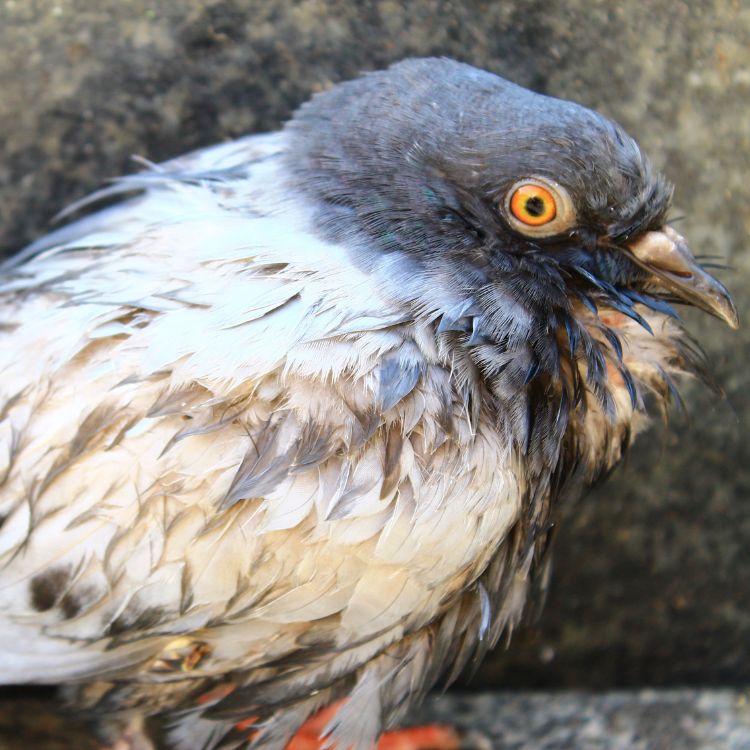
    A bird that’s “fluffed up” just needs to warm up Fluffing and lethargy in birds is a common early sign of illness, not just a comfort behaviour
    Reptiles don’t need regular check-ups since they’re “low maintenance” Reptiles silently mask husbandry-related illness until it’s advanced, and periodic screening catches problems early

    Our Experience at ExoCare Vet Medical Centre (Subang Jaya)

    In our clinical experience, many bird and reptile owners in the Klang Valley arrive after already visiting a general-practice clinic that couldn’t pinpoint the issue, usually because the case required species-specific imaging or interpretation. 

    A common pattern is a “fluffed up,” quiet bird treated as a minor chill elsewhere, where an in-house radiograph and cytology instead reveal air sacculitis that was already well advanced. According to ExoCare’s medical protocols, every exotic patient undergoing a procedure receives precision dosing scaled to body weight, continuous monitoring during anaesthesia, and soft-tissue surgery technique appropriate to the species.

    We recommend a baseline health screening at the first visit, even for birds and reptiles that appear healthy, since it gives our team a reference point that makes any future illness far easier to catch early. That is a real advantage when the patient is a species built to hide disease.

    “The biggest mistake we see in the Klang Valley is owners assuming that because a clinic is nearby and ‘sees everything,’ it has genuine avian or reptile expertise. The physiology is different enough that the wrong assumption can delay a correct diagnosis by days, which matters a great deal for a bird or reptile that’s already deteriorating quietly.” Dr. Asma Farihah, Lead Veterinarian & Co-Founder, ExoCare Vet Medical Centre

    When to See a Vet?

    bird vet

    • Open-mouth breathing, tail-bobbing while breathing (birds), or audible clicking sounds. These signal significant respiratory compromise, which in birds usually means the disease is already well advanced.
    • Persistent fluffing, lethargy, or appetite loss for more than 24 hours. A fluffed, quiet bird is conserving heat because it is unwell, and in a small patient this can progress to collapse quickly.
    • Straining without producing droppings or eggs. This may indicate an obstruction or egg-binding, both of which are time-critical emergencies.
    • Visible discharge from eyes, nares, or cloaca. Discharge points to infection or systemic illness that needs species-specific diagnosis rather than a generic antibiotic.

    Bring any previous medical records, a secure species-appropriate carrier (covered for birds, escape-proof for reptiles), and a fresh faecal sample if possible.

    Vet Emergency Care at ExoCare

    bird vet

    ExoCare Vet Medical Centre provides emergency and critical care for birds, reptiles, and other exotic pets, but only during our operating hours. This is not a 24-hour service. Within opening hours our team can carry out rapid stabilisation, oxygen support, IV or fluid therapy, and hospitalisation with monitoring, using the same in-house avian and reptile diagnostics available for routine cases.

    Because birds and reptiles crash quickly, call us on the way so the team can prepare before you arrive. Outside our hours, contact your nearest 24-hour emergency veterinary hospital first, then follow up with us.

    ExoCare Veterinary Medical Centre

    Address: G3, Lot 15, Jalan SS 16/1, SS 16, 47500 Subang Jaya, Selangor, Malaysia

    Phone: +60 12-345 6789

    Hours: Monday and Wednesday to Sunday, 11:00 AM to 7:00 PM (closed Tuesdays)

    Email: info@exocarevet.com

    ExoCare also runs additional clinics across the Klang Valley, including USJ, Puchong, Kelana Jaya, Bandar Sunway, Taman Paramount, Bukit Kiara, and Damansara.

    FAQ 

    1. How do I find a bird vet (avian vet) near me in Malaysia?
    Not every clinic that treats “small animals” is equipped for birds, avian medicine requires specific training, gram scales, and species knowledge, so many general practices refer parrots, cockatiels, lovebirds, budgies, and chickens elsewhere.

    Call ahead and confirm an avian-trained vet is on duty the day you plan to visit, as dedicated bird vets are concentrated in the Klang Valley, Penang, and Johor Bahru and some only host an avian specialist on selected days.

    2. When should I take my bird to the vet, and does it count as an emergency?
    Birds instinctively hide illness, so by the time symptoms show; fluffed feathers, tail-bobbing, sitting at the cage bottom, not eating, or laboured breathing, it is often already urgent. Any of these signs, plus egg-binding, bleeding, or exposure to Teflon/aerosol fumes, should be treated as an emergency and phoned in before you drive.

    Because true 24/7 avian emergency coverage is rare in Malaysia, call first so the on-call bird vet can be ready. After-hours emergency consultation fees typically run RM100–RM250 and are non-waivable at check-in, on top of diagnostics and treatment. To check avian emergency availability, contact exocarevet.com.

    3. How do I transport my bird to the vet, and how long will the visit take?
    Use a small, covered carrier or the bird’s own cage to reduce stress; keep it warm during air-conditioned drives, and bring a fresh dropping sample plus a photo of the cage setup and diet, since husbandry review is central to avian diagnostics. Don’t clean the cage before the visit, droppings and food intake are diagnostic clues.

    A routine avian consultation usually takes 30–45 minutes, but if the vet needs a gram-scale weigh-in, bloodwork, X-rays, or a fecal test, budget 1–2 hours or a same-day drop-off. Diagnostic packages (bloodwork plus imaging) commonly run RM150–RM500 and are quoted before treatment; the consultation and diagnostic fees are generally non-waivable regardless of the outcome.

    Conclusion

    Not every clinic that “sees” exotic pets has the training or equipment to treat them correctly, and for birds and reptiles that gap can mean a missed or delayed diagnosis in an animal that was already deteriorating quietly. 

    Checking for a genuine bird vet with species-specific protocols and in-house diagnostics, before an emergency happens, is the safest approach. Give your bird or reptile the expertise it actually needs. Check your pet here and book an appointment with ExoCare Vet Medical Centre for avian and reptile care in the Klang Valley.

    References

    1. Association of Avian Veterinarians (AAV), Journal of Avian Medicine and Surgery — peer-reviewed publication on medicine and surgery of captive and wild birds. Accessed at: https://www.aav.org/page/jams

    2. U.S. Food & Drug Administration (FDA), FDA adds Alfaxan Multidose IDX to the Index of Legally Marketed Unapproved New Animal Drugs for Minor Species (indexed for sedation/anaesthesia in pet birds — Psittaciformes, Passeriformes, Columbiformes), Published 27 February 2020. Accessed at: https://www.fda.gov/animal-veterinary/cvm-updates/fda-adds-alfaxan-multidose-idx-index-legally-marketed-unapproved-new-animal-drugs-minor-species

    3. U.S. Food & Drug Administration (FDA), The Index of Legally Marketed Unapproved New Animal Drugs for Minor Species (pathway covering pet birds). Accessed at: https://www.fda.gov/animal-veterinary/minor-useminor-species/index-legally-marketed-unapproved-new-animal-drugs-minor-species

    4. Veterinary Medicines Directorate (VMD, UK) via GOV.UK, Exemption from authorisation for medicines for small pet animals (scheme covers cage birds, birds of prey, and pigeons). Accessed at: https://www.gov.uk/guidance/exemption-from-authorisation-for-medicines-for-small-pet-animals

    5. Australian Pesticides and Veterinary Medicines Authority (APVMA), Guideline on efficacy and target animal safety for products supplied for use in minor species or for minor use under permit. Accessed at: https://www.apvma.gov.au/registrations-and-permits/data-guidelines/veterinary-data-guidelines/specific-guidelines/minor-species-use

    This article has been medically reviewed based on clinical protocols by:

    Dr. Asma Fariha (MVC No. 3362).

    Senior Veterinary Specialist, ExoCare Vet Medical Centre, Subang Jaya.

    ExoCare is a referral veterinary medical center specializing in the medical, surgical, and critical care of small animals, exotic pets, avian species, reptiles, rodents, and amphibians in Malaysia.

    bird vet

  • Are Dwarf Hamsters Prone to Diabetes? Rodent Health Facts

    Are Dwarf Hamsters Prone to Diabetes? Rodent Health Facts

    • Dwarf hamsters, especially Russian Campbell’s and hybrid lines, carry a genuine, well-documented predisposition to obesity and diabetes mellitus.
    • Sugary treats, muesli-style mixes, and low activity slowly push a dwarf hamster toward diabetes long before owners notice anything wrong.
    • Early diabetes signs like drinking and urinating more are easy to miss in an animal that is naturally active mainly at night.
    • Recognising risk factors early and adjusting diet before symptoms appear is far more effective than treating advanced diabetes.
    • If your dwarf hamster is drinking unusually often or losing weight, book an assessment at ExoCare Vet Medical Centre rather than waiting it out.

    The dwarf hamster is one of Malaysia’s most popular starter pets: small, cheap, and often treated as low-maintenance. In many pet shops and weekend markets they are sold with a bag of colourful muesli mix and sugary treats, and most husbandry advice comes from shop staff rather than a vet. That combination hides a real clinical risk. 

    Certain dwarf hamster lines, especially Russian Campbell’s (Phodopus campbelli) and their hybrids, carry a genuine, genetically influenced predisposition to obesity and diabetes mellitus, and the earliest signs are so subtle they are easy to miss in an animal that is mostly active at night.

    This guide explains why some dwarf hamsters are predisposed to diabetes, how Malaysia’s climate and common feeding habits raise the risk, the warning signs to watch for, and how ExoCare diagnoses and helps manage the condition before it becomes advanced. It reflects what our clinical team sees in day-to-day exotic practice in Subang Jaya, cross-checked against current veterinary references.

    dwarf hamster

    Why Dwarf Hamsters Are Prone to Diabetes

    Russian Campbell’s and hybrid dwarf hamster lines carry a genuine, genetically influenced predisposition to diabetes, while Syrian hamsters carry almost no risk. Identifying your hamster’s line is the first step in assessing its diabetes risk.

    Not all hamsters carry the same risk. Russian Campbell’s dwarf hamsters and Campbell’s/Winter White hybrid lines are particularly prone to diabetes. Campbell’s hamsters are in fact used in laboratory research as a spontaneous model of type 2 diabetes while Syrian (“teddy bear”) hamsters are not considered at meaningful risk. 

    The predisposition combines genetics and obesity: a dwarf hamster fed an unsuitable diet gains weight and can then tip into a diabetic state far more easily than a Syrian would. Because the two are sold side by side in Malaysian pet shops and are easy to confuse, correctly identifying your dwarf hamster’s line is the practical first step in judging its risk.

    Related: Expert for Exotic & Small Animals Vet in Klang Valley (2026)

    Why Malaysia’s Climate Raises Hamster Diabetes Risk

    dwarf hamster

    Malaysia’s warm, humid environment compounds the dietary risk that already exists for dwarf hamsters:

    • Year-round availability of sugary fruit means owners often offer fruit as a daily treat without realising the cumulative sugar load on a small, diabetes-prone rodent.
    • Indoor heat can reduce a hamster’s natural activity level, especially in cages kept in warm, poorly ventilated rooms, which adds to the risk of obesity.
    • Humidity-driven food spoilage can push owners toward sugary, shelf-stable treats instead of fresh vegetables, which carry a lower glycaemic load.

    None of these factors cause diabetes on their own, but layered onto a genetically predisposed dwarf hamster, they speed up the move from slightly overweight to diabetic.

    What Causes Diabetes in Dwarf Hamsters? 

    dwarf hamster

    1. Genetic predisposition:

    Russian Campbell’s and hybrid dwarf lines have a documented hereditary susceptibility to diabetes mellitus.

    2. Obesity from diet:

    Muesli-style mixes let hamsters selectively eat the high-sugar, high-fat pieces and leave the high-fibre pellets behind, while excess fruit and veg treats add further sugar load.

    3. Low activity:

    An undersized exercise wheel or an under-enriched cage reduces the movement needed to offset dietary sugar.

    A hamster with both the genetic predisposition and a poor diet is at higher risk than one with either factor alone, which is why diet and enrichment are the two levers owners can actually control.

    Clinical & Laboratory Diagnosis

    • History and observation. Increased water intake (polydipsia) and increased urination (polyuria) are usually the earliest signs owners notice.
    • Blood glucose testing. A small blood sample, drawn using species-appropriate technique, confirms elevated glucose levels.
    • Weight and body condition tracking. Sudden weight loss despite normal or increased appetite is a red flag once diabetes is suspected.
    • Urinalysis, where feasible, to check for glucose in the urine (glucosuria).

    Because hamsters are small and can deteriorate quickly once unwell, early testing matters more than it might for a larger pet, and a single baseline reading makes future results far easier to interpret.

    Related: Pet Insurance & Vet Fees in Malaysia: What Owners Should Know

    Common Care Myths

    Because hamsters are small and inexpensive, owners often assume they are interchangeable and low-risk, and that any hamster can eat the same treats without consequence. Genetics say otherwise.

    Myth Reality
    All hamster species have the same diabetes risk Russian Campbell’s and hybrid dwarf hamsters are genuinely predisposed, while Syrian hamsters are not
    Fruit is always a healthy treat for hamsters Sugary fruit fed too often can push a predisposed dwarf hamster toward diabetes
    The muesli mix from the pet shop is a complete diet Hamsters selectively eat the high-sugar pieces and leave the fibre behind, undermining the diet’s balance
    Weight loss in a hamster eating normally isn’t concerning Weight loss alongside normal or increased appetite and thirst is a classic early diabetes sign

    Our Experience at ExoCare Vet Medical Centre (Subang Jaya)

    In our day-to-day exotics caseload in Subang Jaya, dwarf hamster diabetes is one of the more common rodent endocrine problems we manage, and Campbell’s and Winter White hybrids make up the majority of those cases. 

    A representative presentation looks like this: a young hamster, bought from a market with a bag of muesli mix, brought in because the owner is “refilling the water bottle far more often.” By the time visible weight loss appears, the disease has usually been progressing quietly for some time.

    According to ExoCare’s medical protocols, every small-mammal patient undergoing diagnostics or a procedure receives precision dosing scaled to body weight, with continuous monitoring during any anaesthesia and soft-tissue technique appropriate to a patient that can weigh under 50 grams. 

    We recommend a baseline health screening soon after bringing a dwarf hamster home, because it gives our team a healthy reference point, particularly useful for a species where genetics already raise the stakes and where a few grams of weight change can be clinically significant.

    “Owners are often surprised that diabetes is even a concern in a hamster. With Russian Campbell’s and hybrid dwarf lines, it’s a real and fairly common presentation. Because the early signs are subtle, by the time we see noticeable weight loss, the disease has usually been progressing for a while. Diet and activity matter far more for this species than most owners realise.” Dr. Asma Farihah, Lead Veterinarian & Co-Founder, ExoCare Vet Medical Centre

    When to See a Vet? 

    dwarf hamster

    When to See a Vet? 

    • Drinking or urinating noticeably more than usual. The earliest measurable signs of diabetes warrant a blood glucose check before weight loss sets in.
    • Weight loss despite normal or increased appetite. A classic diabetic sign that usually means the disease is already active.
    • Lethargy or reduced activity at their usual active times. A normally busy hamster becoming quiet at night often signals systemic illness.
    • Cloudy eyes, laboured breathing, or a swollen abdomen. These can point to diabetic complications such as cataracts, or to a separate serious condition.

    Bring your hamster in a small, secure, escape-proof carrier with some of their usual bedding, and note any recent changes in diet, water intake, or weight.

    Vet Emergency Care at ExoCare

    ExoCare Vet Medical Centre provides emergency and critical care for hamsters and other small mammals, but only during our operating hours. This is not a 24-hour service. Small rodents can crash within hours, so within opening hours our team treats a collapsing or non-eating hamster as urgent, using precision-scaled supportive care, warmth, fluids, and in-house diagnostics. 

    Call us on the way so we can prepare for a patient this size. Outside our hours, contact your nearest 24-hour emergency veterinary hospital first, then follow up with us.

    ExoCare Veterinary Medical Centre

    Address: G3, Lot 15, Jalan SS 16/1, SS 16, 47500 Subang Jaya, Selangor, Malaysia

    Phone: +60 12-345 6789

    Hours: Monday and Wednesday to Sunday, 11:00 AM to 7:00 PM (closed Tuesdays)

    Email: info@exocarevet.com

    ExoCare also runs additional clinics across the Klang Valley, including USJ, Puchong, Kelana Jaya, Bandar Sunway, Taman Paramount, Bukit Kiara, and Damansara.

    FAQ 

    1. What should I know before getting a dwarf hamster in Malaysia?
    Dwarf hamsters (Roborovski, Winter White, and Campbell’s) are small, fast, and mostly nocturnal, living around 1.5–3 years. Unlike Syrian hamsters, some dwarf species can live in same-sex pairs if introduced young, but many still fight and are best kept solo, house them separately if you see aggression.

    They need a solid-floor cage of at least 4,000 cm² (bar cages risk escape or foot injury), deep bedding for burrowing, a solid running wheel (mesh wheels injure feet), and a stable indoor temperature, since Malaysia’s heat and humidity can stress them, avoid direct sun and keep them cool. Dwarf hamsters are prone to diabetes, especially Winter Whites and Campbell’s, so avoid sugary treats and fruit.

    2. When does a dwarf hamster need a vet, and who treats them?
    Because hamsters are small and hide illness, watch for wet tail (diarrhoea, a medical emergency), lethargy, weight loss, laboured breathing, lumps, overgrown teeth, or bleeding. Any of these warrants a vet promptly, as small rodents decline within hours.

    Not every clinic treats hamsters, so you’ll want an exotic/small-animal vet rather than a general practice; these are concentrated in the Klang Valley, Penang, and Johor Bahru. Call ahead to confirm an exotics-trained vet is on duty. Expect a consultation fee of roughly RM40–RM90, which is non-waivable and charged separately from diagnostics, even for a quick check.

    3. How do I transport a sick dwarf hamster to the vet, and how long is the visit?
    Use a small, secure, escape-proof carrier or a ventilated container with familiar bedding, and keep it warm and cool-stable during air-conditioned drives, hamsters chill and overheat easily. Bring a sample of their droppings, a photo of the cage setup, and note their diet, since husbandry is central to rodent diagnostics; don’t fully clean the cage first, as droppings and food intake are diagnostic clues.

    A routine consultation usually takes 30–45 minutes, but if the vet needs a weigh-in, dental check, bloodwork, or imaging, budget up to 1–2 hours or a same-day drop-off. Diagnostic packages commonly run RM150–RM500 and are quoted before treatment; consultation and diagnostic fees are generally non-waivable regardless of the outcome. T

    Conclusion

    Diabetes in dwarf hamsters isn’t a rare curiosity. For Russian Campbell’s and hybrid lines, it’s a genuine, genetically influenced risk that diet and activity can either worsen or help manage. Catching the early signs, rather than waiting for visible weight loss, is what makes the difference.

    If your dwarf hamster is showing any of the warning signs above, don’t wait it out. Check your pet here and book an appointment with ExoCare Vet Medical Centre for an assessment.

    References

    1. Merck Veterinary Manual (MSD), Hamsters — Exotic and Laboratory Animals (covers dwarf hamsters: Djungarian Phodopus sungorus and Roborovsky Phodopus roborovskii), Full review May 2026. Accessed at: https://www.merckvetmanual.com/exotic-and-laboratory-animals/rodents/hamsters

    2. UC Davis School of Veterinary Medicine, Hamster Care (dwarf hamster longevity, weight, gestation, and litter-size data), Published 11 April 2019 (updated 28 April 2026). Accessed at: https://healthtopics.vetmed.ucdavis.edu/health-topics/exotics/hamster-care

    3. RSPCA, Keeping Hamsters as Pets (welfare and housing guidance, including dwarf species). Accessed at: https://www.rspca.org.uk/adviceandwelfare/pets/rodents/hamsters

    4. PDSA (People’s Dispensary for Sick Animals), Hamsters as Pets. Accessed at: https://www.pdsa.org.uk/pet-help-and-advice/looking-after-your-pet/small-pets/hamsters-as-pets

    5. Veterinary Medicines Directorate (VMD, UK) via GOV.UK, Exemption from authorisation for medicines for small pet animals (scheme covers small rodents including hamsters). Accessed at: https://www.gov.uk/guidance/exemption-from-authorisation-for-medicines-for-small-pet-animals


    This article has been medically reviewed based on clinical protocols by:

    Dr. Asma Fariha (MVC No. 3362).

    Senior Veterinary Specialist, ExoCare Vet Medical Centre, Subang Jaya.

    ExoCare is a referral veterinary medical center specializing in the medical, surgical, and critical care of small animals, exotic pets, avian species, reptiles, rodents, and amphibians in Malaysia.
    dwarf hamster

  • Expert for Exotic & Small Animals Vet in Selangor (2026)

    Expert for Exotic & Small Animals Vet in Selangor (2026)

    • An exotic and small animals vet at ExoCare Vet Medical Centre provides clinical-grade care for birds, reptiles, and small mammals, as well as cats and dogs.
    • Exotic species mask illness far longer than cats and dogs, and most general clinics lack the species-specific diagnostics needed to catch problems early.
    • Owners often discover a sick rabbit, bird, or hamster only once the animal is already in crisis.
    • In-house digital radiography, cytology, soft-tissue surgery, and an animal blood bank mean critical cases can be assessed and stabilised without delay.
    • Book a baseline health screening for your exotic or small animal at ExoCare Vet Medical Centre before a routine issue becomes an emergency.

    If you own a bird, rabbit, reptile, tortoise, or hamster in the Klang Valley, finding a good exotic and small animals vet is harder than it should be. Most neighbourhood clinics are built around cats and dogs, so owners of exotic pets often ring around for hours or drive from one suburb to another before finding a vet willing to see them. 

    It doesn’t help that many owners also assume that as long as the animal is eating and moving, it must be healthy. Exotic and small animals are prey species by instinct, so they hide illness until it is well advanced, and their anatomy, drug dosing, and disease patterns differ enough from cats and dogs that standard general practice often isn’t set up to catch problems early.

    This guide explains what separates an exotic and small animals vet from a general practitioner, why species-specific screening matters for these pets, the husbandry-driven conditions we see most in Malaysia’s climate, and how ExoCare’s referral-level facility in Subang Jaya diagnoses and treats them.

    What Counts as an “Exotic and Small Animal” Vet Patient?


    exotic and small animals vet

    An exotic and small animals vet treats birds, reptiles, and small mammals. These species hide illness longer and need specialised diagnostics that general cat-and-dog clinics don’t have, so early, species-specific screening matters more for them than for typical cats and dogs.

    An exotic and small animals vet is trained beyond standard cat-and-dog general practice to handle three physiologically distinct groups, each with its own rules:

    Birds (parrots, passerines)


    Breathe through a one-way air-sac system rather than a diaphragm, run a high resting metabolic rate, and hide weight loss beneath their feathers, so decline is often invisible until it is severe.

    Reptiles (snakes, lizards, tortoises)

    Considered as ectothermic. Digestion, immune function, and healing all depend on a correct thermal gradient and adequate UVB for calcium metabolism. Get the enclosure wrong and the animal cannot process food or fight infection normally.

    Small mammals (rabbits, guinea pigs, hamsters, ferrets)

    Include hindgut fermenters whose digestive tract must keep moving constantly. Even a day of reduced eating can trigger life-threatening gut stasis. Rodents also have continuously growing teeth prone to malocclusion.

    Each group carries its own anaesthesia risk profile and dosing requirements, so husbandry review (housing, diet, thermal gradient, lighting) is treated as part of the clinical exam rather than an afterthought. 

    At a referral-level exotics service this also means species-specific equipment: avian-safe restraint and radiography, reptile-appropriate thermal support during procedures, and precision dosing scaled to patients that can weigh under 100 grams

    Related: Are Dwarf Hamsters Prone to Diabetes? Rodent Health Facts

    Risks & Malaysia’s Climate Impact


    exotic and small animals vet

    Reptiles


    Kept in humid enclosures without a proper thermal gradient are prone to dysecdysis (incomplete shedding), scale rot, and respiratory infection. Inadequate UVB can push this into metabolic bone disease, one of the most common reptile problems we see.

    Birds

    Are highly sensitive to heat stress and to ammonia build-up from damp bedding, which inflames delicate air-sac tissue and speeds up respiratory disease such as air sacculitis.

    Small mammals

    Such as rabbits and guinea pigs can suffer fatal heatstroke at temperatures many Malaysian owners consider normal, especially if housed outdoors or near direct sun. Humid conditions also raise the risk of flystrike.

    Layered onto an already-stressed exotic patient, husbandry mistakes that might be tolerated in a cooler climate become acute emergencies much faster here.


    Why Do Exotic Pets Get Sick? 

    exotic and small animals vet

    1. Husbandry errors, such as incorrect temperature, humidity, UVB lighting, or substrate for the species, which slowly undermine immune and digestive function.
    2. Nutritional deficiencies, including calcium-deficient diets that drive metabolic bone disease in reptiles, vitamin A deficiency in seed-only birds, and low-fibre diets that cause gut stasis in rabbits and guinea pigs.
    3. Genetic predisposition, where certain lines carry higher baseline risk for specific conditions, such as dental malocclusion in rabbits and diabetes mellitus in dwarf hamsters.

    Because exotic species instinctively hide weakness, these root causes usually progress for weeks before any visible symptom appears. That is why proactive screening beats reactive treatment.

    Clinical & Laboratory Diagnosis


    A proper work-up for an exotic or small animal patient typically includes:

    • High-resolution digital radiography to assess bone density (a key marker of metabolic bone disease), GI obstruction, or egg-binding in birds and reptiles.
    • In-house cytology and full serum biochemistry profiles to catch organ-function changes before external symptoms appear.
    • Ultrasound for soft-tissue and abdominal assessment in small mammals.
    • Faecal parasitology and Gram staining to identify parasite burdens and bacterial imbalance common in Malaysian husbandry conditions.
    • Species-appropriate blood-draw technique. Vascular access differs a lot between a parrot (jugular), a gecko (ventral tail vein), and a guinea pig, so it is handled by a team trained for patients this small.

    Common Care Myths

    The belief that an exotic pet in good spirits must be in good health is one of the most common assumptions we correct at the clinic, and one of the most dangerous.

    Myth Reality
    If it’s eating and active, it’s healthy Exotic species mask illness until it’s advanced, and normal behaviour can persist almost until collapse
    Small animals don’t need anaesthesia monitoring like dogs and cats Smaller body mass means narrower safety margins, so continuous monitoring matters more, not less
    Any vet can treat a hamster or bird Dosing, restraint, and disease patterns differ enough by species that exotic-specific training changes outcomes
    Buying from a pet shop means it came health-checked Pet-shop animals are rarely examined by a vet, so a first-visit screening is where real problems are first caught

    Our Experience at ExoCare Vet Medical Centre 

    exotic and small animals vet


    In our day-to-day exotics practice, most owners only seek care once their animal is already in visible distress, by which point treatment options are narrower and outcomes less predictable.

    Many have already been turned away by a general clinic, or given advice meant for cats and dogs. The pattern we see most is not exotic disease at all, it’s husbandry problems that quietly became medical ones: a thermal gradient a couple of degrees off, or a slightly wrong diet, that took months to show and then escalated within days. 

    According to ExoCare’s medical protocols, every exotic and small-animal patient undergoing a procedure receives precision dosing calculated to their exact body weight, continuous monitoring during anaesthesia, and soft-tissue surgery performed with species-appropriate technique.

    We tell new clients that a baseline health screening at the first visit, even for an animal that seems fine, records that individual’s normal bloodwork and weight. For a species that hides disease, that first record is often the most useful thing in the file, because it makes any future illness much easier to catch early.

    Related: Pet Insurance & Vet Fees in Malaysia: What Owners Should Know

    “In the Klang Valley’s climate, the exotic and small-animal cases we see most often aren’t exotic diseases. They’re husbandry problems that became medical ones. A thermal gradient that’s two degrees off, or a diet that’s slightly wrong, can take months to show up and then escalate within days.”

    Dr. Asma Farihah, Vet Specialist ExoCare Vet Medical Centre

    When to See a Vet? 

    • Sudden refusal to eat or drink for more than 24 hours. In a small exotic patient, even a day without food can trigger gut stasis and a rapid metabolic crash.
    • Laboured or open-mouth breathing in birds or reptiles. Respiratory distress in these species is usually advanced by the time it shows, so same-day assessment is important.
    • Lethargy, collapse, or inability to stand. A sudden drop in activity usually signals pain, systemic illness, or shock that needs urgent evaluation.
    • Visible bleeding, swelling, or limb dysfunction. In tiny patients even minor blood loss is significant, and untreated swellings or injuries can worsen quickly.
    • Straining without producing droppings or eggs. This can indicate a life-threatening obstruction or egg-binding that needs immediate intervention.

    Bring any previous medical records, a secure species-appropriate carrier, and a fresh faecal sample if possible. This speeds up diagnosis considerably.

    Vet Emergency Care at ExoCare

    ExoCare Vet Medical Centre provides emergency and critical care for exotic and small animals, but only during our operating hours. This is not a 24-hour service. Within opening hours our team can carry out rapid stabilisation, IV fluid therapy, oxygen support, and hospitalisation with monitoring, using the same in-house diagnostics available for routine cases. 

    If your pet is in distress during the day, call us on the way so the team can prepare before you arrive. Outside our hours, contact your nearest 24-hour emergency veterinary hospital first, then follow up with us.

    ExoCare Veterinary Medical Centre

    Address: G3, Lot 15, Jalan SS 16/1, SS 16, 47500 Subang Jaya, Selangor, Malaysia

    Phone: +60 12-345 6789

    Hours: Monday and Wednesday to Sunday, 11:00 AM to 7:00 PM (closed Tuesdays)

    Email: info@exocarevet.com

    ExoCare also runs additional clinics across the Klang Valley, including USJ, Puchong, Kelana Jaya, Bandar Sunway, Taman Paramount, Bukit Kiara, and Damansara, so specialist care is rarely far away.


    Questions We Received


    1. How do I find an exotic and small animals vet near me in Malaysia that treats my specific pet?
    Not every clinic labelled “exotic” treats every species. coverage depends on the vet’s training and equipment.

    Call ahead and confirm they see your exact animal (reptiles, rabbits, ferrets, sugar gliders, birds, hamsters, tortoises), as many general practices only handle common small mammals and refer reptiles or avians elsewhere.

    If you’re in the Klang Valley and want a clinic that focuses specifically on exotic and small animals, you can book or enquire directly via WhatsApp at +6016‑242 4884.


    2. Does an exotic animal vet see emergencies, and what are the after-hours logistics?
    Most exotic-capable clinics in Malaysia keep limited hours, and true 24/7 exotic emergency coverage is rare outside the Klang Valley, Penang and Johor Bahru.

    Yyou may need a dedicated emergency or specialty clinic rather than a neighbourhood vet. Because exotic species (especially birds and reptiles) hide illness and decline fast, call before driving so the on-call exotics vet can be ready.


    3. How should I transport my exotic pet to the clinic, and how long will the visit take?
    Use a secure, species-appropriate carrier: a ventilated hard-sided box for reptiles kept warm, a covered cage for birds to reduce stress, and an escape-proof enclosure for small mammals like rabbits, hamsters, or sugar gliders.

    Bring a fresh fecal or urine sample plus a photo of the enclosure and diet, since husbandry review is central to exotic diagnostics. A routine exotic consultation usually takes 30–45 minutes, but if bloodwork, X-rays, or fecal testing are needed, budget 1–2 hours or a same-day drop-off.


    Conclusion

    Exotic and small animals hide illness well, so proactive, species-specific veterinary care matters more for them than for typical cats and dogs. Choosing an exotic and small animals vet with in-house diagnostics, and booking a baseline screening now, costs far less financially and clinically than an emergency visit later.

    If you keep an exotic or small animal in the Klang Valley, don’t wait for a visible crisis. Check your pet here and book their first assessment with ExoCare Vet Medical Centre to get ahead of problems before they become critical.

    Disclaimer: This article is for informational purposes only and does not replace a hands-on clinical examination. If your pet is showing signs of distress, contact ExoCare Vet Medical Centre or your nearest emergency veterinary provider immediately.

    References

    1. U.S. Food & Drug Administration (FDA), Minor Use/Minor Species (MUMS) — Animal & Veterinary, Content current as of: 22 May 2026. Accessed at: https://www.fda.gov/animal-veterinary/development-approval-process/minor-useminor-species
    2. U.S. Food & Drug Administration (FDA), The Index of Legally Marketed Unapproved New Animal Drugs for Minor Species, updated 6 March 2026. Accessed at: https://www.fda.gov/animal-veterinary/minor-useminor-species/index-legally-marketed-unapproved-new-animal-drugs-minor-species
    3. Veterinary Medicines Directorate (VMD, UK) via GOV.UK, Exemption from authorisation for medicines for small pet animals (SAES). Accessed at: https://www.gov.uk/guidance/exemption-from-authorisation-for-medicines-for-small-pet-animals
    4. Veterinary Medicines Directorate (VMD, UK), Veterinary Medicines Guidance Note No. 12 — Exemptions for Small Pet Animals. Accessed at: https://assets.publishing.service.gov.uk/media/6825f7cec3d769b1824e6421/VMGN_12_Exemptions_for_Small_Pet_Animals.pdf
    5. Australian Pesticides and Veterinary Medicines Authority (APVMA), Guideline on efficacy and target animal safety for products supplied for use in minor species or for minor use under permit. Accessed at: https://www.apvma.gov.au/registrations-and-permits/data-guidelines/veterinary-data-guidelines/specific-guidelines/minor-species-use

    This article has been medically reviewed based on clinical protocols by:

    Dr. Asma Fariha (MVC No. 3362).

    Senior Veterinary Specialist at ExoCare Vet Medical Centre, Subang Jaya.

    ExoCare is a referral veterinary medical center specializing in the medical, surgical, and critical care of small animals, exotic pets, avian species, reptiles, rodents, and amphibians in Malaysia.
    exotic and small animals vet

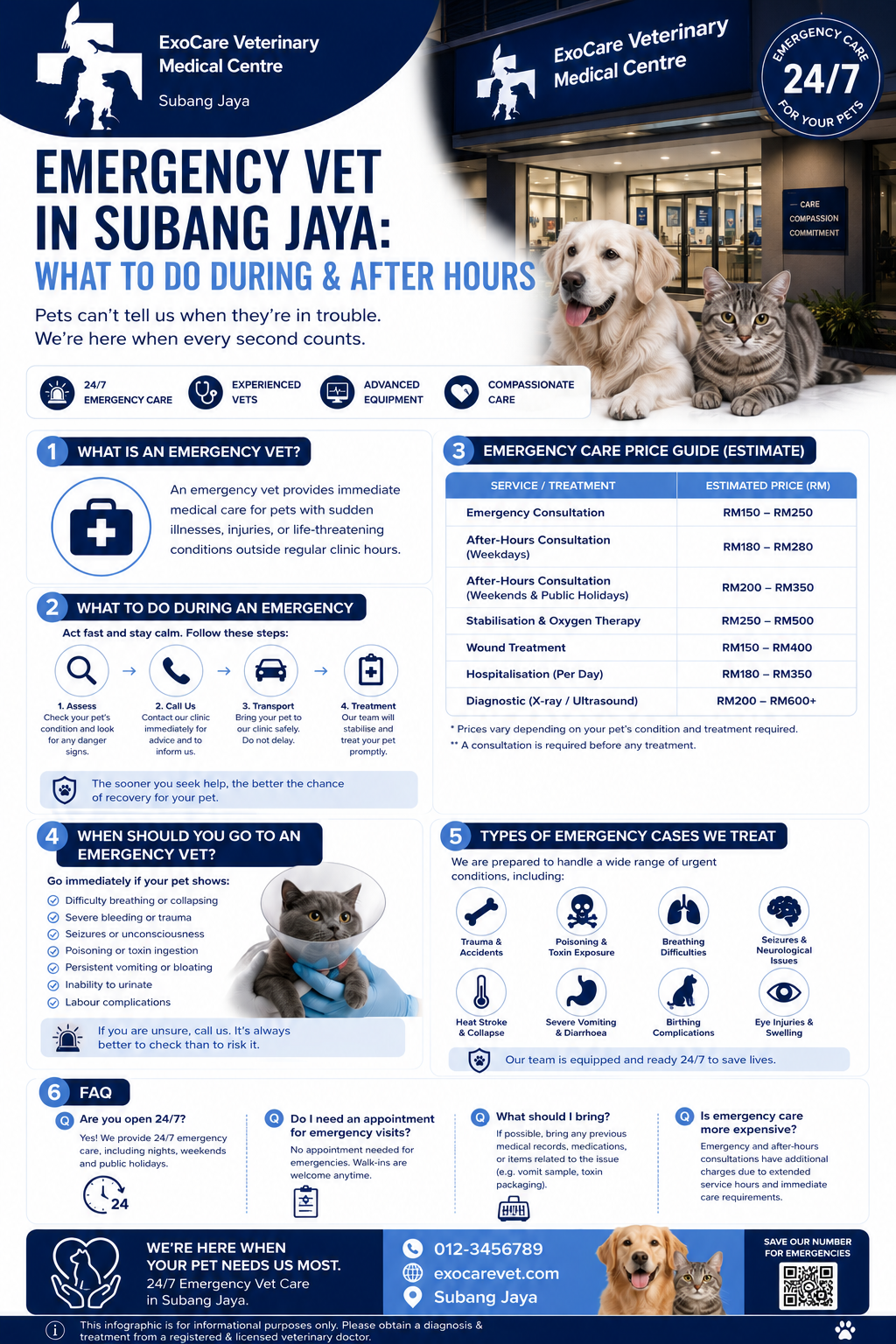
  • Emergency Vet in Subang Jaya: What to Do During & After Hours

    Emergency Vet in Subang Jaya: What to Do During & After Hours

    Your dog collapses, your cat strains and cries in the litter tray, or your rabbit suddenly goes still, and your mind empties. The two questions that crowd out everything else are what do I do now and where do I go, especially after hours. This guide replaces the blank panic with a plan: what counts as a true emergency, what to do in the first ten minutes, and how emergency care works here in Subang Jaya.

    • Any sudden event, breathing difficulty, collapse, poisoning, trauma, or a straining blocked cat, where minutes change the outcome.
    • Your phone call and handling before arrival often matter as much as the treatment, especially for fragile exotics.
    • Stay calm, phone ahead so we can prepare, stabilise safely, and bring records plus any suspected toxin packaging.
    • Save our number, and a 24-hour clinic’s number, before you ever need them.

    What actually counts as an emergency

    vet subang jaya

    Treat each of these as go-now:

    • Laboured or open-mouth breathing, or blue/grey gums: the body is failing to oxygenate; irreversible damage occurs within minutes. The most time-critical of all.

    • Collapse or inability to stand: internal bleeding, heart failure, poisoning, or a metabolic crash.

    • A distended, hard belly with unproductive retching (possible bloat in dogs): the stomach can twist and cut off its blood supply; rapidly fatal without surgery.

    • A male cat straining with little or no urine: a urinary blockage that can cause fatal kidney failure and cardiac arrest within 24–72 hours.

    • Seizures, especially repeated or lasting over five minutes: prolonged seizing overheats the body and injures the brain.

    • Suspected poisoning, uncontrolled bleeding, or major trauma: each can deteriorate fast; internal damage is often worse than it looks.

    • In exotics, sudden collapse, or a rabbit/rodent that stops eating and passing droppings: gut stasis or crisis, an emergency in prey species with minimal reserve.

    Why exotic and small pets can’t wait

    vet subang jaya

    Exotic species are prey animals, wired to hide illness as long as possible. So a rabbit, bird, or rodent that “suddenly” looks sick has often been declining silently for days with almost nothing left in reserve. Add our heat, transport stress in a hot car can tip a fragile patient over the edge before it reaches the clinic, and the window for effective help is dramatically shorter than in a dog or cat. With an exotic, when in doubt, phone immediately.

    The first ten minutes

    1. Stay calm. Your anxiety travels down the lead and raises your pet’s stress, worsening breathing difficulty and cardiac demand. A calm handler helps keep the patient stable.

    2. Phone the clinic first. Emergency care starts with your call. Describing what happened lets us prepare oxygen and equipment and give first-aid instructions specific to the situation.

    3. Handle safely. Injured animals bite from pain and fear. A towel helps you restrain gently, but never muzzle a pet that is vomiting or struggling to breathe, it risks aspiration or suffocation.

    4. Control bleeding. Firm, direct pressure with a clean cloth for at least three full minutes without lifting to check. If blood soaks through, add more on top rather than removing the first layer, which tears off any forming clot.

    5. Keep warm and still. Confine to a small, secure carrier or box with air holes, and support the neck and back as one unit if you suspect a spinal injury.

    Emergency myths that cost lives


    The myth The clinical fact
    “Induce vomiting for any poisoning.” Wrong for corrosive and petroleum toxins and many species. Phone the vet before doing anything.
    “A straining cat is just constipated.” In male cats it’s often a life-threatening blockage; delay risks kidney failure within 24–72 hours.
    “My rabbit will eat again by morning.” Gut stasis (not eating, no droppings) is a genuine emergency in rabbits and rodents, not an overnight wait.
    “Muzzle any injured pet for transport.” Never muzzle a vomiting or breathing-distressed pet; it can cause aspiration or suffocation.

    Also Read: 8 Pet Emergency Symptoms You Cannot Ignore (Expert Review)

    What phoning ahead does on our end

    A heads-up lets us prepare oxygen, warming equipment, and the correct instruments before your pet arrives, a head start that matters most for exotics needing precise, weight-based stabilisation. Owners who bring prior records and the packaging of a suspected toxin let us reach the right treatment faster, because we aren’t reconstructing history or guessing at a poison. Our on-site diagnostics, digital X-ray, ultrasound, in-house cytology, and full bloodwork, mean the underlying problem is identified in the same visit.

    A rabbit came in collapsed one afternoon. The owner had phoned from the car and kept him warm and still, so we were warming the table before they arrived and didn’t lose a minute. With a prey animal that fragile, those saved minutes are sometimes the whole story. 

    “In an emergency, the most valuable thing an owner can do isn’t heroics, it’s a calm phone call and safe transport. I’ve seen fragile exotic patients saved simply because the owner phoned ahead and kept them warm and still on the way in.” — Dr. Asma Farihah

    When to call and what to bring

    vet subang jaya

    Call immediately during our hours for breathing difficulty or blue/grey gums, collapse, seizures, suspected poisoning, a straining or blocked cat, uncontrolled bleeding, a bloated abdomen, or an exotic that has stopped eating and passing droppings.

    Our hours: Monday, and Wednesday to Sunday, 11:00am–7:00pm. Closed Tuesdays. Outside these hours, phone your nearest 24-hour facility while preparing to travel; save both numbers now.

    Bring: previous records and recent bloodwork, your pet in a secure carrier, the packaging or a photo of any suspected toxin, and for exotics a fresh faecal sample.

    Conclusion

    Emergencies are frightening because they’re sudden and unfamiliar, but your response doesn’t have to be either. The core plan never changes, no matter what walks through the door: stay calm, phone ahead, stabilise safely, and transport securely in a covered carrier. Those four steps buy us the one thing that decides most emergencies, time, and for fragile exotic patients with almost no reserve, the first ten minutes and that first phone call can genuinely be the difference between a recovery and a loss.

    If you spot an emergency during our hours, Monday and Wednesday to Sunday, 11:00am–7:00pm (closed Tuesdays), call us straight away so our team can prepare oxygen, warming, and the right equipment before you even arrive in Subang Jaya.

    FAQ

    Is ExoCare a 24-hour emergency vet in Subang Jaya?

    Our hours are Monday, and Wednesday to Sunday, 11:00am–7:00pm; closed Tuesdays. During these hours, phone ahead so we can prepare. Outside them, contact your nearest 24-hour facility, which is why we recommend saving both numbers in advance.

    Will I pay for diagnostics before treatment in an emergency?

    Yes. Stabilisation and tests like X-rays or bloodwork are needed because we can’t safely treat what we haven’t identified. They turn guesswork into targeted treatment and are often the fastest route to the right intervention.

    Should I treat my exotic pet at home first?

    No. Because exotics hide illness and crash fast, watch-and-wait burns the narrow window when treatment still works, and many home remedies are unsafe for small species. Phone a vet experienced with exotics immediately.

    References

    This article has been medically reviewed based on clinical protocols by:

    Dr. Asma Fariha (MVC No. 3362).

    Senior Veterinary Specialist, ExoCare Vet Medical Centre, Subang Jaya.

    ExoCare is a referral veterinary medical center specializing in the medical, surgical, and critical care of small animals, exotic pets, avian species, reptiles, rodents, and amphibians in Malaysia.

    vet subang jaya

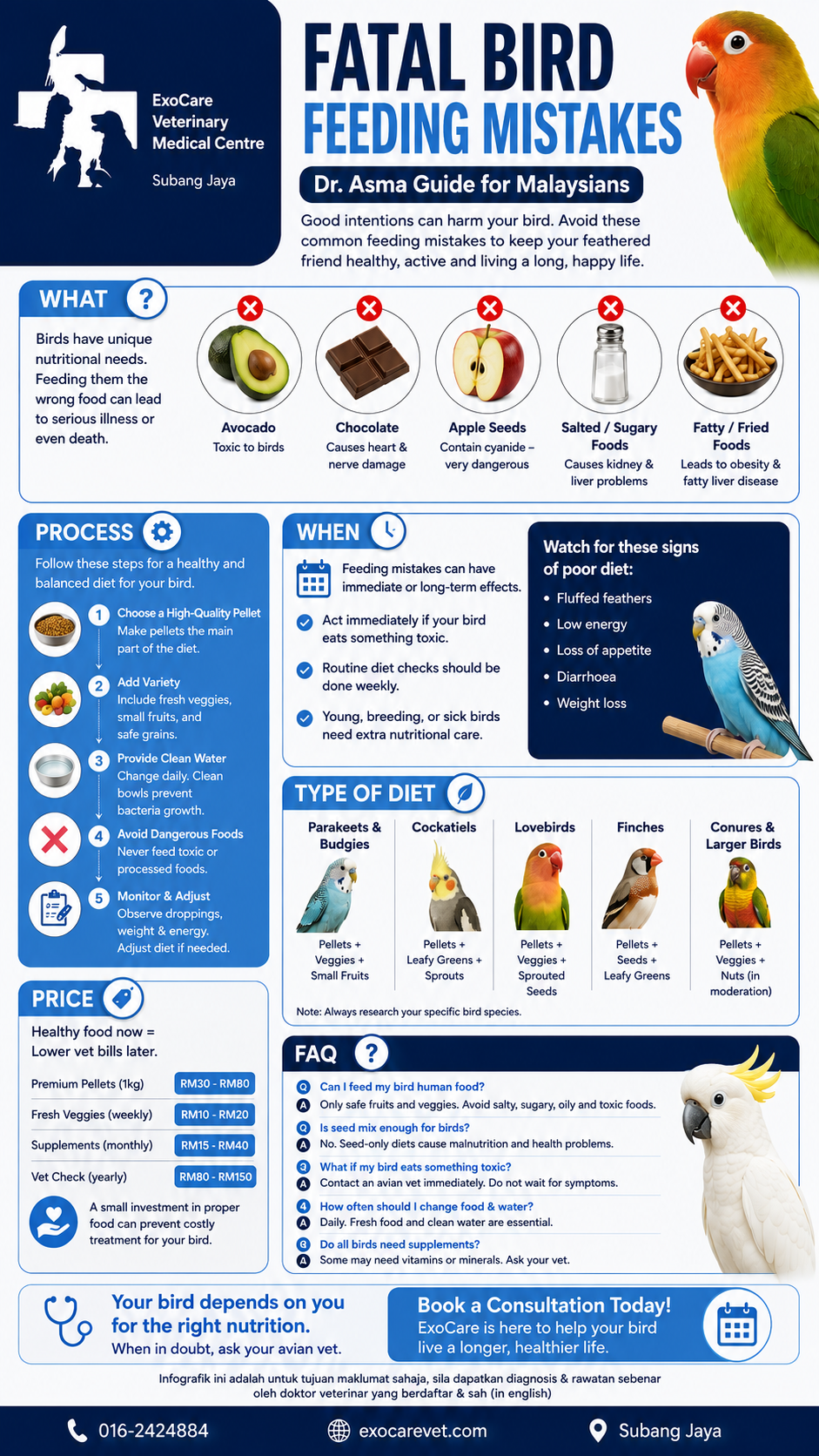
  • Fatal Bird Feeding Mistakes : Dr. Asma Guide for Malaysians

    Fatal Bird Feeding Mistakes : Dr. Asma Guide for Malaysians

    • Correct bird feeding means a formulated pellet base with fresh vegetables, not an all-seed bowl.
    • An all-seed diet slowly starves birds of vitamin A & calcium while overloading them with fat, driving fatal disease over months to years.
    • Owners see a bird happily cracking seeds and assume it is thriving when it is actually developing hypovitaminosis A, fatty liver, or heart disease.
    • A gradual, vet-supervised diet conversion to formulated food plus safe vegetables corrects deficiencies and extends lifespan.
    • Book an avian nutrition consultation at ExoCare Vet Medical Centre, Subang Jaya, before a hidden deficiency becomes an emergency.

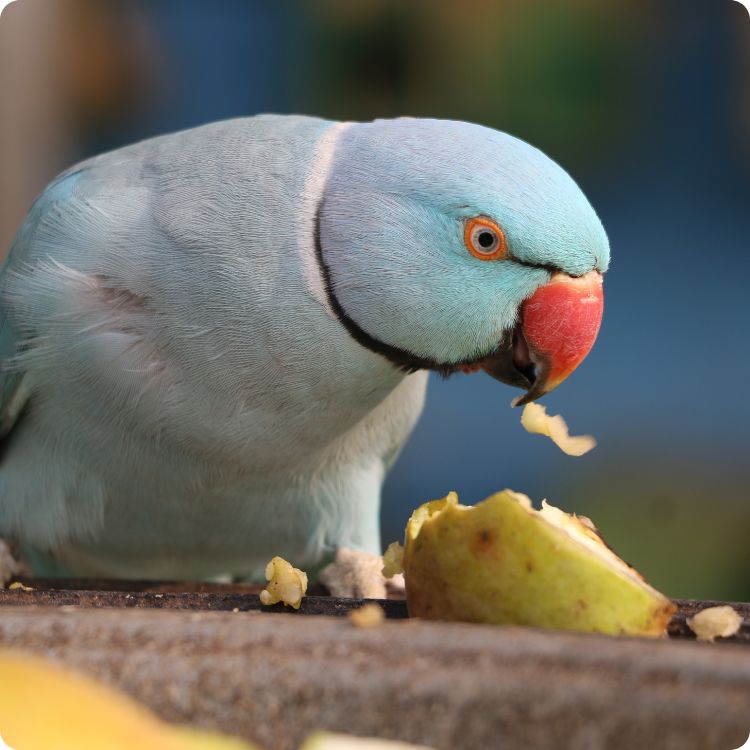
    Seeing a parrot enthusiastically cracking open sunflower seeds often leads owners to believe their pet is happy and thriving. In reality, an all-seed diet is one of the most dangerous long-term mistakes in bird feeding. Seeds starves birds of essential Vitamin A and calcium while overloading their organs with dietary fat, driving systemic organ failure over months or years.

    At ExoCare Vet Medical Centre in Subang Jaya, nutritional deficiencies account for a significant portion of the avian emergency cases we treat. Understanding correct bird feeding protocols is the single most effective way to protect your pet’s health and extend their lifespan.

    What Correct Bird Feeding Actually Looks Like

    bird feeding

    For most companion parrots like budgies, cockatiels, lovebirds, conures, African greys, macaws, a healthy diet is about nutrient balance, not a seed mix:

    • Seeds, nuts & fruit (under 10%): high-fat seeds (sunflower, millet) and sugary fruit belong strictly as training rewards or occasional treats.
    • Fresh vegetables & leafy greens (20–30%): dark greens like mustard leaf, kale and broccoli, plus carrots, supply natural beta-carotene and micronutrients.
    • Formulated pellets (60–70% of daily intake): each bite carries balanced vitamins, minerals and amino acids, which also stops the bird from picking out its favourite seeds and skipping the rest.

    One caveat by species: nectar-feeders such as lorikeets need a specialised liquid nectar diet, while granivores like budgies do best on a pellet-based regimen rather than seeds alone.

    Also Read: 7 Human Foods Toxic to Pets, Include Birds & Rabbits (2026)


    How Bad Bird Feeding Turns Fatal

    bird feeding

    An unbalanced diet sets off several slow, silent conditions which most of them well advanced before the owner notices anything.

    Hypovitaminosis A (Vitamin A Deficiency)

    Vitamin A keeps the mucosal linings of the respiratory, digestive and urinary tracts healthy. Without it, those linings dry out and thicken (hyperkeratinise), opening the door to chronic sinus infections, plaques in the mouth, a weakened immune system, and kidney problems.

    Seed-based diets are among the highest-risk because they are naturally low in Vitamin A.

    Hepatic Lipidosis (Fatty Liver Disease)

    A high-fat seed diet overloads the liver with lipids. Healthy liver tissue is gradually replaced by fat, metabolism falters, and the bird can develop abdominal swelling, laboured breathing and, eventually, sudden liver failure.

    Hypocalcaemia & Metabolic Bone Disease

    Seeds are low in calcium and Vitamin D3 and high in phosphorus is a combination that strips the skeleton of calcium. In laying hens it causes life-threatening egg-binding; in African greys especially, chronically low blood calcium can trigger muscle tremors and seizures, like the case above.

    Iodine Deficiency (Goitre)

    Often overlooked: an all-seed diet is also low in iodine. In budgies in particular this can enlarge the thyroid (goitre), which presses on the airway and causes a change in voice, wheezing, or regurgitation.

    Atherosclerosis (Heart Disease)

    Diets heavy in fat drive cholesterol plaques into the major arteries. Older parrots kept on all-seed diets are at real risk of sudden cardiac death from these narrowed vessels.


    The Malaysian Climate Risk: Fungal Toxins & Rapid Spoilage

    bird feeding

    Our heat and humidity add risks that owners in cooler countries rarely have to think about.

    • Aspergillosis: seeds and nuts stored warm and damp grow Aspergillus mould easily. Inhaled by a bird whose airway is already compromised by Vitamin A deficiency, these spores can cause severe, often fatal respiratory disease.
    • Bacterial spoilage: fresh vegetables and cooked food spoil within hours in tropical heat. Left in the cage, they become a breeding ground for bacteria, take uneaten fresh food out after a couple of hours.


    Debunking Common Avian Feeding Myths

    Myth 1: “Parrots need grit to digest their food.”

    False for parrots. Parrots, budgies and cockatiels de-hull their seeds with their beaks before swallowing, so they do not need insoluble grit and over-eating grit out of boredom or illness can cause a dangerous crop or gizzard impaction. Only seed-swallowing passerines such as canaries and finches may take small amounts.

    Myth 2: “You can switch a bird to pellets overnight by removing the seeds.”

    Dangerous. Birds do not automatically recognise pellets as food. A seed-dependent bird may literally starve itself rather than eat something unfamiliar. Conversion has to be gradual, structured, and monitored daily with a gram scale.

    Myth 3: “A little human treat like avocado or chocolate is fine.”

    No. Avocado contains persin, a cardiotoxin that causes heart-muscle death and sudden collapse in birds. Chocolate, caffeine, alcohol, onion, garlic, and fruit seeds and pits (which release cyanide compounds) are all genuinely toxic and must never be offered. Xylitol, the sweetener in sugar-free gum, is best avoided too as a precaution. Its toxicity is proven in dogs, and there is no safe established dose in birds.


    Our Experience at ExoCare Vet Medical Centre (Subang Jaya)

    According to ExoCare’s medical protocols, diet conversion in birds is never rushed. Because a bird may starve rather than accept unfamiliar food, we guide owners through a gradual transition with mandatory weight monitoring, adjusting the plan to the individual bird’s species, age, and health.

    Our clinical team has observed a recurring pattern: many exotic-pet owners only seek help once a bird is fluffed, silent, and struggling to breathe, the point at which years of hidden malnutrition have finally tipped into crisis.

    This is precisely why we emphasise baseline health screening at a bird’s first visit. Establishing a bird’s normal weight and blood values while it is well allows us to catch deficiency early and intervene before organ damage sets in.

    For debilitated birds requiring hospitalisation, we provide assisted feeding, warmth, and, when sedation or procedures are needed, precision dosing with continuous monitoring, because a tiny avian patient has almost no margin for error.

    “The saddest cases I see are entirely preventable, a beloved parrot dying slowly from a bowl of seeds its owner offered out of love. In our climate, that same seed bowl can grow the mould that causes aspergillosis. Feeding is medicine for birds. Get the diet right, store it correctly, and you can add years to your bird’s life.”

    — Dr. Asma Farihah (Lead Veterinarian & Co-Founder, ExoCare Vet Medical Centre)


    Safe Steps for Converting Your Bird to a Pelleted Diet

    1. Establish a baseline weight. Weigh your bird on a digital gram scale at the same time each morning, before feeding.
    2. Mix gradually. Offer pellets in the main bowl while limiting seeds to short, timed sessions (for example 30 minutes morning and evening).
    3. Monitor droppings and weight. A weight drop of more than 10% means the bird is not eating enough and needs an immediate rethink.
    4. Work with an avian vet. Let a vet tailor the technique to your bird’s species and health, this is where most home conversions succeed or fail.


    When to Seek Immediate Veterinary Care

    Birds instinctively hide illness until they are critically unwell. Treat any of these as an emergency:

    • Fluffed-up feathers, sitting low on the cage floor, or tail-bobbing while breathing.
    • Open-mouth breathing, wheezing, or clicking from the nostrils.
    • Noticeable weight loss or a prominent keel (breastbone), or sudden loss of appetite.
    • Swelling around the eyes or nostrils, or white spots inside the mouth.
    • Muscle weakness, inability to grip the perch, or seizures.


    Frequently Asked Questions

    1. How much does it cost to feed a bird properly in Malaysia?

    A quality formulated pellet costs more per kilogram than a bag of seed, but birds eat small amounts, and fresh vegetables are inexpensive. The real saving is medical: correcting an all-seed diet is far cheaper than treating fatty liver, chronic sinus infection, or heart disease later. A nutrition consultation is a small, one-time cost that prevents recurring vet bills.

    2. How do I switch my bird from seeds to pellets without harming it?

    Slowly and under supervision. Birds can refuse new food to the point of starvation, so conversion is done gradually while monitoring weight. We tailor a step-by-step plan and check progress, because a sudden switch can be as dangerous as the poor diet itself. Never starve a bird into eating pellets.

    3. Which everyday foods are actually fatal to birds?

    Avocado, chocolate, caffeine, alcohol, salt, onion and garlic, xylitol (a sweetener), and fruit pits or apple seeds are all dangerous or fatal. 


    Conclusion

    Bird feeding is not a minor detail, it is the most powerful lever you have over your bird’s health and lifespan. The all-seed bowl that looks like kindness is, over time, one of the deadliest mistakes an owner can make, and Malaysia’s heat and humidity only sharpen the risk. The fix is achievable: a formulated base, safe vegetables, careful food storage, and a gradual, supervised conversion.

    If you are unsure whether your bird’s diet is truly complete, do not wait for symptoms to appear. Book an avian nutrition consultation at ExoCare Vet Medical Centre in Subang Jaya and let our expert clinical team, alongside our exotic and small animal service, help your bird truly thrive. You can also explore our exotic species nutrition service.

    References

    Merck Veterinary Manual, “Nutritional Disorders of Pet Birds.” Accessed at: https://www.merckvetmanual.com/bird-owners/disorders-and-diseases-of-birds/nutritional-disorders-of-pet-birds

    Merck Veterinary Manual, “Nutrition in Psittacines.” Accessed at: https://www.merckvetmanual.com/management-and-nutrition/nutrition-exotic-and-zoo-animals/nutrition-in-psittacines

    NC State Veterinary Hospital, “Parrot Nutrition.” Accessed at: https://hospital.cvm.ncsu.edu/services/small-animals/nutrition/parrot-nutrition/

    Malaysian Veterinary Council (MVC). Accessed at: https://www.mvc.gov.my/

    Department of Veterinary Services Malaysia (DVS / Jabatan Veterinar). Accessed at: https://www.dvs.gov.my/


    This article has been medically reviewed based on clinical protocols by:

    Dr. Asma Fariha (MVC No. 3362) (Malaysian Veterinary Council).

    Senior Veterinary Specialist, ExoCare Vet Medical Centre, Subang Jaya.

    ExoCare is a referral veterinary medical center specializing in the medical, surgical, and critical care of small animals, exotic pets, avian species, reptiles, rodents, and amphibians in Malaysia.
    bird feeding