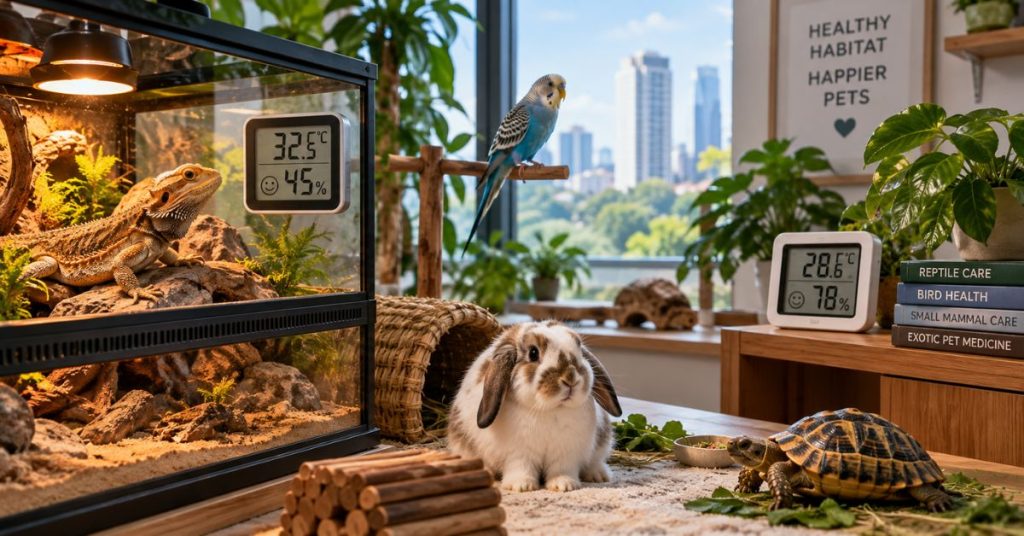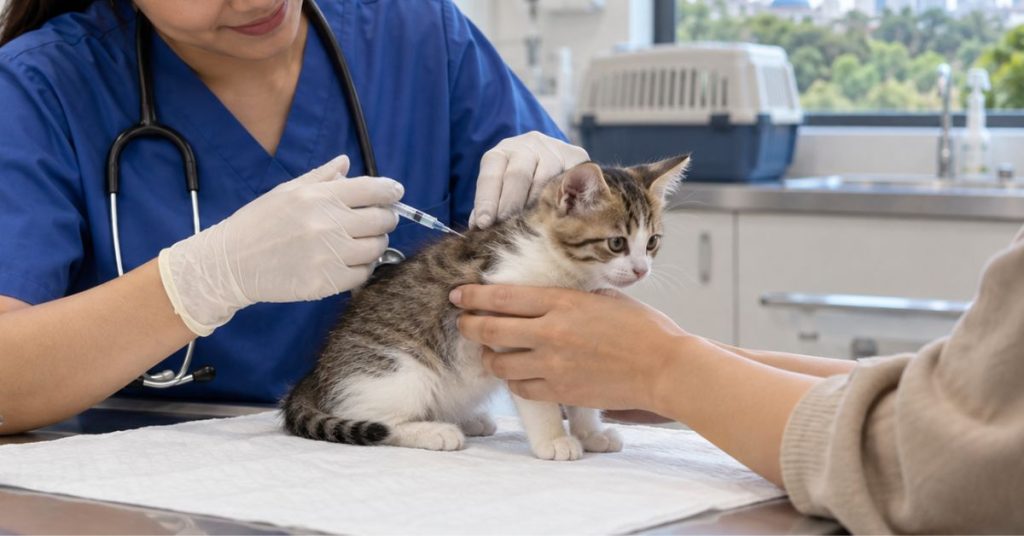

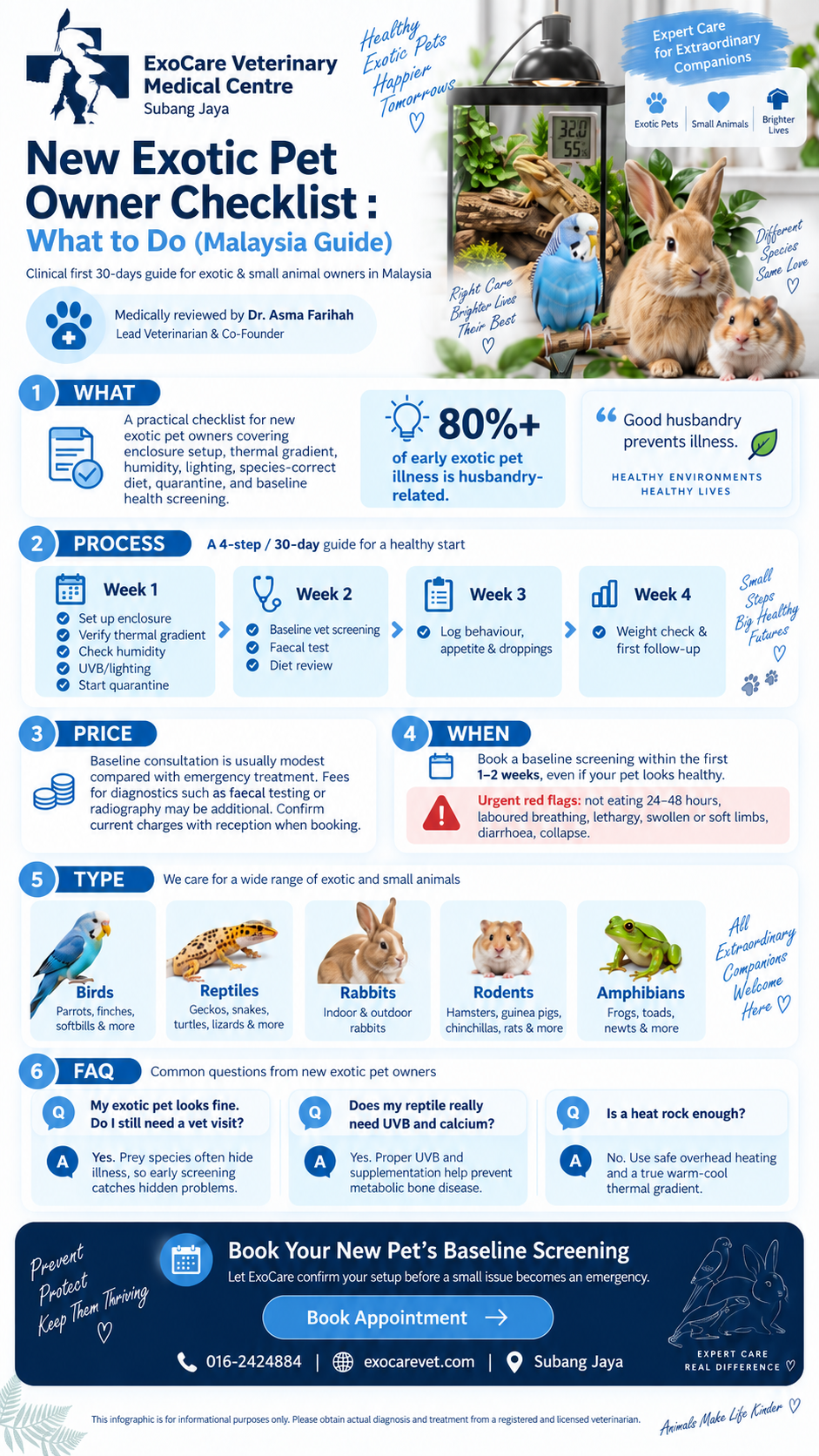
- A clinical first-30-days checklist for new exotic pet owner, covering enclosure setup, thermal gradients, species-correct diet, quarantine & a baseline vet screening.
- Over 80% of exotic pet illnesses our team sees are husbandry-related, not infectious.
- Birds, reptiles, rabbits and rodents instinctively mask illness, so by the time symptoms show, the animal is often already critical.
- Establish correct temperature, humidity & diet before the animal arrives, quarantine new arrivals within the first two weeks.
- Book a new-pet baseline screening at ExoCare Vet Medical Centre, Subang Jaya, the most important step to catch hidden problems early.
Bringing home a new bird, reptile, rabbit, or small rodent is an exciting experience. However, every new exotic pet owner quickly learns that these unique companions have very different needs compared to cats and dogs. In exotic pet care, health depends heavily on husbandry. The everyday management of temperature, humidity, lighting and diet.
In fact, over 80% of the health issues treated in exotic veterinary practice stem from minor, unintentional errors in home setup rather than infectious diseases. Getting your setup right within the first 30 days is the most effective way to keep your new companion healthy for years to come.
Also Read: 8 Pet Emergency Symptoms You Cannot Ignore (Expert Review)
Habitat Setup: Build It Before the Pet Arrives
Here’s the rule I repeat to every new client: the enclosure should be fully built, powered on, and holding stable readings for a few days before the animal moves in. Not the same afternoon. A habitat you’re still troubleshooting while a stressed animal watches from a carrier is a habitat that’s already failing.
For reptiles
Reptiles are ectothermic. They can’t generate their own body heat, so they borrow it from their surroundings to run digestion, immune function, everything. The classic beginner mistake is heating the whole tank to one “correct” number. That leaves the animal no way to self-regulate.
Every reptile enclosure needs a measured thermal gradient, a warm end and a cool end:
- Basking zone: a warmer area under an overhead heat source, where the animal loads up on warmth to digest a meal.
- Cool zone: a shaded retreat at the far end, so it can move away and cool down on its own terms.
Check both ends with digital thermometers. Don’t eyeball it, and please don’t rely on those adhesive dial strips. One more thing: skip heat rocks. I’ve treated more than one gecko for deep belly burns from a heat rock that ran hotter than its label ever admitted.
For birds and small mammals
Rabbits, guinea pigs, hamsters, and birds need room to actually move. Prioritise a spacious, well-ventilated cage, dust-free bedding, and this part gets overlooked, a quiet spot in the house. Away from the TV, away from the kitchen. Cooking fumes, especially anything from an overheated non-stick pan, can kill a bird faster than most owners believe.
Managing Malaysia’s Tropical Climate
This is where care advice copied from a US or UK website quietly fails a Malaysian exotic pet owner. Our climate isn’t their climate, and the humidity that keeps one species thriving is the same humidity that puts another in my consult room.
- Arid species vs. our air: ambient humidity of 70–90% suits tropical geckos and tortoises nicely. For desert-adapted species like bearded dragons and leopard geckos, that same damp air invites respiratory infections and scale rot. These animals often need a drier microclimate than your living room naturally offers.
- Heatstroke in small mammals: rabbits and guinea pigs shed heat poorly and can’t sweat it off. A hutch near a sunlit window on a still Malaysian afternoon becomes an oven. Every hot season we lose rabbits to heatstroke that a fan, better ventilation, or an air-conditioned room would have prevented. Keep them cool. This is not optional here.
- Mould and fungi: our humidity turns seeds, nuts, and wooden cage furniture into a breeding ground for mould. Mouldy feed exposes birds to Aspergillus, a fungal respiratory infection that’s stubborn to treat and easy to prevent. Store all food in airtight containers somewhere cool and dry.
Nutrition: Avoiding Common Diet Mistakes
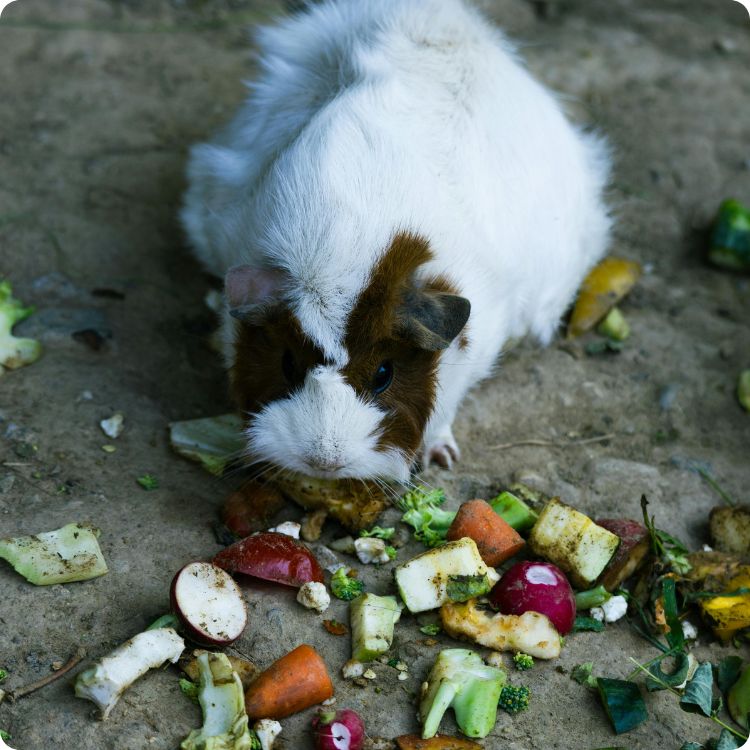
Malnutrition in exotics is quiet. It builds for months, sometimes years, and by the time you can see something wrong, the damage is often well advanced. Species-specific feeding isn’t fussiness, it’s the difference between a bird that lives four years and one that lives fourteen.
- Birds: an all-seed diet is high in fat and short on Vitamin A and calcium. Over time that drives fatty liver disease and a weakened immune system. A good base is formulated pellets, topped up with fresh, bird-safe vegetables.
- Reptiles (UVB & calcium): most diurnal reptiles need proper UVB lighting to make Vitamin D3, which is what lets them absorb calcium from food. Skip the UVB or the calcium and you get Metabolic Bone Disease, a painful, deforming softening of the bones that I see far too often, and almost always in an animal that “seemed fine” until it wasn’t.
- Small herbivores: rabbits and guinea pigs need unlimited fresh grass hay (Timothy hay is ideal). It keeps the gut moving and wears down teeth that never stop growing. Pellets and greens are extras, not the foundation.
The First-Visit Baseline Health Screening
Prey animals hide illness. It’s instinct. In the wild, the one that looks sick gets picked off first. So your exotic pet will act completely normal until it is genuinely, sometimes dangerously, unwell. Waiting for obvious symptoms usually means waiting too long.
That’s why I ask every new exotic pet owner to book a baseline screening within the first two weeks. In that visit we:
- Record a precise starting weight and physical baseline, so we can catch small changes later that you’d never spot at home.
- Screen a fresh faecal sample for internal parasites, which are common in young or newly bought animals.
- Go through your temperature, humidity, and diet setup together and fix problems early.
- Set you up with safe parasite prevention and, if needed, a plan to transition the diet.
Bring a photo of your enclosure and a fresh faecal sample. Honestly, those two things tell me more in five minutes than half an hour of questions.
Common Myths, Straight from the Consult Room
“My pet’s active, so it doesn’t need a vet.”
Activity isn’t a clean bill of health in a prey species. A check-up while your pet looks well is exactly how we catch the hidden nutritional and parasitic problems before they turn into emergencies.
“A seed mix is all a pet bird needs.”
Seeds are fatty and thin on the micronutrients birds actually need. A pelleted base plus fresh leafy greens is what balances the diet.
“A heat mat is enough for any reptile.”
For most reptiles, no. They’re built to absorb heat from above, the way the sun delivers it. Thermostat-controlled overhead heat, paired with correct UVB, is safer and far closer to what their bodies expect.
“The single biggest change a new owner can make is to treat the baseline health screening as part of setting up the enclosure, not as something you do only when the animal is already in trouble. In Malaysia’s climate, small errors in temperature or humidity compound quickly, and a prey species will hide the consequences until it can no longer cope. Screening early is how we turn a preventable crisis into a five-minute correction.”
— Dr. Asma Farihah (Lead Veterinarian & Co-Founder, ExoCare Vet Medical Centre)
When to Call a Vet
Don’t wait and watch overnight if you see any of these. Call an exotic clinic the same day:
- Refusing food or water for more than 24–48 hours.
- Open-mouth breathing, wheezing, or tail-bobbing while perched (in birds).
- Lethargy, weakness, or sitting motionless at the bottom of the enclosure.
- Swollen limbs, shaky movement, or a soft, rubbery jaw (in reptiles).
- Diarrhoea, no droppings at all, or a hunched, painful-looking posture.
With exotics, a day’s delay is often the whole margin between a treatable problem and a lost patient. When in doubt, ring us.
Visit ExoCare Vet Medical Centre (Subang Jaya)
- Hours: Monday & Wednesday–Sunday, 11:00 AM – 7:00 PM. Closed Tuesdays.
- Location: Subang Jaya, Selangor.
- Phone / WhatsApp: 016-2424884
- What to bring: a warm, secure, well-ventilated carrier; a photo of your home enclosure; and a fresh faecal sample if you have one.
Frequently Asked Questions
How soon after getting an exotic pet should I see a vet?
Within the first one to two weeks, even if the animal appears healthy. This window lets us establish a baseline, screen for parasites, and correct any husbandry issue before it causes disease. Newly acquired animals should also be quarantined from any existing pets during this period.
Is a first exotic-pet consultation expensive in Malaysia?
A baseline consultation is modest relative to emergency treatment. Note that certain diagnostics such as faecal testing or radiography, carry non-waivable fees because they involve laboratory processing and equipment, but they are precisely what detect hidden problems early. Confirm current consultation and diagnostic fees with our reception when booking.
My reptile seems fine, do I really need UVB lighting and supplements?
Yes. Metabolic bone disease develops silently over weeks to months. Correct UVB lighting and calcium/D3 supplementation are preventive essentials for most reptile species, not optional extras, and they cost far less than treating advanced bone disease.
Conclusion
Owning an exotic pet in Malaysia is deeply rewarding, but it rewards preparation. Get the thermal gradient, humidity, lighting and diet right before the animal arrives; quarantine new arrivals; and book a baseline screening early. These few steps prevent the large majority of problems our team treats.
If you have just brought home a bird, reptile, rabbit or rodent, or you are about to, let our clinical team confirm your setup and screen your new companion before a small issue becomes an emergency.
References
Merck Veterinary Manual, “Management and Husbandry of Reptiles”. Accessed at: https://www.merckvetmanual.com/exotic-and-laboratory-animals/reptiles/management-and-husbandry-of-reptiles
Merck Veterinary Manual, “Nutritional, Metabolic, and Endocrine Diseases of Reptiles” (Metabolic Bone Disease). Accessed at: https://www.merckvetmanual.com/exotic-and-laboratory-animals/reptiles/metabolic-and-endocrine-diseases-of-reptiles
Merck Veterinary Manual, “Management of Pet Birds”. Accessed at: https://www.merckvetmanual.com/exotic-and-laboratory-animals/pet-birds/management-of-pet-birds
Malaysian Veterinary Council (MVC). Accessed at: https://www.mvc.gov.my/
This article has been medically reviewed based on clinical protocols by:
Dr. Asma Fariha (MVC No. 3362).
Senior Veterinary Specialist, ExoCare Vet Medical Centre, Subang Jaya.
ExoCare is a referral veterinary medical center specializing in the medical, surgical, and critical care of small animals, exotic pets, avian species, reptiles, rodents, and amphibians in Malaysia.