Key Takeaways
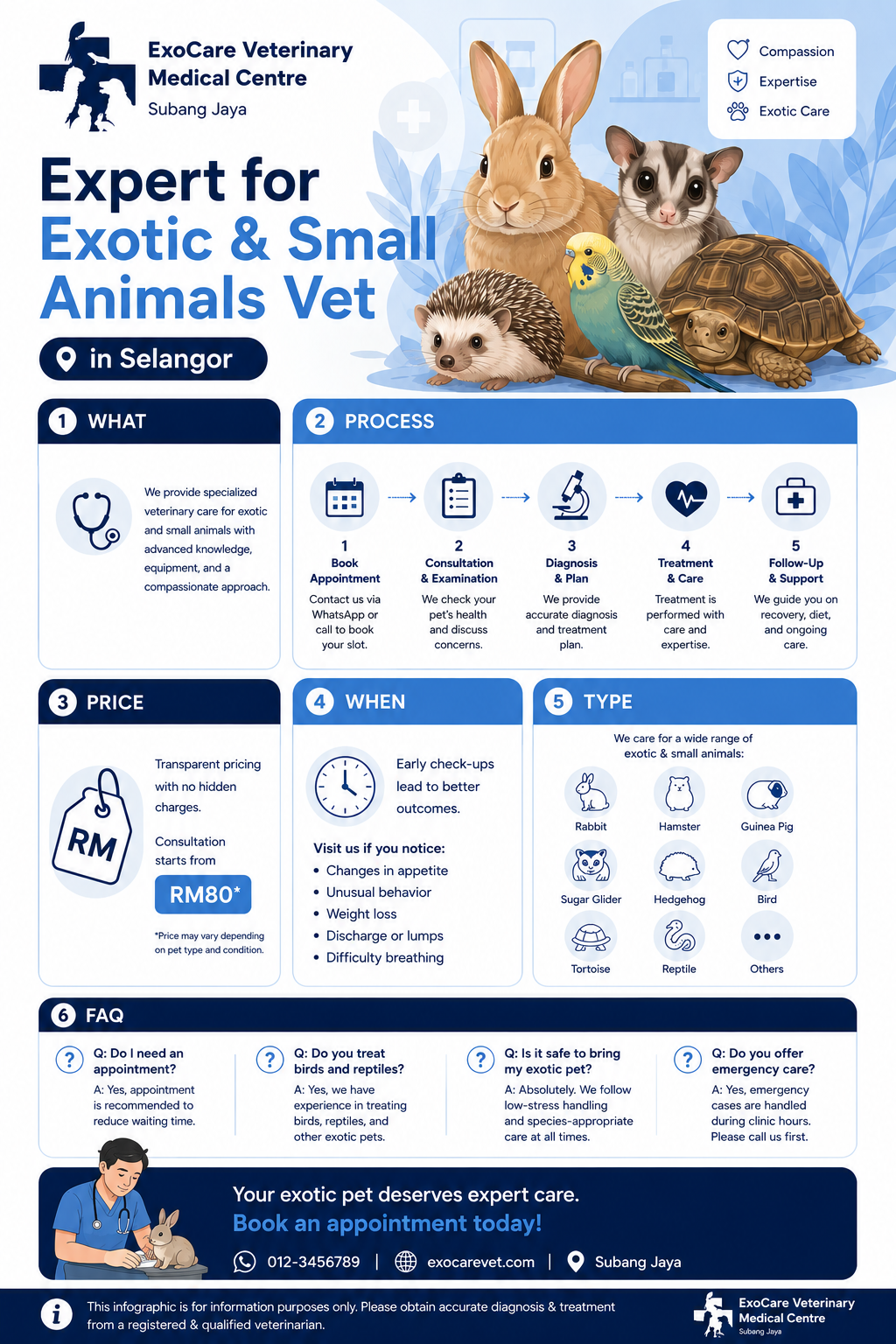
- An exotic and small animals vet at ExoCare Vet Medical Centre provides clinical-grade care for birds, reptiles, and small mammals, as well as cats and dogs, from a referral-level facility in Subang Jaya.
- Exotic species mask illness far longer than cats and dogs, and most general clinics lack the species-specific diagnostics needed to catch problems early.
- Owners often discover a sick rabbit, bird, or hamster only once the animal is already in crisis, because routine general practice doesn’t screen for species-specific disease.
- In-house digital radiography, cytology, soft-tissue surgery, and an animal blood bank mean critical cases can be assessed and stabilised without delay.
- Book a baseline health screening for your exotic or small animal at ExoCare Vet Medical Centre before a routine issue becomes an emergency.
If you own a bird, rabbit, reptile, tortoise, or hamster in the Klang Valley, finding a good exotic and small animals vet is harder than it should be. Most neighbourhood clinics are built around cats and dogs, so owners of exotic pets often ring around for hours or drive from one suburb to another before finding a vet willing to see them.
It doesn’t help that many owners also assume that as long as the animal is eating and moving, it must be healthy. Exotic and small animals are prey species by instinct, so they hide illness until it is well advanced, and their anatomy, drug dosing, and disease patterns differ enough from cats and dogs that standard general practice often isn’t set up to catch problems early.
This guide explains what separates an exotic and small animals vet from a general practitioner, why species-specific screening matters for these pets, the husbandry-driven conditions we see most in Malaysia’s climate, and how ExoCare’s referral-level facility in Subang Jaya diagnoses and treats them.
What Counts as an “Exotic and Small Animal” Vet Patient?
What Counts as an “Exotic and Small Animal” Vet Patient?
An exotic and small animals vet treats birds, reptiles, and small mammals. These species hide illness longer and need specialised diagnostics that general cat-and-dog clinics don’t have, so early, species-specific screening matters more for them than for typical cats and dogs.
An exotic and small animals vet is trained beyond standard cat-and-dog general practice to handle three physiologically distinct groups, each with its own rules:
-
Birds (parrots, passerines) breathe through a one-way air-sac system rather than a diaphragm, run a high resting metabolic rate, and hide weight loss beneath their feathers, so decline is often invisible until it is severe.
-
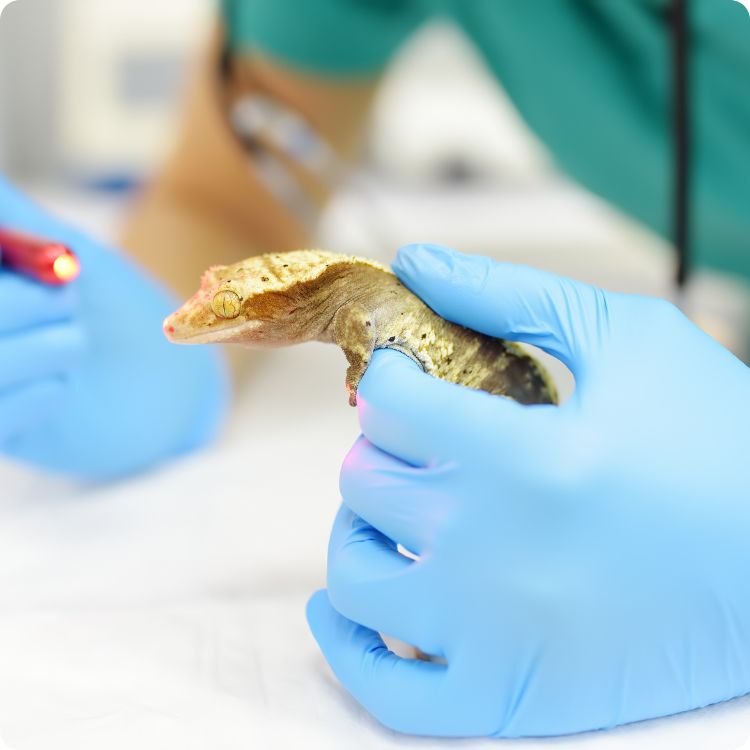
Reptiles (snakes, lizards, tortoises) are ectothermic. Digestion, immune function, and healing all depend on a correct thermal gradient and adequate UVB for calcium metabolism. Get the enclosure wrong and the animal cannot process food or fight infection normally.
-
Small mammals (rabbits, guinea pigs, hamsters, ferrets) include hindgut fermenters whose digestive tract must keep moving constantly. Even a day of reduced eating can trigger life-threatening gut stasis. Rodents also have continuously growing teeth prone to malocclusion.
Each group carries its own anaesthesia risk profile and dosing requirements, so husbandry review (housing, diet, thermal gradient, lighting) is treated as part of the clinical exam rather than an afterthought.
At a referral-level exotics service this also means species-specific equipment: avian-safe restraint and radiography, reptile-appropriate thermal support during procedures, and precision dosing scaled to patients that can weigh under 100 grams
Related: Are Dwarf Hamsters Prone to Diabetes? Rodent Health Facts
Risks & Malaysia’s Climate Impact

-
Reptiles kept in humid enclosures without a proper thermal gradient are prone to dysecdysis (incomplete shedding), scale rot, and respiratory infection. Inadequate UVB can push this into metabolic bone disease, one of the most common reptile problems we see.
-
Birds are highly sensitive to heat stress and to ammonia build-up from damp bedding, which inflames delicate air-sac tissue and speeds up respiratory disease such as air sacculitis.
-
Small mammals like rabbits and guinea pigs can suffer fatal heatstroke at temperatures many Malaysian owners consider normal, especially if housed outdoors or near direct sun. Humid conditions also raise the risk of flystrike.
Layered onto an already-stressed exotic patient, husbandry mistakes that might be tolerated in a cooler climate become acute emergencies much faster here.
Why Do Exotic Pets Get Sick?
-
Husbandry errors, such as incorrect temperature, humidity, UVB lighting, or substrate for the species, which slowly undermine immune and digestive function.
-
Nutritional deficiencies, including calcium-deficient diets that drive metabolic bone disease in reptiles, vitamin A deficiency in seed-only birds, and low-fibre diets that cause gut stasis in rabbits and guinea pigs.
-
Genetic predisposition, where certain lines carry higher baseline risk for specific conditions, such as dental malocclusion in rabbits and diabetes mellitus in dwarf hamsters.
Because exotic species instinctively hide weakness, these root causes usually progress for weeks before any visible symptom appears. That is why proactive screening beats reactive treatment.
Clinical & Laboratory Diagnosis
A proper work-up for an exotic or small animal patient typically includes:
-
High-resolution digital radiography to assess bone density (a key marker of metabolic bone disease), GI obstruction, or egg-binding in birds and reptiles.
-
In-house cytology and full serum biochemistry profiles to catch organ-function changes before external symptoms appear.
-
Ultrasound for soft-tissue and abdominal assessment in small mammals.
-
Faecal parasitology and Gram staining to identify parasite burdens and bacterial imbalance common in Malaysian husbandry conditions.
-
Species-appropriate blood-draw technique. Vascular access differs a lot between a parrot (jugular), a gecko (ventral tail vein), and a guinea pig, so it is handled by a team trained for patients this small.
Common Care Myths
The belief that an exotic pet in good spirits must be in good health is one of the most common assumptions we correct at the clinic, and one of the most dangerous.
| Myth | Reality |
|---|---|
| If it’s eating and active, it’s healthy | Exotic species mask illness until it’s advanced, and normal behaviour can persist almost until collapse |
| Small animals don’t need anaesthesia monitoring like dogs and cats | Smaller body mass means narrower safety margins, so continuous monitoring matters more, not less |
| Any vet can treat a hamster or bird | Dosing, restraint, and disease patterns differ enough by species that exotic-specific training changes outcomes |
| Buying from a pet shop means it came health-checked | Pet-shop animals are rarely examined by a vet, so a first-visit screening is where real problems are first caught |
Our Experience at ExoCare Vet Medical Centre
In our day-to-day exotics practice, most owners only seek care once their animal is already in visible distress, by which point treatment options are narrower and outcomes less predictable. Many have already been turned away by a general clinic, or given advice meant for cats and dogs. The pattern we see most is not exotic disease at all, it’s husbandry problems that quietly became medical ones: a thermal gradient a couple of degrees off, or a slightly wrong diet, that took months to show and then escalated within days.
According to ExoCare’s medical protocols, every exotic and small-animal patient undergoing a procedure receives precision dosing calculated to their exact body weight, continuous monitoring during anaesthesia, and soft-tissue surgery performed with species-appropriate technique.
We tell new clients that a baseline health screening at the first visit, even for an animal that seems fine, records that individual’s normal bloodwork and weight. For a species that hides disease, that first record is often the most useful thing in the file, because it makes any future illness much easier to catch early.
Related: Pet Insurance & Vet Fees in Malaysia: What Owners Should Know
Expert Commentary
“In the Klang Valley’s climate, the exotic and small-animal cases we see most often aren’t exotic diseases. They’re husbandry problems that became medical ones. A thermal gradient that’s two degrees off, or a diet that’s slightly wrong, can take months to show up and then escalate within days.” — Dr. Asma Farihah, Lead Veterinarian & Co-Founder, ExoCare Vet Medical Centre
Check your pet here → Book an appointment at ExoCare Vet Medical Centre
When to See a Vet?
-
Sudden refusal to eat or drink for more than 24 hours. In a small exotic patient, even a day without food can trigger gut stasis and a rapid metabolic crash.
-
Laboured or open-mouth breathing in birds or reptiles. Respiratory distress in these species is usually advanced by the time it shows, so same-day assessment is important.
-
Lethargy, collapse, or inability to stand. A sudden drop in activity usually signals pain, systemic illness, or shock that needs urgent evaluation.
-
Visible bleeding, swelling, or limb dysfunction. In tiny patients even minor blood loss is significant, and untreated swellings or injuries can worsen quickly.
-
Straining without producing droppings or eggs. This can indicate a life-threatening obstruction or egg-binding that needs immediate intervention.
Bring any previous medical records, a secure species-appropriate carrier, and a fresh faecal sample if possible. This speeds up diagnosis considerably.
Vet Emergency Care at ExoCare
ExoCare Vet Medical Centre provides emergency and critical care for exotic and small animals, but only during our operating hours. This is not a 24-hour service. Within opening hours our team can carry out rapid stabilisation, IV fluid therapy, oxygen support, and hospitalisation with monitoring, using the same in-house diagnostics available for routine cases.
If your pet is in distress during the day, call us on the way so the team can prepare before you arrive. Outside our hours, contact your nearest 24-hour emergency veterinary hospital first, then follow up with us.
ExoCare Veterinary Medical Centre
Address: G3, Lot 15, Jalan SS 16/1, SS 16, 47500 Subang Jaya, Selangor, Malaysia
Phone: +60 12-345 6789
Hours: Monday and Wednesday to Sunday, 11:00 AM to 7:00 PM (closed Tuesdays)
Email: info@exocarevet.com
ExoCare also runs additional clinics across the Klang Valley, including USJ, Puchong, Kelana Jaya, Bandar Sunway, Taman Paramount, Bukit Kiara, and Damansara, so specialist care is rarely far away.
FAQ We Received at ExoCare Vet Medical Centre
1. How do I find an exotic and small animals vet near me in Malaysia that treats my specific pet?
Not every clinic labelled “exotic” treats every species. coverage depends on the vet’s training and equipment. Call ahead and confirm they see your exact animal (reptiles, rabbits, ferrets, sugar gliders, birds, hamsters, tortoises), as many general practices only handle common small mammals and refer reptiles or avians elsewhere. If you’re in the Klang Valley and want a clinic that focuses specifically on exotic and small animals, you can book or enquire directly at exocarevet.com.
2. Does an exotic animal vet see emergencies, and what are the after-hours logistics?
Most exotic-capable clinics in Malaysia keep limited hours, and true 24/7 exotic emergency coverage is rare outside the Klang Valley, Penang and Johor Bahru, you may need a dedicated emergency or specialty clinic rather than a neighbourhood vet. Because exotic species (especially birds and reptiles) hide illness and decline fast, call before driving so the on-call exotics vet can be ready.
3. How should I transport my exotic pet to the clinic, and how long will the visit take?
Use a secure, species-appropriate carrier: a ventilated hard-sided box for reptiles kept warm, a covered cage for birds to reduce stress, and an escape-proof enclosure for small mammals like rabbits, hamsters, or sugar gliders. Bring a fresh fecal or urine sample plus a photo of the enclosure and diet, since husbandry review is central to exotic diagnostics. A routine exotic consultation usually takes 30–45 minutes, but if bloodwork, X-rays, or fecal testing are needed, budget 1–2 hours or a same-day drop-off.
Conclusion
Exotic and small animals hide illness well, so proactive, species-specific veterinary care matters more for them than for typical cats and dogs. Choosing an exotic and small animals vet with in-house diagnostics, and booking a baseline screening now, costs far less financially and clinically than an emergency visit later.
If you keep an exotic or small animal in the Klang Valley, don’t wait for a visible crisis. Check your pet here and book their first assessment with ExoCare Vet Medical Centre to get ahead of problems before they become critical.
Disclaimer: This article is for informational purposes only and does not replace a hands-on clinical examination. If your pet is showing signs of distress, contact ExoCare Vet Medical Centre or your nearest emergency veterinary provider immediately.
References
-
-
U.S. Food & Drug Administration (FDA), Minor Use/Minor Species (MUMS) — Animal & Veterinary, Content current as of: 22 May 2026. Accessed at: https://www.fda.gov/animal-veterinary/development-approval-process/minor-useminor-species
-
U.S. Food & Drug Administration (FDA), The Index of Legally Marketed Unapproved New Animal Drugs for Minor Species, updated 6 March 2026. Accessed at: https://www.fda.gov/animal-veterinary/minor-useminor-species/index-legally-marketed-unapproved-new-animal-drugs-minor-species
-
Veterinary Medicines Directorate (VMD, UK) via GOV.UK, Exemption from authorisation for medicines for small pet animals (SAES). Accessed at: https://www.gov.uk/guidance/exemption-from-authorisation-for-medicines-for-small-pet-animals
-
Veterinary Medicines Directorate (VMD, UK), Veterinary Medicines Guidance Note No. 12 — Exemptions for Small Pet Animals. Accessed at: https://assets.publishing.service.gov.uk/media/6825f7cec3d769b1824e6421/VMGN_12_Exemptions_for_Small_Pet_Animals.pdf
-
Australian Pesticides and Veterinary Medicines Authority (APVMA), Guideline on efficacy and target animal safety for products supplied for use in minor species or for minor use under permit. Accessed at: https://www.apvma.gov.au/registrations-and-permits/data-guidelines/veterinary-data-guidelines/specific-guidelines/minor-species-use
-
This article has been medically reviewed based on clinical protocols by:
Dr. Asma Farihah (MVC No. 3362).
Lead Veterinarian & Co-Founder, ExoCare Vet Medical Centre, Subang Jaya.
ExoCare is a referral veterinary medical center specializing in the medical, surgical, and critical care of small animals, exotic pets, avian species, reptiles, rodents, and amphibians in Malaysia.