Exocare Veterinary Medical Center

Category: Pet Wellness

Holistic pet wellness starts here. Learn proactive strategies for weight management, dental care, and the mental well being of your furry companions at Exocare Veterinary Medical Centre.

  • 7 Human Foods Toxic to Pets, Include Birds & Rabbits (2026)

    7 Human Foods Toxic to Pets, Include Birds & Rabbits (2026)

    • Several everyday human foods such as chocolate are toxic to pets & some are uniquely dangerous to birds and rabbits.
    • Many owners assume “natural” or “healthy” human foods are safe to share, not realising species differences in toxin tolerance.
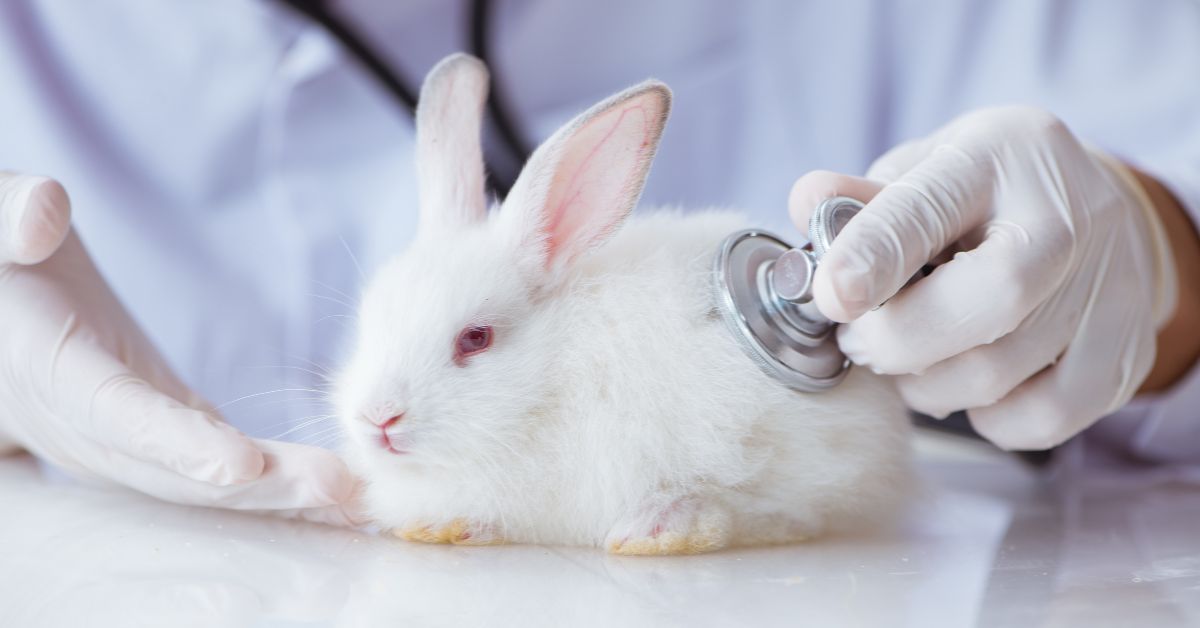
    • Avocado, which seems harmless or even healthy, can cause fatal cardiac damage in birds and rabbits specifically.
    • Knowing which foods are dangerous for your specific pet type, not just “pets” generically to prevent accidental poisoning.
    • If your pet has eaten any of these foods, contact ExoCare Vet Medical Centre immediately rather than waiting for symptoms to appear.

    In Malaysian homes, sharing food is second nature, and pets are usually somewhere near the table. That is exactly where a lot of accidental poisonings begin. Some of the most common human foods are genuinely toxic to pets, and a few are uniquely fatal to birds and rabbits. 

    Most owners assume anything wholesome for people must be safe to pass along, but toxicity isn’t universal. A food that only mildly upsets a dog can kill a bird or rabbit, so a generic list isn’t enough. What matters is the risk for your specific species.

    This guide covers the seven human foods most dangerous to pets, the toxin behind each one, why some are especially deadly to exotic species in Malaysian households, and what to do if your pet has already eaten something it shouldn’t have. It reflects the toxic-ingestion cases our team sees in Subang Jaya, cross-checked against ASPCA and Merck toxicology references.

    Why Species Matters When It Comes to Toxic Food

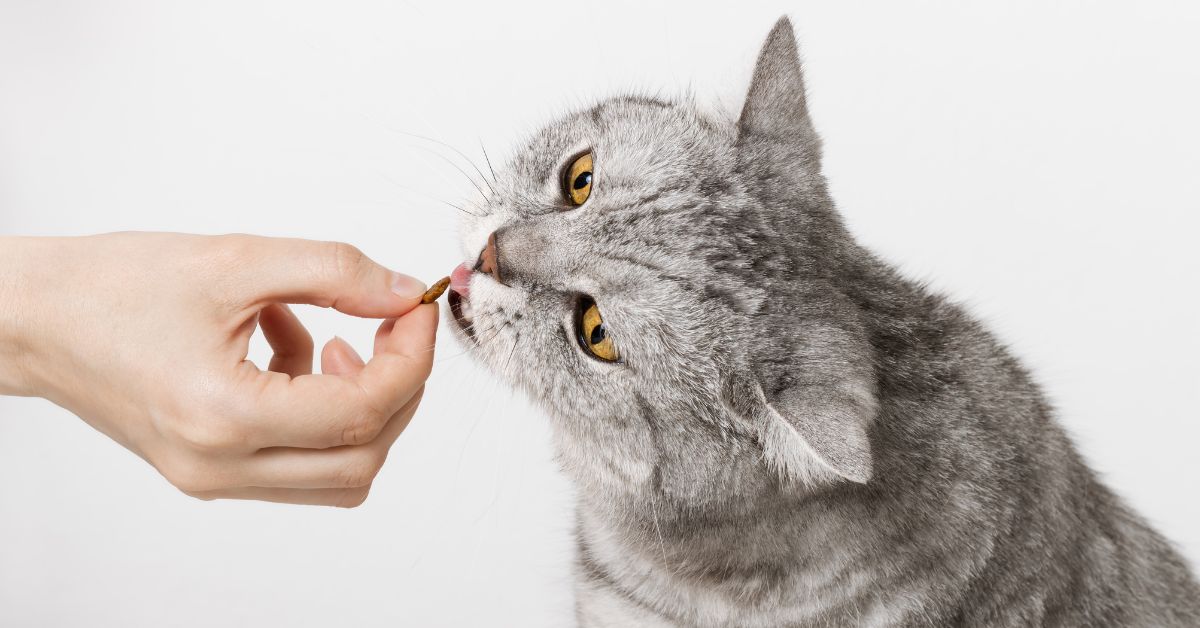
    toxic food for pet


    Toxicity isn’t universal across pets. A food that’s mildly upsetting to a dog, like avocado, can be fatal to a bird or rabbit, so knowing your specific pet’s species risk matters more than knowing a generic “toxic foods” list.

    Toxicity depends on species-specific metabolism. An animal is harmed by a compound when it lacks the enzymes to break it down, or when its heart, liver, or kidneys are especially sensitive to it. A food that causes mild stomach upset in a dog can therefore be fatal in a bird or rabbit. 

    This matters in Malaysia, where many households keep birds, rabbits, and small mammals alongside cats and dogs, and where a treat meant for one pet is easily offered to another.

    Related: Are Dwarf Hamsters Prone to Diabetes? Rodent Health Facts


    7 Human Foods Toxic to Pets

    toxic food for pet

    1. Avocado

    Avocado contains persin in its skin, flesh, and pit. It is primarily dangerous for birds and rabbits, where the main concern is cardiovascular damage, fluid around the heart, and sudden death. Cats and dogs are generally less severely affected, but ingestion should still be avoided, and the large pit is also a choking and obstruction hazard.

    2. Chocolate, Coffee & Caffeine

    These contain methylxanthines (theobromine and caffeine), which can cause vomiting, diarrhoea, abnormal heart rhythm, tremors, seizures, and death. The darker the chocolate or higher the caffeine content, the greater the risk per gram.

    3. Grapes & Raisins

    Tartaric acid in grapes and raisins can trigger acute kidney injury, particularly in dogs, which cannot process this compound effectively. There is no reliably “safe” amount, so any ingestion warrants a call to the vet.

    4. Onion, Garlic & Chives

    These cause gastrointestinal irritation and oxidative damage to red blood cells, leading to haemolytic anaemia. Cats are especially susceptible, though dogs are also at risk. The danger applies whether the vegetable is raw, cooked, powdered, or hidden in leftovers and gravies, which makes shared local dishes a common culprit.

    5. Xylitol

    Found in sugar-free gum, candy, peanut butter, and baked goods, xylitol can cause a rapid, dangerous drop in blood sugar (hypoglycaemia) and liver damage, with symptoms sometimes progressing to seizures within hours.

    6. Macadamia Nuts

    These can cause weakness, tremors, vomiting, and hyperthermia in dogs, typically appearing within 12 hours of ingestion. Signs are usually temporary but distressing and warrant veterinary assessment.

    7. Alcohol & Yeast Dough

    Alcohol is rapidly absorbed and can cause disorientation, coma, or death. Raw yeast dough is doubly dangerous: it expands in the warm stomach and ferments to produce alcohol as a by-product, compounding the risk.

    Risks & Malaysia’s Climate Impact

    Malaysia’s warm climate means fruits like avocado and citrus are available year-round and often shared with pets without a second thought. Many homes also keep birds and rabbits alongside cats and dogs, which raises the chance that a food safe for one species ends up offered to another that can’t tolerate it. Warm indoor temperatures also speed the fermentation of dropped dough or spoiling fruit, adding another route to accidental exposure.

    Why Do These Foods Cause Poisoning?

    1. Species-specific enzyme deficiencies: pets lack the enzymes needed to break down certain compounds (such as tartaric acid in grapes or persin in avocado).

    2. Accidental access: food is left within reach, dropped on the floor, or shared between pets, especially in multi-pet households.

    3. Well-meaning but uninformed sharing: owners assume “natural” or “healthy” foods are safe across species.

    Clinical & Laboratory Diagnosis

    toxic food for pet

    When toxic ingestion is suspected, diagnosis begins with a thorough history (what was eaten, how much, and when), followed by:

    • Full serum biochemistry profiles to assess liver and kidney function, the organs most often targeted.
    • In-house cytology and blood tests to check for anaemia or electrolyte abnormalities.
    • Radiography, if a foreign body or obstruction (such as an avocado pit) is also suspected.

    Early presentation improves treatment options, since some toxins like xylitol cause damage that progresses over just 12 to 24 hours. In a small exotic patient, that window is even shorter.

    Common Care Myths

    Most food-related emergencies trace back to one well-meaning belief: that “natural” or “healthy” human food is automatically safe to share. In fact, toxicity depends entirely on species.

    Myth Reality
    Avocado is a healthy treat for any pet It’s specifically dangerous for birds and rabbits due to cardiac toxicity from persin
    A small amount of chocolate is harmless Even small amounts can be dangerous depending on the pet’s size and the chocolate’s cacao content
    Sugar-free treats are a safer alternative Many sugar-free products contain xylitol, which is more dangerous than sugar itself
    Table scraps are fine in moderation Onion, garlic, and grapes are toxic in small amounts regardless of “moderation”

    Our Experience at ExoCare Vet Medical Centre (Subang Jaya)

    In our clinical experience, toxic-ingestion cases often arrive later than ideal, because owners wait to see whether symptoms develop before seeking care. The cases that worry us most are not the dogs that ate chocolate, most owners know that risk but the rabbit or bird given a piece of avocado as a “healthy” treat, where the owner had no idea it was dangerous. 

    According to ExoCare’s medical protocols, suspected toxin cases are treated as time-sensitive, with full serum biochemistry profiles and in-house cytology used immediately to assess organ involvement, so treatment isn’t delayed while samples are sent elsewhere.

    We advise owners with several pet species at home; birds, rabbits, cats, and dogs to store all human food well out of reach, since what’s safe for one species in the household may be lethal for another sharing the same space.

    “The case that worries us most isn’t the dog that ate chocolate. Owners are generally aware of that risk. It’s the rabbit or bird that gets a piece of avocado as a ‘healthy’ treat. The toxicity is real, fast-acting, and not something most owners know to watch for.” Dr. Asma Farihah, Lead Veterinarian & Co-Founder, ExoCare Vet Medical Centre

    When to See a Vet? 

    toxic food for pet

    • Vomiting, diarrhoea, or lethargy. Early signs the toxin is affecting the gut or system.
    • Tremors, seizures, or incoordination. Neurological signs mean the toxin is reaching the brain or nervous system, a critical emergency.
    • Rapid breathing or abnormal heart rhythm. Cardiac and respiratory effects, as with chocolate or avocado, can turn fatal without immediate care.
    • Loss of appetite following known ingestion. Refusing food after eating something toxic is an early warning worth acting on straight away.

    Bring the packaging or a sample of what was eaten if possible, along with the approximate amount and time of ingestion.

    Vet Emergency Care at ExoCare

    ExoCare Vet Medical Centre provides emergency and critical care for suspected poisoning in cats, dogs, and exotic pets, but only during our operating hours. This is not a 24-hour service. 

    Poisoning is time-sensitive, so within opening hours our team treats it as urgent, using in-house biochemistry and cytology to assess organ involvement immediately and start supportive care without delay. Call us on the way so we can prepare. Outside our hours, contact your nearest 24-hour emergency veterinary hospital first, then follow up with us.

    ExoCare Veterinary Medical Centre

    Address: G3, Lot 15, Jalan SS 16/1, SS 16, 47500 Subang Jaya, Selangor, Malaysia

    Phone: +60 12-345 6789

    Hours: Monday and Wednesday to Sunday, 11:00 AM to 7:00 PM (closed Tuesdays)

    Email: info@exocarevet.com

    ExoCare also runs additional clinics across the Klang Valley, including USJ, Puchong, Kelana Jaya, Bandar Sunway, Taman Paramount, Bukit Kiara, and Damansara.

    FAQ  

    1. What common foods are toxic to pets?
    Several everyday foods are dangerous across cats, dogs, and exotics. The most serious for dogs and cats include chocolate (theobromine), grapes and raisins (kidney failure), onions, garlic, chives and leeks (damage red blood cells), xylitol (sugar-free gum and sweets, causes a sharp blood-sugar crash), macadamia nuts, alcohol, caffeine, and raw bread dough.

    For rabbits, guinea pigs, and other small herbivores, avoid chocolate, avocado, iceberg lettuce in excess, and any meat or dairy. For birds, avocado (persin), chocolate, caffeine, salt, and fruit seeds/pits are especially deadly. Amount and body size matter, a dose that’s harmless to a large dog can be fatal to a hamster or a budgie.

    2. My pet ate something toxic, what should I do right now?
    Act fast and do not wait for symptoms, since many toxins (like xylitol or onion) act with a delay. Remove any remaining food, note what and how much was eaten and the time, and call a vet immediately before attempting anything at home, do NOT try to induce vomiting unless a vet instructs you, as it can cause more harm with certain substances or in birds and small mammals.

    Bring the packaging or a photo of the item. Because poisoning is time-sensitive, phone ahead so the clinic can prepare. Emergency consultation fees in Malaysia typically run RM100–RM250 and are non-waivable at check-in, on top of diagnostics and treatment.

    3. How is food poisoning treated at the vet, and what does it cost?
    Treatment depends on the toxin and how quickly you arrive. It may involve inducing vomiting, activated charcoal, IV fluids, blood tests to check liver and kidney function, and hospitalisation for monitoring, often a 24–48 hour stay for serious cases like grape, xylitol, or onion ingestion.

    Diagnostics such as bloodwork plus imaging commonly run RM150–RM500 and are quoted before treatment; consultation and diagnostic fees are generally non-waivable regardless of the outcome. Early treatment dramatically improves the prognosis and lowers cost, so never “wait and see.”

    Conclusion

    Not every food that’s safe for one pet is safe for another, and for birds and rabbits especially, common “healthy” foods like avocado can be fatal. Knowing which items are toxic for your specific pet, and acting before symptoms appear, is what keeps a shared snack from becoming an emergency.

    If your pet has eaten anything questionable, don’t wait for symptoms. Check your pet here and book an appointment with ExoCare Vet Medical Centre right away for guidance.

    References

    1. U.S. Food & Drug Administration (FDA), Potentially Dangerous Items for Your Pet (edible dangers: chocolate, xylitol, grapes/raisins, onions, garlic, macadamia nuts, etc.), Content current as of 28 February 2023. Accessed at: https://www.fda.gov/animal-veterinary/animal-health-literacy/potentially-dangerous-items-your-pet

    2. U.S. Food & Drug Administration (FDA), Xylitol and Dogs, A Deadly Combination, Content current as of 9 July 2019. Accessed at: https://www.fda.gov/animal-veterinary/animal-health-literacy/xylitol-and-dogs-deadly-combination

    3. ASPCA Animal Poison Control Center (APCC), People Foods to Avoid Feeding Your Pets. Accessed at: https://www.aspca.org/pet-care/aspca-poison-control/people-foods-avoid-feeding-your-pets

    4. Pet Poison Helpline, Poisons (searchable toxin database — foods, plants, medications). Accessed at: https://www.petpoisonhelpline.com/poisons/

    5. American Veterinary Medical Association (AVMA), Household Hazards. Accessed at: https://www.avma.org/resources-tools/pet-owners/petcare/household-hazards


    This article has been medically reviewed based on clinical protocols by:

    Dr. Asma Fariha (MVC No. 3362).

    Senior Veterinary Specialist, ExoCare Vet Medical Centre, Subang Jaya.

    ExoCare is a referral veterinary medical center specializing in the medical, surgical, and critical care of small animals, exotic pets, avian species, reptiles, rodents, and amphibians in Malaysia.

    toxic food for pet

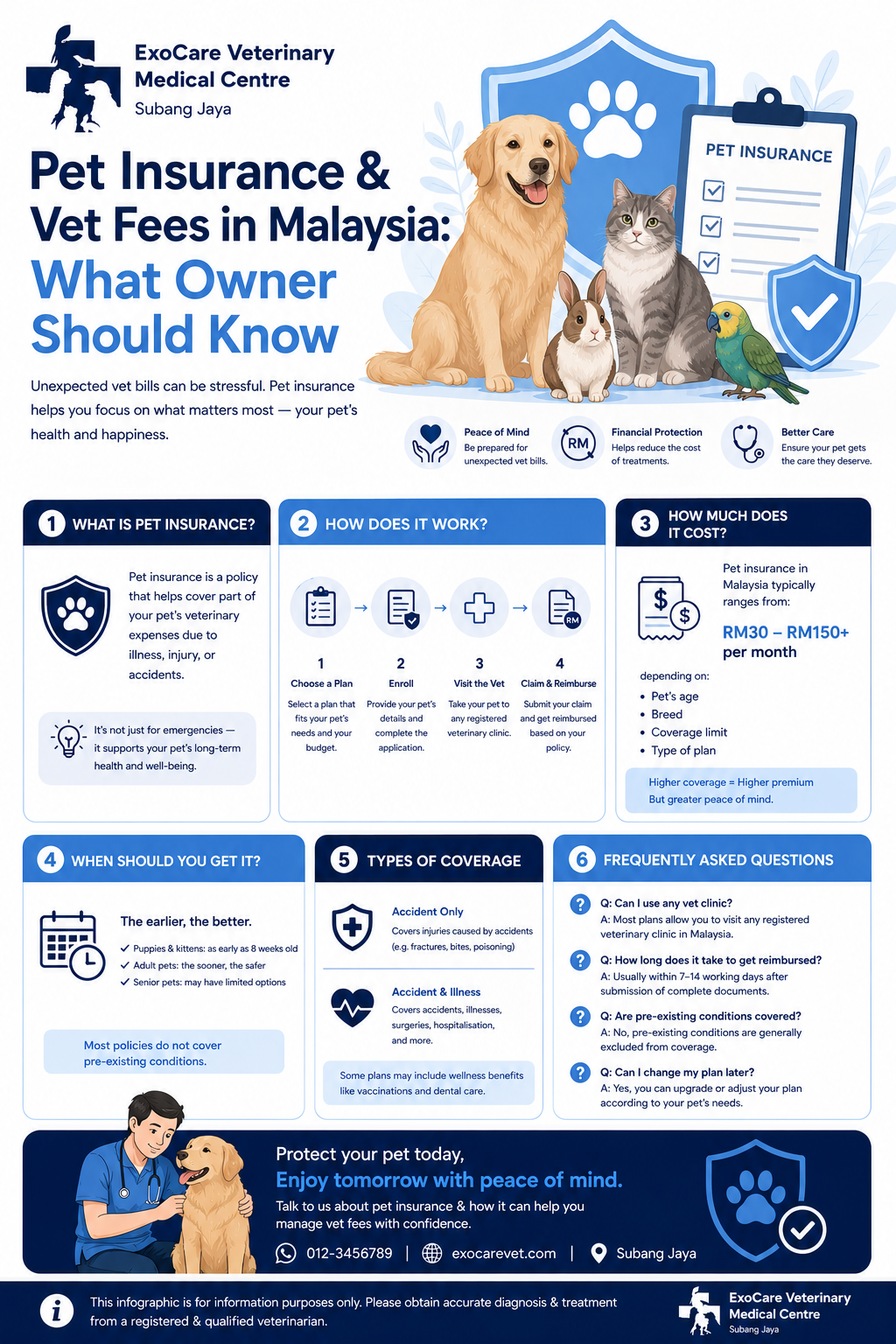
  • Pet Insurance & Vet Fees in Malaysia: What Owner Should Know

    Pet Insurance & Vet Fees in Malaysia: What Owner Should Know

    • Pet insurance in Malaysia reimburses vet bills for illness, injury, and surgery on a pay-and-claim basis.
    • A single emergency such as a urinary blockage, GDV, or fracture can run into the thousands of ringgit.
    • Many owners are caught off guard not by the vet bill itself, but by not understanding which fees are fixed regardless of outcome & what their pet insurance will and won’t reimburse.
    • Understanding fee structure and policy terms upfront, paired with insurance or a dedicated emergency fund, removes the guesswork when your pet needs urgent care.
    • Speak to ExoCare Vet Medical Centre about cost transparency before your pet’s next visit.

    For many Malaysian pet owners, the most stressful part of a vet visit isn’t the diagnosis, it’s the bill. Pet insurance is still uncommon here, so most owners pay out of pocket and a big bill lands all at once. 

    It doesn’t help that pet insurance is widely misunderstood: owners assume it covers everything, that a “normal” diagnostic result means the fee should be waived, or that private and government clinics should charge the same. None of those assumptions hold up in practice, and believing them is what turns a manageable expense into a financial shock.

    This guide breaks down what pet insurance in Malaysia actually covers, how veterinary fee structures work, why certain diagnostic charges are non-waivable regardless of outcome, and how to plan through insurance or a dedicated emergency fund so an urgent case never catches you financially unprepared.

    Note on scope: this is general educational information, not financial or insurance advice. Premium ranges below are indicative for 2026 and vary by insurer, pet, and policy, always confirm current terms directly.

    What Pet Insurance Actually Covers

    pet insurance

    Pet insurance in Malaysia reimburses a percentage of your vet bill after you pay upfront, while diagnostic and treatment fees follow a fixed, non-waivable structure regardless of outcome. Understanding both is what prevents financial shock during an emergency.

    Pet insurance in Malaysia is reimbursement-based: you pay the vet bill upfront, then submit a claim. Most policies cover consultation fees, diagnostic tests (blood work, x-ray, ultrasound), prescribed medication, surgery, and hospitalisation. Routine preventive care such as vaccination, deworming, and sterilisation is typically excluded, as are pre-existing conditions.

    Annual premiums generally range from roughly RM300 to RM530 for cats, scaling higher for dogs and older pets (indicative 2026 figures, verify with your insurer). Policies commonly reimburse at 50%, 70%, or 90% of the approved bill up to an annual cap. 

    Most also carry two figures worth checking before you buy: an excess (a fixed amount you pay per claim) and a co-payment (a percentage you keep paying even after the excess is met). Both reduce what you actually receive back.

    Related: Expert for Exotic & Small Animals Vet in Klang Valley (2026)

    Risks & Malaysia’s Climate Impact


    pet insurance

    • Heatstroke and dehydration in dogs left outdoors or in poorly ventilated spaces, requiring emergency IV fluid therapy and monitoring.
    • Skin and ear infections that flare faster in humid conditions, often needing repeat visits and repeat medication if undertreated.
    • Tick-borne and mosquito-borne disease (such as tick fever or heartworm), which can require extended hospitalisation and follow-up bloodwork if caught late.

    Each of these can escalate from a RM50 consultation into a multi-day hospitalisation bill if delayed. That is the kind of open-ended cost that insurance or an emergency fund exists to absorb.


    Why Vet Bills Add Up Quickly


    pet insurance

    1. Consultation fee covers the physical exam and clinical assessment only.
    2. Diagnostics (bloodwork, x-ray, ultrasound) are billed separately and reflect the equipment, technician time, and specialist interpretation required.
    3. Treatment and medication are added once a diagnosis is reached.
    4. Hospitalisation, if needed, is charged per day and adds up quickly over a multi-day stay.

    A single emergency visit involving diagnostics and an overnight stay can realistically reach RM1,000 to RM5,000, even before surgery is factored in. Knowing the fee structure in advance matters as much as the insurance itself.

    How Clinical & Diagnostic Costs Are Determined


    1. Equipment overhead

    In-house digital radiography, ultrasound, and laboratory analysers represent significant capital and maintenance cost.

    2. Specialist interpretation time

    A radiograph or blood panel requires trained clinical judgement, not just the raw test.

    3. Sample handling

    Some tests require correct collection and processing regardless of the eventual diagnosis.

    This is why diagnostic charges are billed once the test is performed, whatever the result. The clinical work has already taken place, and a “normal” result is still a clinically valuable answer rather than proof the test was unnecessary.

    Common Pet Insurance & Vet Fee Myths

    Cost confusion at the vet usually comes from a handful of persistent myths rather than hidden charges.

    Myth Reality
    Pet insurance covers all vet visits Routine and preventive care (vaccines, deworming, sterilisation) is usually excluded from coverage
    Diagnostic fees can be waived if nothing is found Diagnostic charges reflect the work performed, not the outcome, and they apply regardless of result
    Government clinic pricing applies everywhere Private referral clinics offer advanced diagnostics and emergency care unavailable at government clinics, reflected in their fee structure
    You only need insurance for “high-risk” pets Any pet can have an accident or sudden illness, so cost risk isn’t limited to specific breeds or ages

    Our Experience at ExoCare Vet Medical Centre (Subang Jaya)

    In our clinical experience, the most stressful moment for owners is rarely the diagnosis itself, it’s not knowing what the bill will look like. We routinely see owners delay an emergency visit for a day or two out of cost anxiety, only for a manageable problem to become a multi-day hospitalisation. 

    According to ExoCare’s medical protocols, every patient requiring anaesthesia receives continuous cardiac monitoring and precision dosing regardless of species or size, and soft-tissue surgery follows fixed clinical protocols rather than being adjusted to fit a budget.

    This applies whether you own a cat, a dog, or an exotic pet like a rabbit, parrot, or reptile. Fee structure and insurance considerations follow the same principles across species, though diagnostic costs can vary by the equipment a specific patient requires. 

    We tell new clients that a baseline health screening at the first visit before anything is wrong, helps establish what’s normal for your pet, which makes future diagnostics faster, more targeted, and often cheaper.

    “Owners in Malaysia underestimate vet costs the same way they underestimate climate-driven illness. A blood panel and an x-ray together can already pass RM300, and that’s before any treatment begins. Knowing your clinic’s fee structure, and having pet insurance or savings in place, is what determines whether an emergency is manageable or overwhelming.” — Dr. Asma Farihah, Lead Veterinarian & Co-Founder, ExoCare Vet Medical Centre

    When to See a Vet? 

    pet insurance


    • Sudden collapse, repeated vomiting, or inability to urinate or defecate. These point to potentially fatal problems such as a urinary blockage or systemic shock.
    • Visible trauma, bleeding, or suspected fracture. Open wounds and fractures need prompt stabilisation to prevent infection and complications that make treatment far more expensive.
    • Laboured or open-mouth breathing. Breathing difficulty is always an emergency, as it can deteriorate into full respiratory failure within hours.
    • Bloated, painful abdomen (possible GDV in dogs). Gastric dilatation-volvulus is rapidly fatal without emergency surgery, so a swollen, tender belly should never wait.

    Bring previous medical records, your pet insurance policy details (if applicable), and a secure carrier or leash.

    Vet Emergency Care at ExoCare

    ExoCare Vet Medical Centre provides emergency and critical care for cats, dogs, and exotic pets, but only during our operating hours. This is not a 24-hour service. Within opening hours our team can carry out rapid stabilisation, IV fluid therapy, oxygen support, and hospitalisation with monitoring, using the same in-house diagnostics available for routine cases. If your pet is in distress during the day, call us on the way so the team can prepare before you arrive. Outside our hours, contact your nearest 24-hour emergency veterinary hospital first, then follow up with us.

    ExoCare Veterinary Medical Centre

    Address: G3, Lot 15, Jalan SS 16/1, SS 16, 47500 Subang Jaya, Selangor, Malaysia

    Phone: +60 12-345 6789

    Hours: Monday and Wednesday to Sunday, 11:00 AM to 7:00 PM (closed Tuesdays)

    Email: info@exocarevet.com

    ExoCare also runs additional clinics across the Klang Valley, including USJ, Puchong, Kelana Jaya, Bandar Sunway, Taman Paramount, Bukit Kiara, and Damansara.

    FAQ 

    1. Does pet insurance in Malaysia cover exotic and small animals?
    Most pet insurance plans in Malaysia are built for cats and dogs, and very few extend coverage to exotic or small animals such as rabbits, reptiles, birds, ferrets, or sugar gliders. Local underwriters typically limit eligibility by species, age, and pre-existing conditions, so exotics are often excluded or require a special quote.

    Before you buy, confirm in writing whether your specific species is covered. A policy that only names “small mammals” may still reject a reptile or avian claim. Note that consultation and diagnostic fees at the clinic are non-waivable and payable upfront regardless of insurance; most Malaysian pet plans work on a reimbursement basis, meaning you pay the clinic first and claim back later.

    2. What does pet insurance actually pay for, and what’s excluded?
    Malaysian pet plans generally cover accidents, illness, surgery, and hospitalisation up to an annual limit (commonly RM1,500–RM9,000 depending on tier), often with a co-payment (e.g. you bear 10–20%) and an excess/deductible per claim. Routine and preventive care like vaccinations, deworming, grooming, spaying/neutering, and wellness exams is usually excluded unless you add a wellness rider.

    Pre-existing conditions, congenital issues, and husbandry-related illness (very common in exotics kept in the wrong temperature or diet) are frequent grounds for rejected claims. Because exotic diagnostics (bloodwork plus imaging) can run RM150–RM500 and are quoted before treatment, check whether your plan reimburses diagnostics or only treatment.

    3. How do I claim, and how long does reimbursement take?
    Most Malaysian pet insurers use a pay-first, claim-later model: you settle the clinic bill in full, then submit the itemised invoice, medical records, and a claim form (usually within 14–30 days of treatment). Keep every receipt, including the non-waivable consultation and diagnostic fees, since claims are assessed line by line.

    Reimbursement typically takes around 14–30 days after a complete submission, and incomplete documentation is the most common cause of delay. For faster processing, ask your vet for a detailed diagnosis and treatment breakdown at the time of visit.

    Conclusion

    Vet costs in Malaysia feel unpredictable mostly because owners don’t learn the fee structure until they’re already in crisis, not because clinics are inconsistent. Whether through pet insurance or a dedicated savings buffer, planning ahead turns a financial shock into a manageable expense.

    Don’t wait for an emergency to find out what care costs. Check your pet here and book an appointment with ExoCare Vet Medical Centre to understand what to expect before your next visit.

    Disclaimer: This article is for informational purposes only and does not constitute financial or insurance advice. Always review your specific policy’s terms and conditions, and consult a licensed veterinarian for medical decisions about your pet.

    References

    1. National Association of Insurance Commissioners (NAIC), A Regulator’s Guide to Pet Insurance (White Paper). Accessed at: https://content.naic.org/sites/default/files/publication-pin-op-pet-insurance.pdf

    2. National Association of Insurance Commissioners (NAIC), Insurance Topics: Pet Insurance. Accessed at: https://content.naic.org/insurance-topics/pet-insurance

    3. Association of British Insurers (ABI), Insurance payouts for ‘pawly’ pets top £1 billion for third year in a row, Published 24 May 2025 (last updated 4 June 2025). Accessed at: https://www.abi.org.uk/news/news-articles/2025/5/insurance-payouts-for-pawly-pets-top-1-billion-for-third-year-in-a-row/

    4. Association of British Insurers (ABI), Pet Insurance Guide — Choosing the Right Insurance. Accessed at: https://www.abi.org.uk/products-and-issues/choosing-the-right-insurance/pet-insurance-guide/

    5. Bank Negara Malaysia (BNM), Insurance & Takaful. Accessed at: https://www.bnm.gov.my/insurance-takaful

    This article has been medically reviewed based on clinical protocols by:

    Dr. Asma Fariha (MVC No. 3362).

    Senior Veterinary Specialist, ExoCare Vet Medical Centre, Subang Jaya.

    ExoCare is a referral veterinary medical center specializing in the medical, surgical, and critical care of small animals, exotic pets, avian species, reptiles, rodents, and amphibians in Malaysia.


    pet insurance

  • 8 Pet Emergency Symptoms You Cannot Ignore (Expert Review)

    8 Pet Emergency Symptoms You Cannot Ignore (Expert Review)

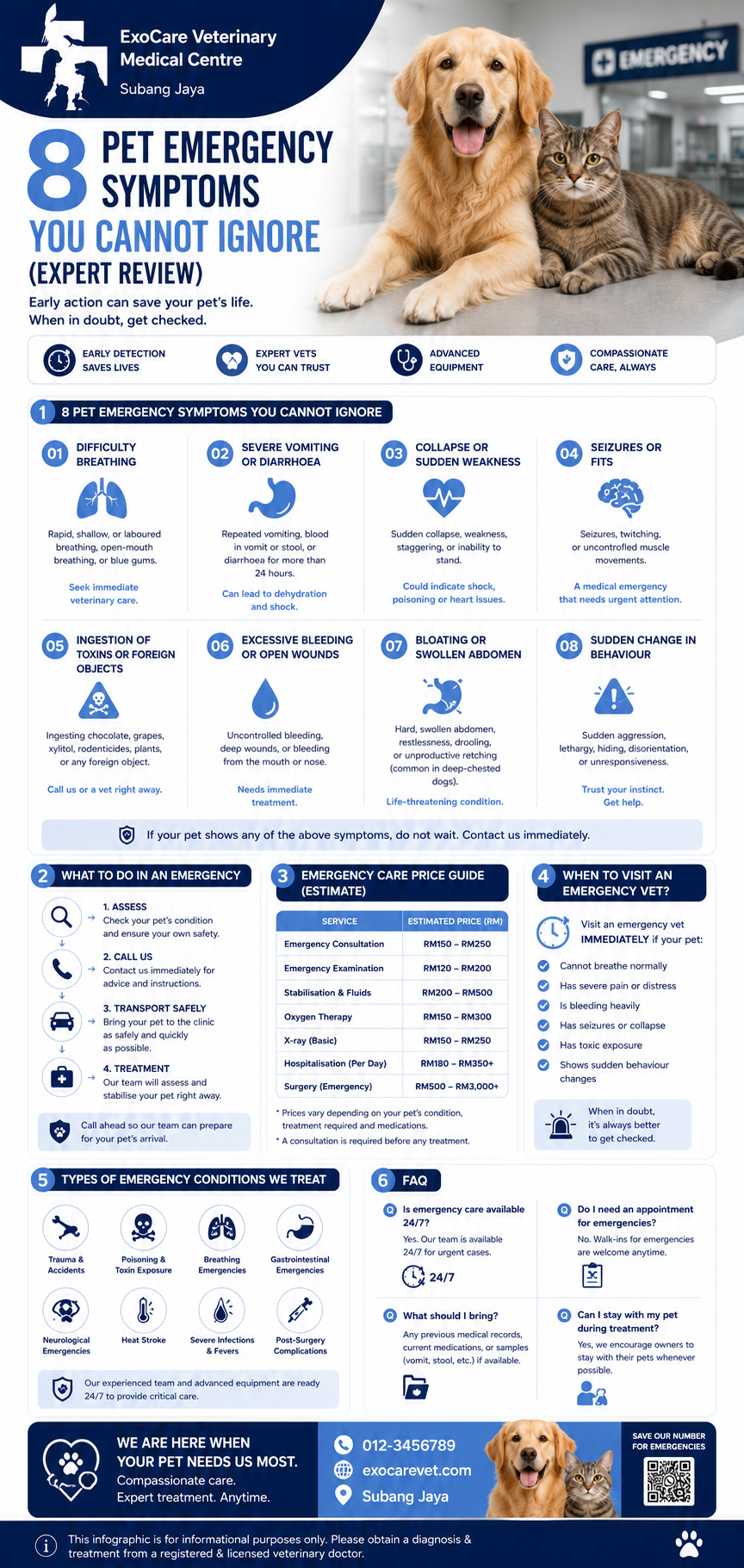
    “Is this bad enough to drive to the vet now, or am I panicking?” Almost every owner has faced that question, usually late at night, hoping the issue will resolve by morning.

    When it comes to critical pet symptoms, waiting is often the dangerous choice. Animals natural instincts drive them to hide weakness and pain, meaning by the time visible pet symptoms appear, the animal is frequently already in crisis. Below is an expert review of the eight emergency pet symptoms that require immediate veterinary triage.

    • Trouble breathing or blue/grey gums, a bloated hard belly with unproductive retching, a male cat straining with no urine, seizures, sudden collapse, suspected poisoning, uncontrolled bleeding or major trauma, and pale/white gums.
    • Bloat and a blocked bladder can kill within hours. There is no version where waiting helps.
    • Cats and exotics hide illness by instinct, so an obvious symptom often means the animal is already in crisis.
    • Save our number; if you see any of these during our hours, phone first, then drive.

    Why Waiting on Pet Symptoms Can Be Fatal


    pet symptoms

    Animals evolved to mask weakness to protect themselves from predators in the wild. This instinct is exceptionally strong in cats and exotic pets. Furthermore, Malaysia’s year-round heat accelerates physical decompensation. A pet that appears “a little off” may already be close to systemic failure.

    8 Pet Emergency Symptoms

    pet symptoms


    1. Breathing Distress or Cyanotic (Blue/Grey) Gums

    Laboured breathing, open-mouth breathing in cats, or dark/purple gums mean oxygen is failing to reach tissues. Healthy cats do not pant; open-mouth breathing in felines is almost always a life-threatening emergency.

    2. Hard, Swollen Belly with Unproductive Retching

    Restlessness, drooling, and unproductive dry-heaving in deep-chested dogs strongly indicate bloat (GDV). The stomach fills with gas and twists, cutting off its own blood supply. Untreated, mortality approaches 100% within hours.

    3. Male Cat Straining at the Litter Box

    A tomcat making frequent trips to the tray, crying and passing little to no urine is likely blocked. This leads to rapid toxic buildup (hyperkalaemia) and cardiac arrest. It is often mistaken for constipation, it is not constipation.

    4. Seizures and Neurological Episodes

    Uncontrolled shaking, paddling limbs, or sudden loss of consciousness require immediate care. Seizures lasting longer than 5 minutes or occurring in clusters can cause severe brain damage and overheating.

    5. Sudden Collapse or Weakness

    An animal that suddenly drops or cannot stand may be experiencing internal haemorrhage, severe hypoglycemia, or heart failure. Even if the pet temporarily recovers, immediate diagnostic evaluation is vital.

    6. Poisoning and Toxin Ingestion

    Ingestion of toxic foods (chocolate, grapes, onions), lilies (fatal to cats), rodenticide, or xylitol demands treatment before heavy pet symptoms develop. Do not induce vomiting yourself, as corrosive toxins can damage the oesophagus.

    7. Uncontrolled Bleeding or Physical Trauma

    Wounds that continue to bleed after several minutes of firm pressure, or injuries sustained from vehicle accidents, require urgent evaluation. Internal organ damage is often hidden behind normal outward behavior initially.

    8. Pale or White Gums

    Pale gums indicate severe anaemia, circulatory shock, or internal bleeding. In Malaysia, tick-borne diseases (Ehrlichiosis and Babesiosis) are major culprits. In rabbits and rodents, a sudden loss of appetite or lack of droppings signals gut stasis, a rapidly progressing emergency in prey animals.

    Factors Affecting Pet Symptoms in Malaysia

    1. Year-Round Heatstroke Risk: High ambient temperatures mean heatstroke (excessive panting, red gums, collapse) can occur rapidly in non-air-conditioned spaces or parked vehicles.
    2. Tick-Borne Pathogens: Ehrlichia and Babesia are widespread in the region. Pale gums combined with lethargy are high-risk indicators of tick-borne infection.

    Myth vs. Reality: Common Misconceptions

    pet symptoms

    Common Owner Assumption Clinical Reality


    “The retching is just a hairball.” Unproductive dry-heaving with a distended belly can be fatal bloat.
    “He seems fine after the fall.” Internal bleeding and organ trauma can remain silent for hours before sudden collapse.
    “Pale gums just mean he’s tired.” Pale gums signal severe anaemia or shock, requiring urgent bloodwork.
    “A straining cat just needs extra fibre.” In male cats, straining without urine flow is an obstructive emergency.


    Immediate Steps When Urgent Pet Symptoms Appear

    1. Call Ahead: Contact your clinic so the emergency team can prepare oxygen, fluids, or surgical equipment before you arrive.
    2. Transport Safely: Keep the pet warm and confined. Never muzzle an animal that is vomiting or struggling to breathe.
    3. Apply Direct Pressure: Use a clean cloth on bleeding wounds.
    4. Bring Documentation: Carry past medical records, recent bloodwork, or packaging of any suspected ingested toxin.

    Also Read: Emergency Vet in Subang Jaya: What to Do During & After Hours

    Frequently Asked Questions (FAQ)

    How do I know if my pet’s symptoms are a true emergency?

    If you observe any of the eight red-flag pet symptoms listed above, treat it as an immediate emergency. When in doubt, telephone a local veterinary hospital directly rather than spending critical time researching online.

    Should I wait to see if minor symptoms improve overnight?

    In cats and exotic pets, subtle signs like sudden quietness or skipping two consecutive meals often indicate an advanced stage of illness due to their natural masking instincts. Early intervention offers the highest chance of full recovery.

    My exotic pet seems “a bit off.” Is that urgent?

    Often, yes. Because these species hide illness, small changes, eating less, fewer droppings, can already mean serious disease. Call a vet who works with exotics; their safe treatment window is short.

    References

    This article has been medically reviewed based on clinical protocols by:

    Dr. Asma Fariha (MVC No. 3362).

    Senior Veterinary Specialist, ExoCare Vet Medical Centre, Subang Jaya.

    ExoCare is a referral veterinary medical center specializing in the medical, surgical, and critical care of small animals, exotic pets, avian species, reptiles, rodents, and amphibians in Malaysia.
    pet symptoms

  • What Happens During a Pet Blood Donation? Step-by-Step

    What Happens During a Pet Blood Donation? Step-by-Step

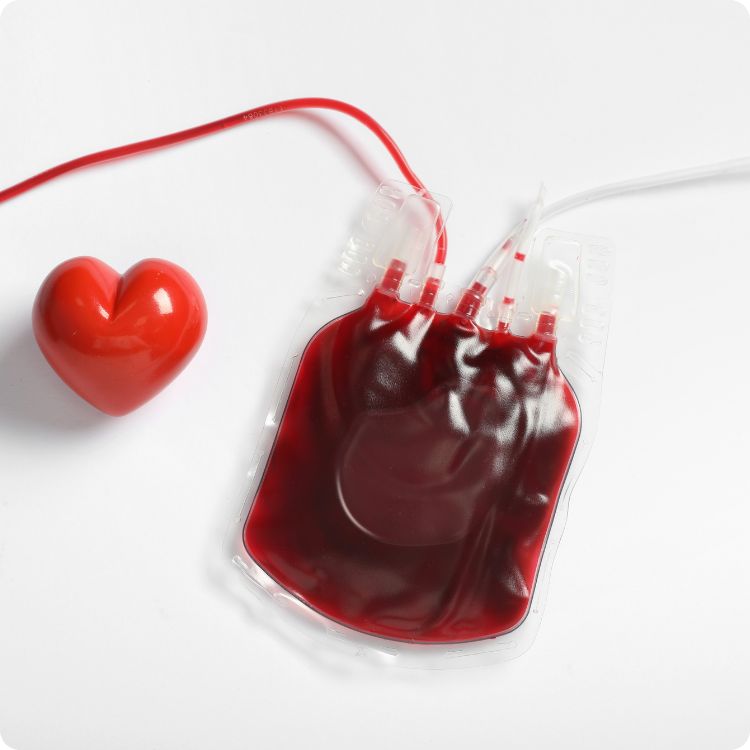
    Most owners are surprised to learn that a local pet blood bank even exists. Their immediate reaction is often worry: “Won’t taking blood harm my healthy dog or cat?”

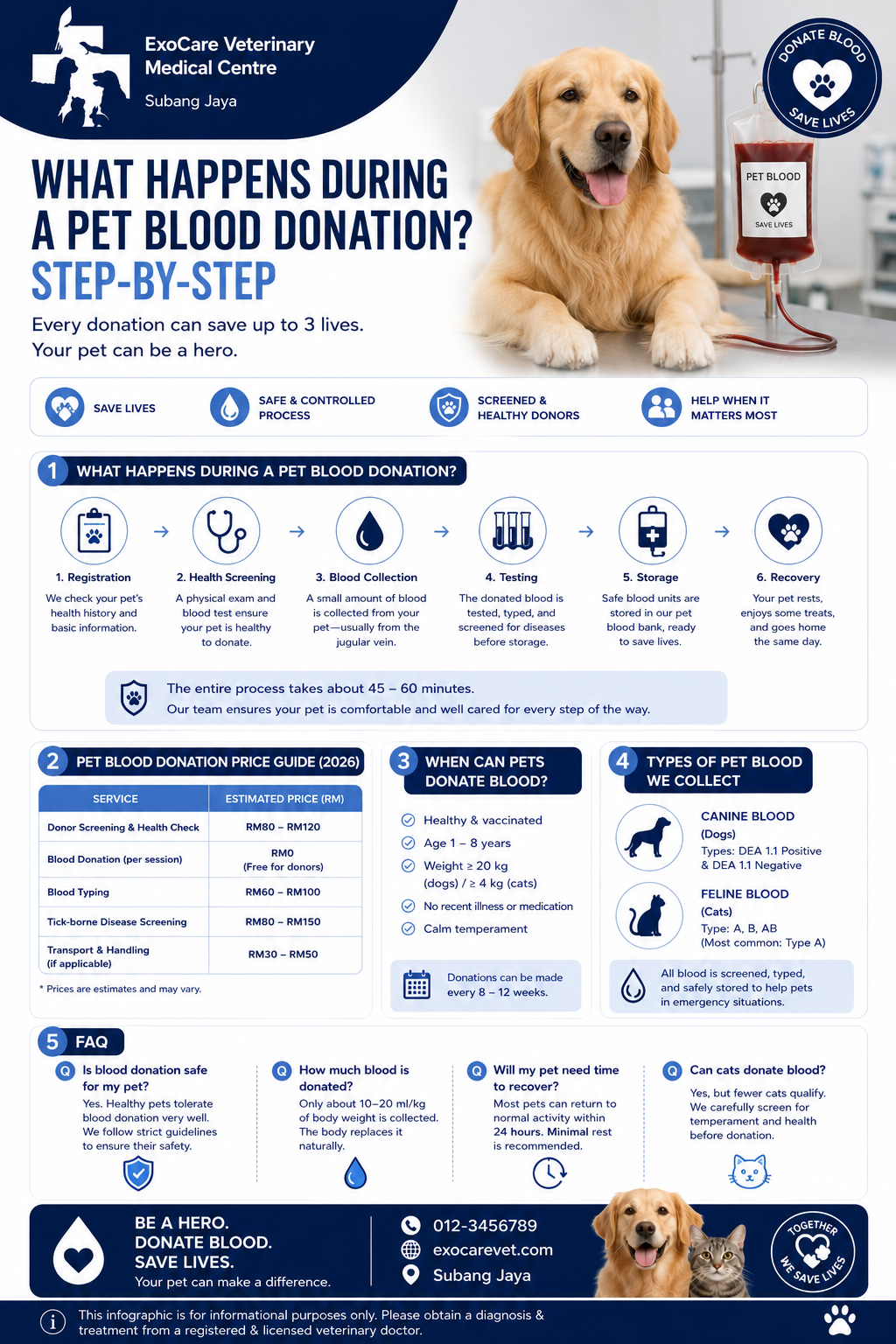
    It is a completely natural concern. However, this misconception causes donor registers at any pet blood bank to stay dangerously low, leaving emergency clinics struggling when a critical patient urgently needs a life-saving transfusion. Below is a clear, step-by-step breakdown of how a professional pet blood bank operates and what actually happens during a pet blood donation.

    How a Pet Blood Bank Works

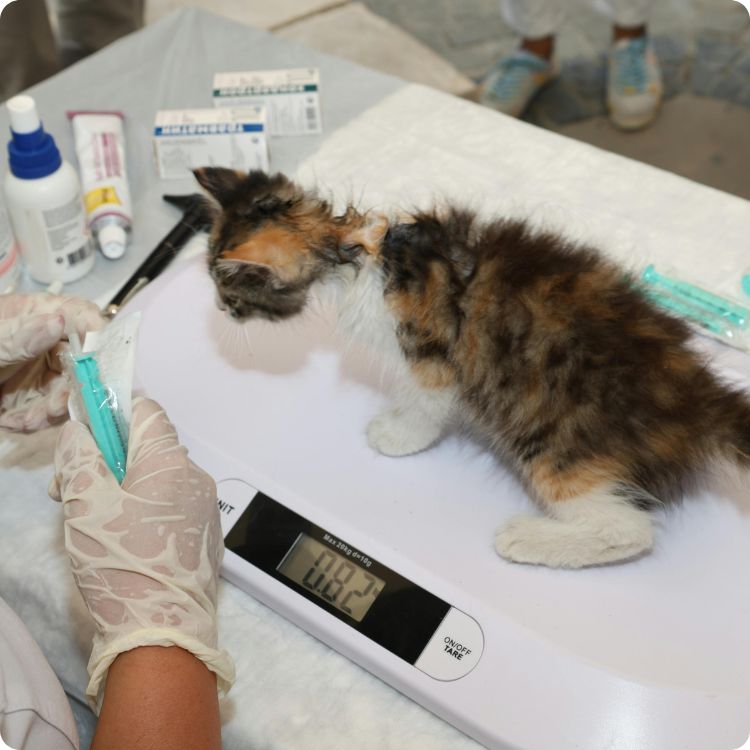
    pet blood bank

    • What a Pet Blood Bank Does: Screens, blood-types, collects and stores red blood cells and plasma from healthy dogs and cats for trauma, poisoning, or severe anaemia cases.

    • Donating blood takes only a safe fraction of the pet’s blood volume (≈10–20%), which the body naturally replenishes within days.

    • Most calm donors remain fully awake and relaxed throughout the collection process.

    • In Malaysia’s climate, tick-borne diseases like Ehrlichiosis cause severe anaemia, making a well-stocked pet blood bank a vital lifeline in the Klang Valley.

    Why Local Pet Blood Bank Supplies Are Critical in Malaysia


    Our warm, humid climate sustains a heavy burden of tick-borne pathogens, specifically Ehrlichiosis and Babesiosis. These infections aggressively destroy red blood cells, causing acute, life-threatening anaemia that can only be corrected through a transfusion.

    Because blood cannot be manufactured artificially and has a limited shelf life, a pet blood bank relies entirely on living donors. Having matched blood ready at a local pet blood bank means a critically ill animal is stabilized immediately rather than waiting hours for a donor, a delay that is often fatal.

    Who Qualifies as a Donor for a Pet Blood Bank?


    pet blood bank

    Before entering the pet blood bank register, donors must meet strict safety criteria to protect both the donor and the recipient:

    • Body Weight & Age: Dogs must weigh 25 kg and cats 4.5 kg. Donors should be young to middle-aged adults so the volume collected remains a safe fraction of total blood.

    • Health & Temperament: Must be in good health, current on vaccinations/preventative care, free of infectious diseases, and calm enough to donate without heavy sedation.

    • Exclusions: Pets receiving long-term medications, animals with a history of receiving blood transfusions, or pregnant pets are generally ineligible.

    Step-by-Step: What Happens During a Pet Blood Donation

    pet blood bank


    When you bring your dog or cat to a pet blood bank facility, the process is structured to ensure maximum comfort and safety:

    Step 1: Health Registration & History Check

    The clinical team confirms your pet’s identity, vaccination records, preventive treatment history, and verifies that the required recovery interval since their last donation has passed.

    Step 2: Physical Exam & Pre-Donation Screening

    A veterinarian performs a hands-on examination (temperature, pulse, respiration, weight) and draws a tiny sample for a Complete Blood Count (CBC). This guarantees the pet is 100% fit to donate that day.

    Step 3: Blood Typing & Cross-Matching

    The donor’s blood group is identified:

    • Dogs: Typed primarily for DEA 1.1 (DEA 1.1-negative dogs act as universal donors).

    • Cats: Typed for A, B, or AB (cats have no universal donor, making accurate typing a strict clinical requirement).

    Step 4: Sterile Collection Process

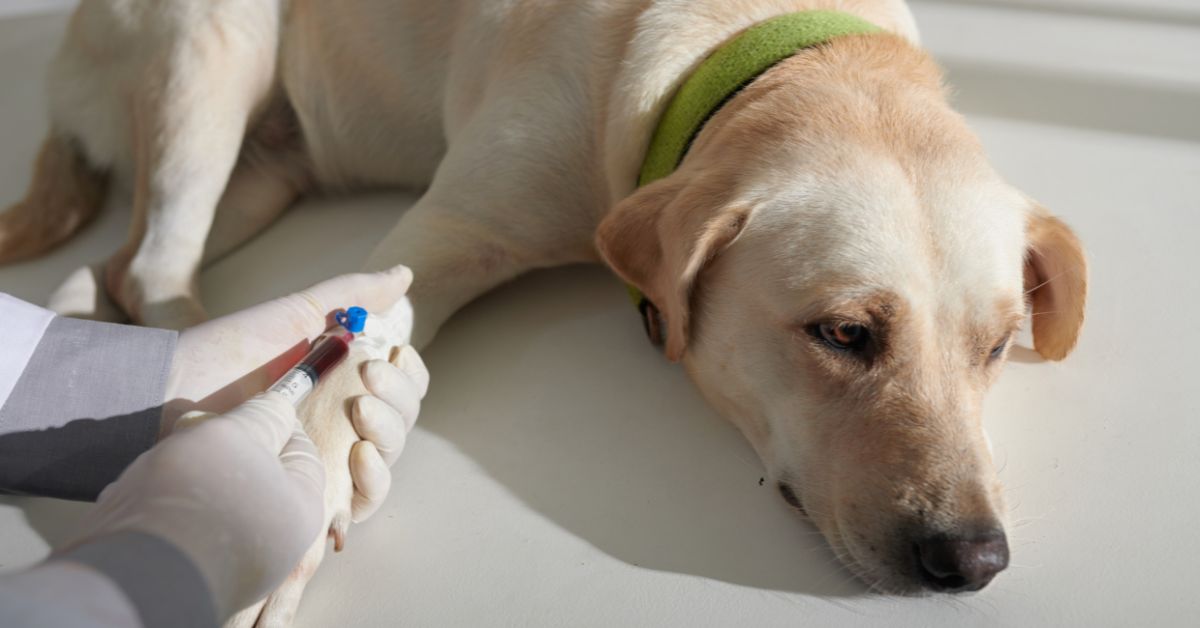
    Your pet is settled comfortably on a cushioned table. A small patch of fur over the jugular vein is gently clipped and sanitized to sterile surgical standards. Blood is drawn smoothly over a few minutes while vital signs and stress levels are continuously monitored.

    Step 5: Recovery, Fluid Hydration & Rewards

    Once collection is complete, the donor rests for a brief period, receives hydration fluids or treats, and goes home the same day. Owners are advised to keep activities calm for the next 24 hours.

    Also Read: Emergency Vet in Subang Jaya: What to Do During & After Hours

    Common Pet Blood Bank Myths vs. Clinical Reality

    Common Misconception Clinical Reality at a Pet Blood Bank
    “Donating harms my healthy pet.”

    Only a safe fraction (≈10–20%) is drawn; the body replaces it within days.

    “Any blood type works for any pet.”

    Blood typing is essential. Giving an incompatible blood type to a cat or dog can trigger fatal reactions.

    “Donation requires heavy general anesthesia.”

    Most calm pets are simply held gently and remain fully awake throughout.

    “Clinics can order pet blood anytime.”

    Synthetic blood does not exist. Pet blood bank supplies depend entirely on registered community donors.

    Conclusion

    Blood can’t be manufactured, only donated, and in a climate where tick-borne anaemia and road trauma are everyday realities, a strong local donor register is one of the quiet foundations holding up emergency care. Understood properly, donation isn’t a risk to fear, it’s a screened, gently monitored, few-minute process that collects only a safe fraction of blood the body quickly replaces.

    If you have a calm, healthy adult dog (around 25kg or more) or cat (around 4.5kg or more) who’s current on preventive care and free of chronic illness, your pet could help make sure matched, life-saving blood is ready the next time an emergency comes through our doors. Ask our team at ExoCare Vet Medical Centre in Subang Jaya about donor eligibility, and bring your pet’s vaccination and preventive-care records when you come.

    Frequently Asked Questions (FAQ)

    How much blood does a pet blood bank collect?

    A maximum of roughly 10% to 20% of total blood volume is taken during a single visit, strictly from screened, adequately sized animals. This safe volume is quickly restored by the pet’s bone marrow.

    How often can my dog or cat donate to a pet blood bank?

    Healthy registered donors can typically donate a few times a year, provided a mandatory recovery window passes and a fresh health screen is cleared before each session.

    Is there a fee to register my pet as a blood donor?

    Initial screening involves real laboratory tests (CBC, blood typing, infectious disease panels). Many veterinary facilities and pet blood bank programs cover these screening costs or offer complimentary health checks and preventative benefits for donor families.

    References

    This article has been medically reviewed based on clinical protocols by:

    Dr. Asma Fariha (MVC No. 3362).

    Senior Veterinary Specialist, ExoCare Vet Medical Centre, Subang Jaya.

    ExoCare is a referral veterinary medical center specializing in the medical, surgical, and critical care of small animals, exotic pets, avian species, reptiles, rodents, and amphibians in Malaysia.
    pet blood bank

  • Is Anaesthesia Safe for My Pet? Understanding the Risks

    Is Anaesthesia Safe for My Pet? Understanding the Risks

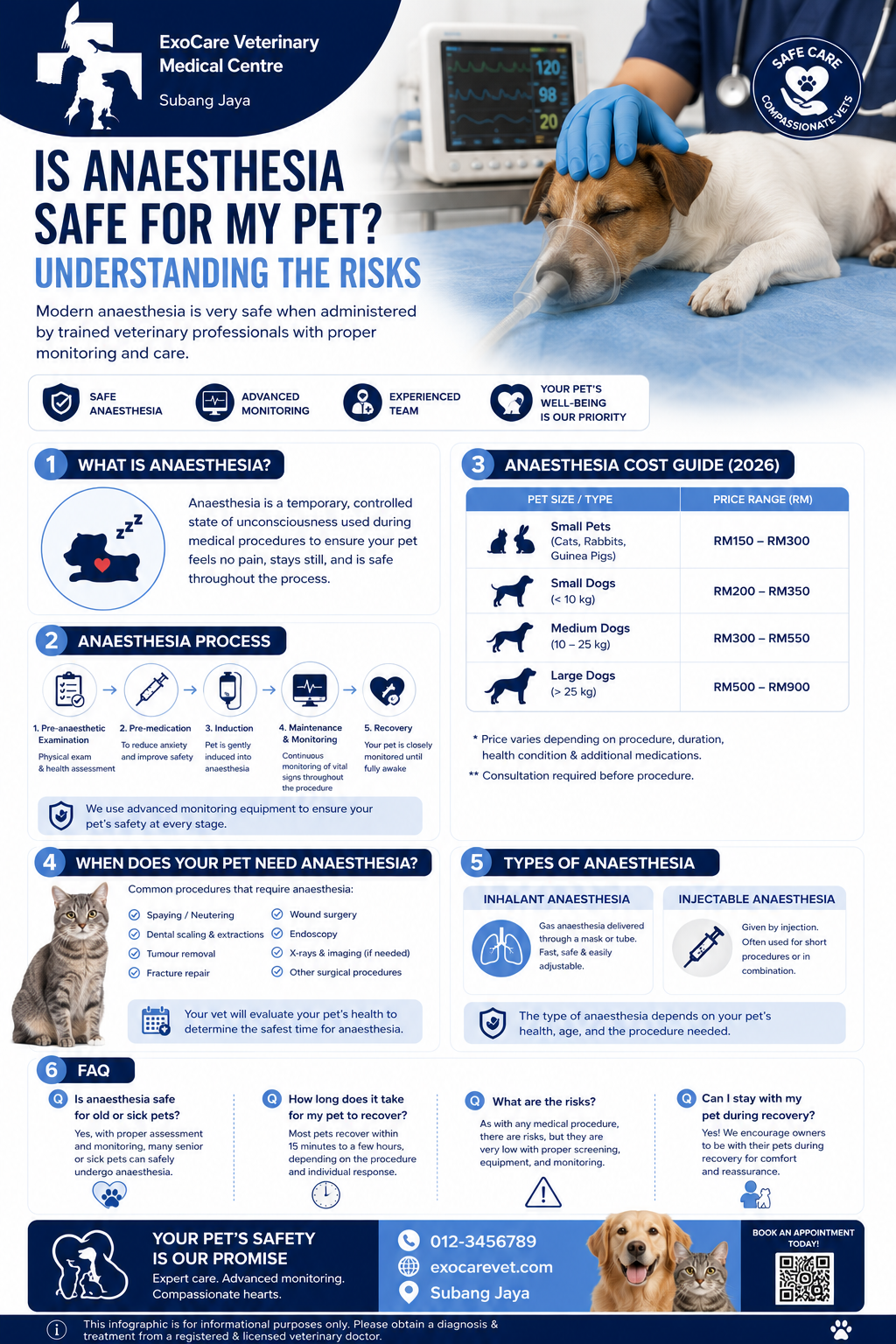
    When I tell an owner their pet needs anaesthesia, the same fear usually crosses their face before they say it: what if he doesn’t wake up? It’s a reasonable worry. The honest answer is that modern veterinary anaesthesia is remarkably safe when properly planned, but the risk is not zero and it is not the same for every animal. Understanding where the risk actually comes from is what turns fear into informed confidence.

    • A controlled, reversible loss of consciousness and pain sensation, a carefully titrated drug state, not “sleep.”
    • The large peer-reviewed CEPSAF study puts anaesthetic-related death at roughly 1 in 1,849 for a healthy dog and 1 in 895 for a healthy cat. In sick animals it rises sharply, to about 1 in 75 (dogs) and 1 in 71 (cats).
    • Risk climbs in sick, elderly, obese, or flat-faced pets, and is naturally higher in exotics like rabbits (≈1.39% mortality) whose bodies have almost no margin.
    • Pre-anaesthetic bloodwork, ASA risk grading, precise weight-based dosing, airway control, active warming, and monitoring through recovery.

    What anaesthesia actually is

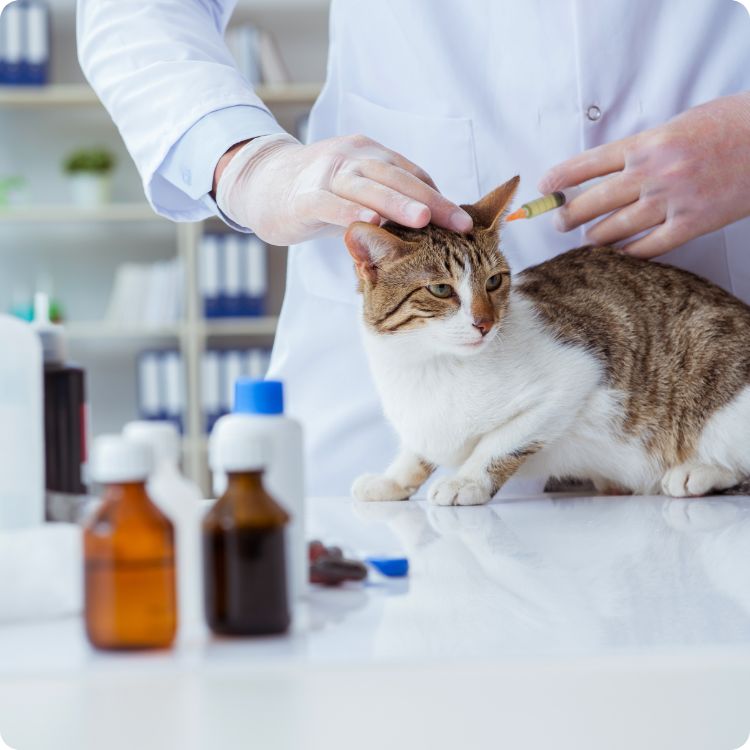
    anaesthesia

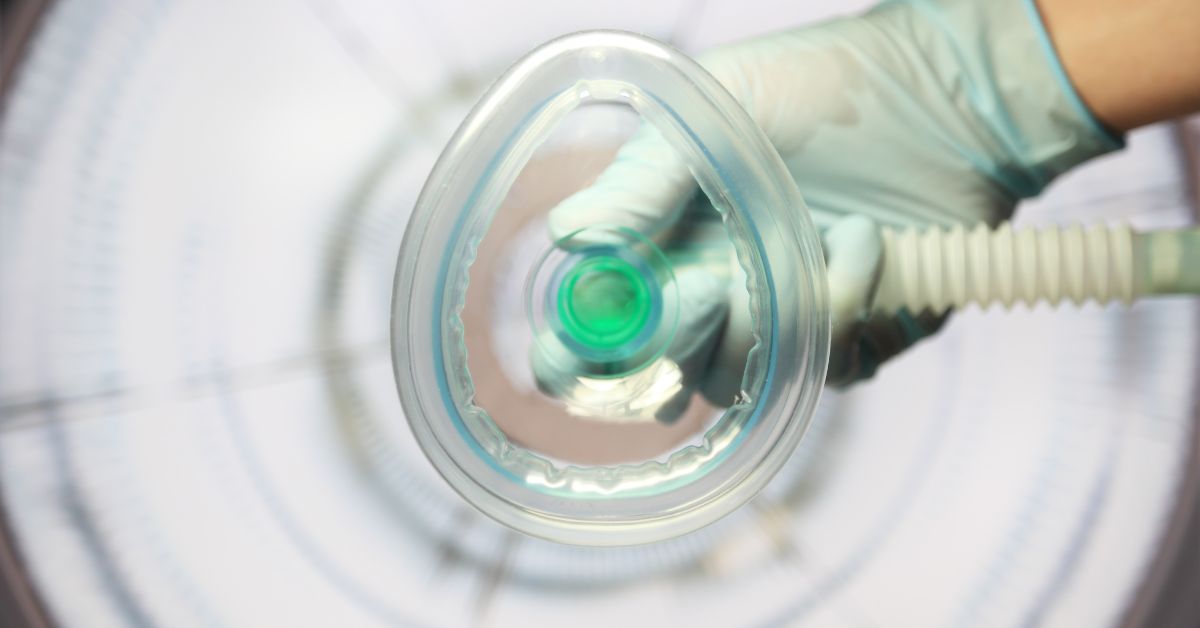
    Anaesthesia holds three things at once, unconsciousness, loss of pain sensation, and muscle relaxation, inside a narrow window. Too light and the patient feels pain; too deep and blood pressure and breathing are dangerously suppressed. We distinguish sedation (depressed but rousable) from general anaesthesia (fully unconscious, with us controlling the airway).

    A general anaesthetic runs through four phases, each with its own risks: pre-anaesthesia, induction, maintenance (an inhaled agent like isoflurane delivered through a breathing tube, adjustable breath by breath), and recovery. That’s why we monitor all four, not just the moment of going under.

    The climate factor most protocols ignore

    Once anaesthetised, an animal can’t regulate its own temperature, and the bigger threat isn’t overheating but hypothermia: a sedated patient can’t shiver, and heat drains fast into a cold table and an air-conditioned theatre even in the tropics. Hypothermia is one of the most common causes of anaesthetic death in small mammals, and a cold body clears drugs more slowly, prolonging recovery.

    The opposite problem arrives at the door: patients already heat-stressed and dehydrated (common in flat-faced dogs and rabbits transported in hot cars) start with depleted reserves and less buffer against the blood-pressure dip anaesthetics cause. Humidity also raises hidden respiratory infection in rabbits and birds. So transport, hydration, and respiratory status factor into every assessment we do.

    Where the danger actually lives

    Complications rarely come from the drugs alone; they emerge from how the drugs meet an animal’s underlying condition. The liver metabolises most anaesthetic agents and the kidneys clear them, so undiagnosed liver or kidney disease lets drugs accumulate to over-deep levels. Heart disease, common and often silent in senior cats, limits the heart’s ability to compensate for the natural drop in blood pressure.

    In exotics, anatomy compounds it: rabbits and rodents lose heat extremely fast, are obligate nasal breathers with delicate airways, and have a gut that can shut down (ileus) after minor stress, which is why rabbit peri-operative mortality (~1.39%) runs five to eight times higher than dogs and cats. The unifying, reassuring point: most anaesthetic deaths are preventable and trace to an unrecognised patient factor, not to anaesthesia being inherently unsafe.

    Also Read: Pet Insurance & Vet Fees in Malaysia: What Owner Should Know

    Catching risk before it happens

    The most valuable safety step happens in the consult room, not theatre. A pre-anaesthetic work-up typically includes:

    • Full serum biochemistry: liver enzymes, kidney values, protein, glucose; confirms the organs that process and clear the drugs work normally.
    • Complete blood count: screens for anaemia, hidden infection, and low platelets (a bleeding risk).
    • ASA grading (I–V): turns exam and bloodwork into a defined risk category that dictates the drug protocol and monitoring intensity.
    • Imaging where indicated: X-ray and ultrasound catch heart enlargement, lung fluid, or abdominal disease a stethoscope can’t.

    This isn’t an upsell. In one retrospective study, comprehensive pre-anaesthetic assessment led to about 16% of scheduled surgeries being postponed or cancelled after bloodwork or imaging revealed problems a physical exam had missed. Catching that before induction is the whole point.

    The myths I hear most

    The myth The clinical fact
    “Healthy pets don’t need pre-anaesthetic bloodwork.” It detects silent liver, kidney, and clotting problems that change drug handling and don’t show on exam, and sets a baseline.
    “Old age makes anaesthesia unsafe.” Age is a factor, not a contraindication. A managed senior is often at lower net risk than one left with an untreated painful condition.
    “Small exotics just need a gas mask.” Small size demands more precision. A dose trivial in a 20kg dog can be lethal in a 200g hamster; their risk is higher, not lower.
    “Recovery is the safe part.” The post-op period is the highest-risk window, behind most anaesthetic deaths in cats and rabbits.


    How we build safety into every phase

    anaesthesia

    For exotics we use weight-based dosing calculated to the gram, because the tiny total volumes leave no room for the rounding that’s harmless in a large dog. Every general anaesthetic patient gets active thermal support against hypothermia. Throughout the procedure and into recovery we run continuous monitoring: capnography (to confirm the airway and ventilation), ECG, pulse oximetry, and blood pressure.

    A senior cat once came in for a routine dental, and pre-anaesthetic bloodwork quietly flagged early kidney changes we’d never have caught on exam. We adjusted the fluids and drug choices around it, and the dental went ahead safely. Without that one test, the same anaesthetic could have gone very differently. 

    “Owners often ask me to promise anaesthesia is completely without risk. I won’t, because that would be dishonest. What I will promise is that the risk is understood, measured, and actively managed for every patient. The danger is almost never the drug itself, it’s the undiagnosed heart or kidney problem we didn’t look for. A safe anaesthetic is a planned anaesthetic.” — Dr. Asma Farihah

    After the procedure: what to watch

    anaesthesia

    The recovery period at home is statistically the highest-risk window. Call urgently if you see:

    • Failure to fully wake, or deep drowsiness hours after discharge (delayed drug clearance, low temperature, or low blood sugar).
    • Pale, blue, or grey gums, or laboured, open-mouth breathing (inadequate oxygen, an immediate emergency).
    • Repeated vomiting, or in rabbits/rodents, refusing to eat or pass droppings (gut stasis).
    • Uncontrolled bleeding, swelling, or discharge from the surgical site.
    • Collapse, seizures, or a body that feels abnormally cold.

    Our hours: Monday, and Wednesday to Sunday, 11:00am–7:00pm. Closed Tuesdays. Bring previous records and prior bloodwork (for baseline comparison), your pet in a secure carrier, and for exotics a fresh faecal sample.

    Conclusion

    Modern veterinary anaesthesia is genuinely safe when it’s genuinely planned: assessed with bloodwork, graded with ASA, dosed with precision, warmed against hypothermia, and monitored from induction all the way through recovery. The numbers back this up, roughly 1 in 1,849 for a healthy dog and 1 in 895 for a healthy cat, and the rare tragedies almost always trace back to a patient factor nobody looked for, not to the drug itself.

    Book a pre-anaesthetic consultation with our team at ExoCare Vet Medical Centre in Subang Jaya, and we’ll assess your pet’s age, species, and health, run the bloodwork, and build an anaesthetic protocol around your individual animal rather than a one-size-fits-all plan. Call us during our hours, Monday and Wednesday to Sunday, 11:00am–7:00pm (closed Tuesdays).

    FAQ

    How long does full recovery take?

    Most healthy cats and dogs are alert within a few hours, but full drug clearance takes 24–48 hours, during which mild grogginess and reduced appetite are normal. Small mammals and seniors take longer. Keep your pet warm, quiet, and observed during this window.

    Why is the bloodwork a separate charge, and is it compulsory?

    It’s a safety requirement, because it determines whether a protocol is safe for your individual pet. It reflects real lab work that changes decisions, and in a meaningful share of cases uncovers a hidden problem. Skipping it removes the one check designed to catch a crisis first.

    Is anaesthesia really riskier for my rabbit?

    Yes, measurably. Rabbit anaesthetic-related death sits around 1.39%, several times higher than dogs and cats, driven by fast heat loss, sensitive airways, and a stress-sensitive gut. That’s why we apply species-specific dosing, warming, and intensive monitoring.

    References

    This article has been medically reviewed based on clinical protocols by:

    Dr. Asma Fariha (MVC No. 3362).

    Senior Veterinary Specialist, ExoCare Vet Medical Centre, Subang Jaya.

    ExoCare is a referral veterinary medical center specializing in the medical, surgical, and critical care of small animals, exotic pets, avian species, reptiles, rodents, and amphibians in Malaysia.
    anaesthesia

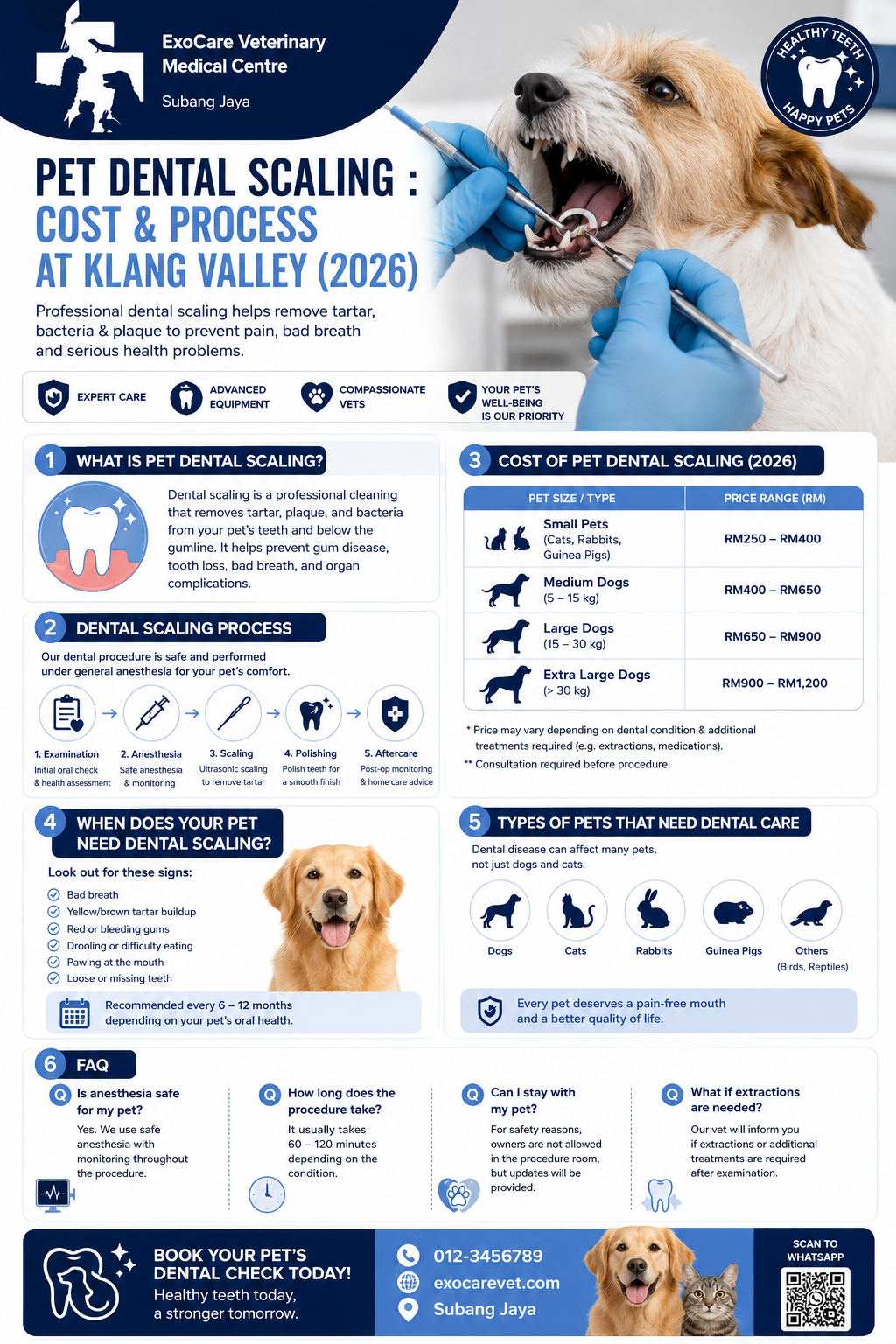
  • Pet Dental Scaling : Cost & Process at Klang Valley (2026)

    Pet Dental Scaling : Cost & Process at Klang Valley (2026)

    “Why does my pet need general anaesthesia just to clean its teeth, and why does it cost more than my own dental visit?” It’s the single biggest reason owners hesitate over a dental, made worse by ads for “anaesthesia-free” cleanings that sound gentler and cheaper. Here is what professional scaling actually involves, why anaesthesia is a requirement rather than an upsell, and what really drives the cost.

    • Professional removal of plaque and hardened calculus from the crown and below the gumline, under general anaesthesia, guided by dental X-rays.
    • Periodontal disease is the most common clinical condition in adult dogs and cats, affecting up to 80% of dogs and 70% of cats by age two, and it seeds bacteria that burden the heart, liver, and kidneys.
    • It’s cosmetic only, it can’t reach below the gumline where disease lives, which is why the American Veterinary Dental College has opposed it since 2004.
    • A Comprehensive Oral Health Assessment and Treatment (COHAT), probing, full-mouth X-rays, ultrasonic scaling, and polishing.

    What “scaling” actually means

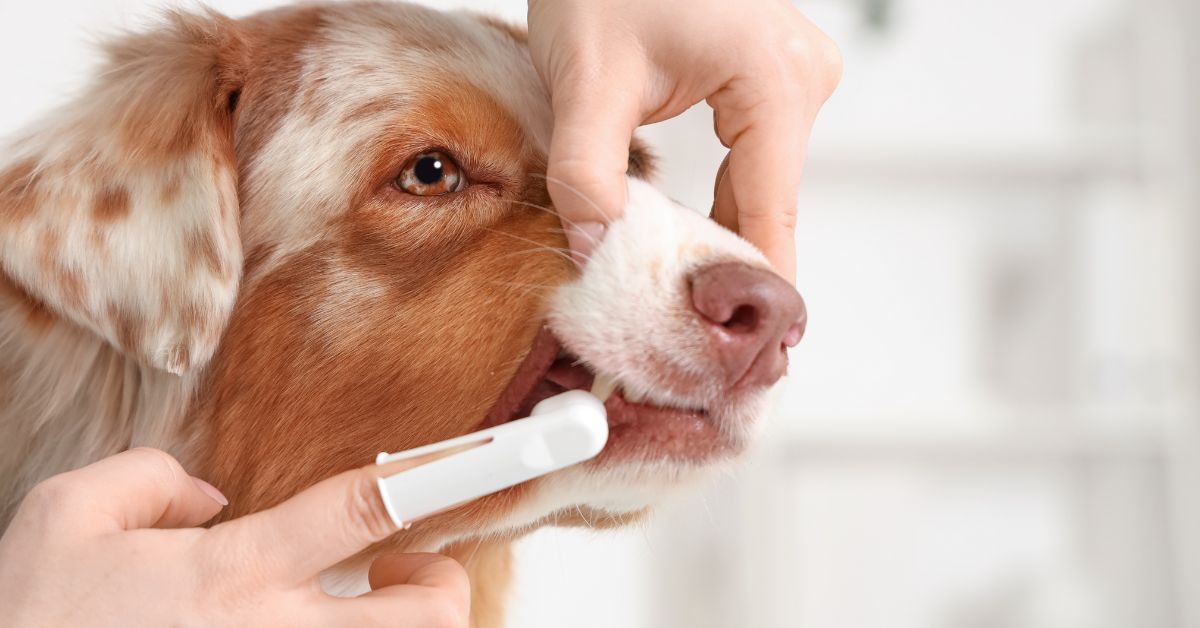
    pet dental

    Done properly, scaling is a COHAT, not chipping tartar off the front teeth. It involves ultrasonic and hand scaling of every surface above and below the gumline; periodontal probing to measure the pocket depth around each tooth (the key indicator of attachment loss); full-mouth X-rays to reveal disease inside the root and jawbone; and polishing to smooth enamel so plaque can’t rapidly re-adhere.

    The most important part is the subgingival scaling, cleaning the space between gum and root where bacterial biofilm collects in periodontal pockets. That’s where the disease is actually active, and it’s invisible to the naked eye. A cleaning that only polishes the visible crown treats the part of the tooth that was never the problem.

    How periodontal disease develops

    pet dental

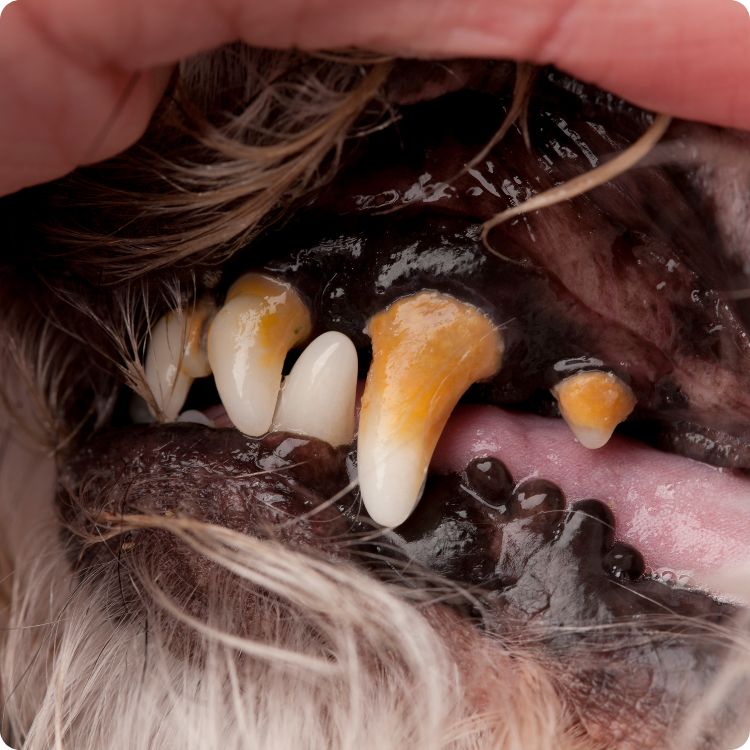
    Plaque, a soft bacterial biofilm, colonises the tooth within hours of a cleaning. Left undisturbed, it mineralises into hard calculus and migrates below the gumline, where bacteria trigger inflammation: first gingivitis (reversible), then progressive destruction of the periodontal ligament and the alveolar bone anchoring the tooth.

    The end results are painful mobile teeth, tooth-root abscesses, and in advanced cases oronasal fistulas (holes between mouth and nasal cavity). Alongside that, the steady leak of oral bacteria into the bloodstream places a measurable burden on the heart, liver and kidneys, which is why dental health is a whole-body issue, not a cosmetic one.

    The climate and anaesthesia link

    Our warmth plus popular soft, moist diets accelerates dental disease: heat speeds the mineralisation of plaque into calculus and sustains a heavy oral bacterial load, so reversible gingivitis can progress to irreversible periodontal disease faster than owners expect. In multi-pet households, shared bowls compound it. And because proper cleaning needs general anaesthesia, the same climate-related anaesthetic care applies: we assess hydration and heat stress before induction and use active warming throughout, since an anaesthetised animal cools quickly even in the tropics.

    What happens before the scaler

    pet dental

    No scaling begins without diagnostics:

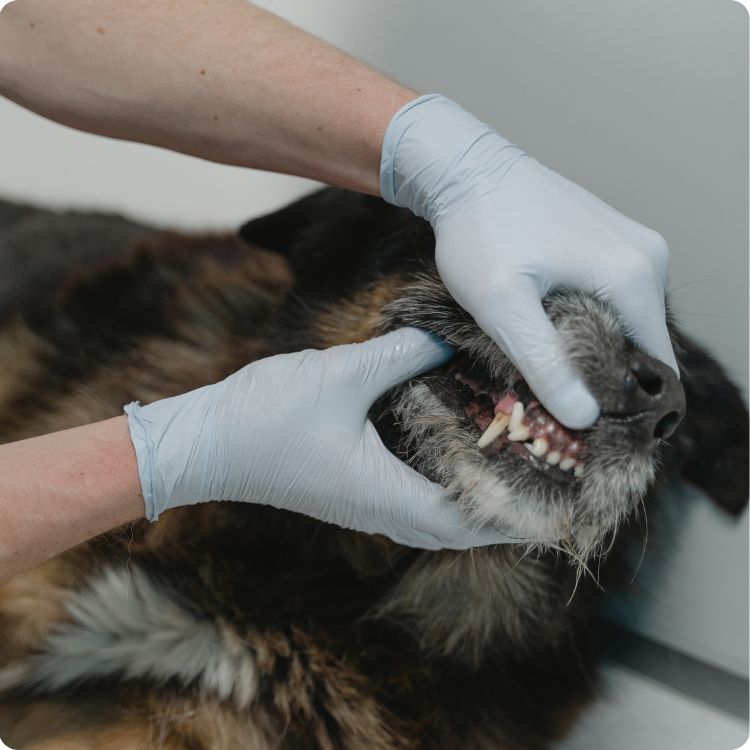
    • Conscious oral exam: a visual grade of visible disease to estimate severity.

    • Pre-anaesthetic bloodwork: confirms the liver and kidneys can process the drugs, and checks for anaemia or hidden infection.

    • Tooth-by-tooth probing (under anaesthesia): measures pocket depth to reveal attachment loss invisible on the surface.

    • Full-mouth X-rays: non-negotiable, because much significant pathology (root disease, retained roots, bone loss) sits entirely below the gumline. This is why two mouths that look identical can need completely different treatment.

    The myths that lead to under-treatment

    The myth The clinical fact
    “Anaesthesia-free dental is a real cleaning.” It only reaches the visible crown. Active subgingival disease is left untreated. AVDC has opposed it since 2004.
    “Bad breath is normal in pets.” Persistent halitosis is a classic early sign of periodontal infection, not a harmless quirk.
    “Dry kibble keeps teeth clean.” Diet and chews slow plaque but can’t remove existing tartar or clean below the gumline.
    “If my pet is still eating, its teeth are fine.” Animals hide oral pain and eat through significant, painful disease.


    What we actually see once the X-rays are up

    A striking number of pets come in for what the owner expects to be a quick scale and polish and once radiographed are found to have advanced root disease needing surgical extraction, disease that can’t be seen or planned without imaging.

    A dog came in for a routine clean, the owner certain it was just cosmetic tartar. The X-rays showed a root abscessing below a crown that looked almost fine from above. That tooth had been quietly hurting him, and no surface scrape would have found it.

    That’s why we assess and X-ray first, then confirm the plan and cost before proceeding, rather than quoting blind.

    Why there’s no single price

    Scaling isn’t a flat fee, because the work scales with the disease. The total reflects the pre-anaesthetic bloodwork, the general anaesthetic and monitoring, ultrasonic scaling and polishing, full-mouth X-rays, and any extractions the imaging reveals.

    A grade 1 gingivitis clean is far simpler than a grade 4 mouth needing multiple surgical extractions and closures, which is exactly why a firm, honest quote can only follow the assessment, not a phone estimate.

    “The question I’m asked most is ‘why anaesthesia just to clean teeth?’ Because the disease we’re treating lives below the gumline, and no conscious animal tolerates a probe and scaler there. Anaesthesia isn’t the risky part of a dental, it’s what makes a genuinely therapeutic one possible. A clean-looking crown on an infected root is not a healthy mouth.” — Dr. Asma Farihah

    Red flags worth a dental assessment

    • Persistent bad breath

    • Yellow-brown calculus along the gumline, or red, bleeding gums

    • Dropping food, chewing on one side, pawing at the mouth

    • Facial swelling below an eye

    • Loose or missing teeth

    Our hours: Monday, and Wednesday to Sunday, 11:00am–7:00pm. Closed Tuesdays. Bring previous records and prior bloodwork, and any medication details, which can affect anaesthetic planning.

    FAQ

    How much does dental scaling cost in the Klang Valley?

    There’s no fixed price; it depends on the periodontal grade and what the X-rays reveal under anaesthesia. The total covers bloodwork, anaesthesia and monitoring, scaling and polishing, X-rays, and any extractions. A simple preventive clean costs considerably less than a mouth needing multiple extractions, which is why a firm quote follows the assessment.

    Is the pre-anaesthetic blood test compulsory?

    Yes. Because scaling needs general anaesthesia, we first confirm the liver and kidneys can process the drugs safely. Skipping it removes the check most likely to catch a hidden problem, like early kidney disease, before it becomes an emergency on the table.

    How often does my pet need a cleaning?

    It varies by breed and home care. Small-breed dogs and many cats are prone to rapid tartar and often need yearly cleaning; some larger dogs go longer. Regular home tooth-brushing is the most powerful way to extend the gap, by disrupting plaque before it mineralises.

    Conclusion

    A pet’s dental health is never just cosmetic. What looks like ordinary tartar on the crown is usually the visible edge of disease living below the gumline, where it quietly destroys bone, abscesses roots, and leaks bacteria into the bloodstream that burden the heart, liver, and kidneys.

    That’s why anaesthesia, X-rays, and pre-anaesthetic bloodwork aren’t the expensive parts to skip, they’re the parts that make the procedure genuinely therapeutic instead of a surface polish that leaves the real problem untouched. And because animals hide oral pain and keep eating through it, a mouth that seems fine from across the room can still be hurting every single day.

    Book a dental assessment with our team at ExoCare Vet Medical Centre in Subang Jaya, and we’ll examine, grade, and X-ray your pet’s mouth before giving you a firm, honest quote and a genuinely pain-free, radiograph-guided cleaning that treats the disease at its source.

    References

    This article has been medically reviewed based on clinical protocols by:

    Dr. Asma Fariha (MVC No. 3362).

    Senior Veterinary Specialist, ExoCare Vet Medical Centre, Subang Jaya.

    ExoCare is a referral veterinary medical center specializing in the medical, surgical, and critical care of small animals, exotic pets, avian species, reptiles, rodents, and amphibians in Malaysia.

    pet dental