
“Why does my pet need general anaesthesia just to clean its teeth, and why does it cost more than my own dental visit?” It’s the single biggest reason owners hesitate over a dental, made worse by ads for “anaesthesia-free” cleanings that sound gentler and cheaper. Here is what professional scaling actually involves, why anaesthesia is a requirement rather than an upsell, and what really drives the cost.
- Professional removal of plaque and hardened calculus from the crown and below the gumline, under general anaesthesia, guided by dental X-rays.
- Periodontal disease is the most common clinical condition in adult dogs and cats, affecting up to 80% of dogs and 70% of cats by age two, and it seeds bacteria that burden the heart, liver, and kidneys.
- It’s cosmetic only, it can’t reach below the gumline where disease lives, which is why the American Veterinary Dental College has opposed it since 2004.
- A Comprehensive Oral Health Assessment and Treatment (COHAT), probing, full-mouth X-rays, ultrasonic scaling, and polishing.
What “scaling” actually means
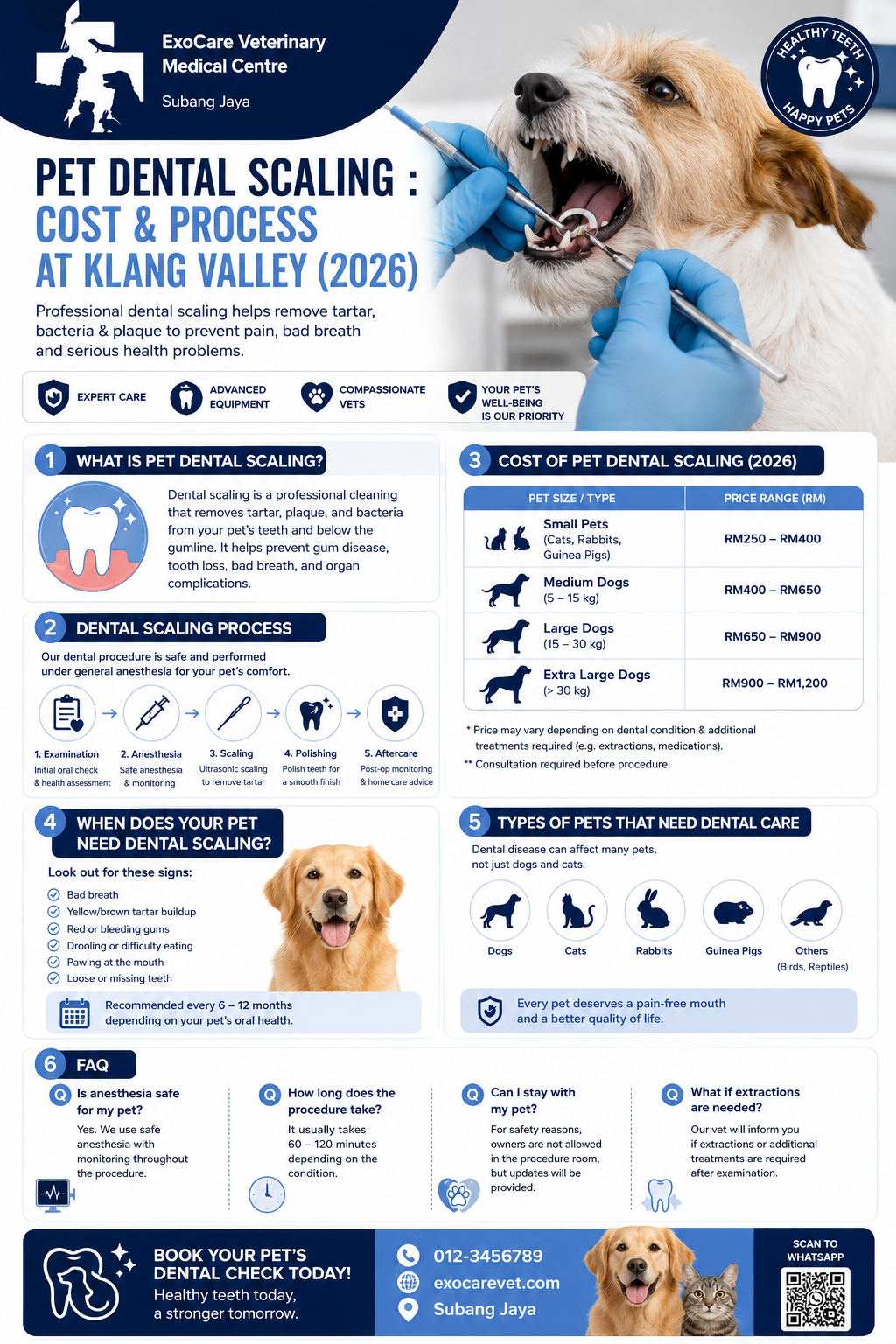
Done properly, scaling is a COHAT, not chipping tartar off the front teeth. It involves ultrasonic and hand scaling of every surface above and below the gumline; periodontal probing to measure the pocket depth around each tooth (the key indicator of attachment loss); full-mouth X-rays to reveal disease inside the root and jawbone; and polishing to smooth enamel so plaque can’t rapidly re-adhere.
The most important part is the subgingival scaling, cleaning the space between gum and root where bacterial biofilm collects in periodontal pockets. That’s where the disease is actually active, and it’s invisible to the naked eye. A cleaning that only polishes the visible crown treats the part of the tooth that was never the problem.
How periodontal disease develops
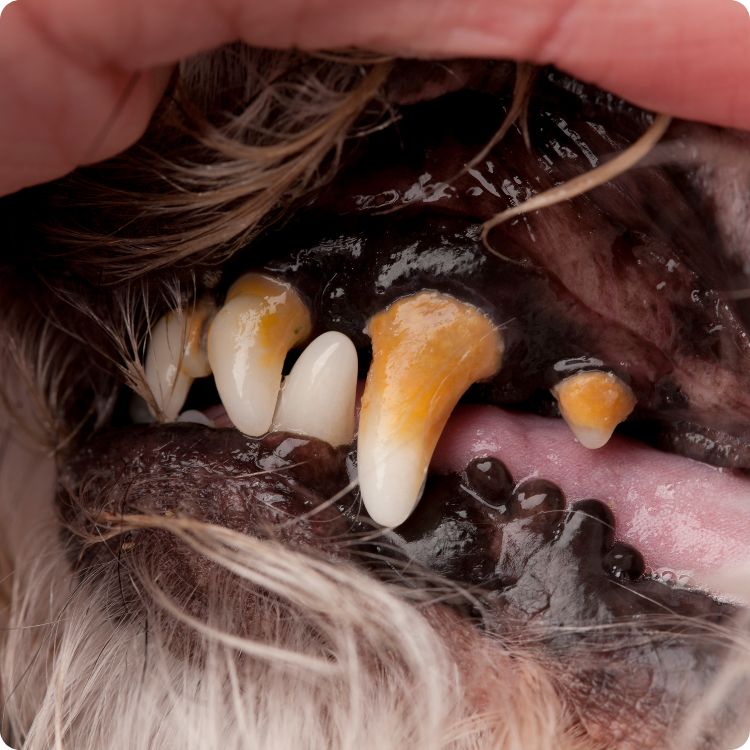
Plaque, a soft bacterial biofilm, colonises the tooth within hours of a cleaning. Left undisturbed, it mineralises into hard calculus and migrates below the gumline, where bacteria trigger inflammation: first gingivitis (reversible), then progressive destruction of the periodontal ligament and the alveolar bone anchoring the tooth.
The end results are painful mobile teeth, tooth-root abscesses, and in advanced cases oronasal fistulas (holes between mouth and nasal cavity). Alongside that, the steady leak of oral bacteria into the bloodstream places a measurable burden on the heart, liver and kidneys, which is why dental health is a whole-body issue, not a cosmetic one.
The climate and anaesthesia link
Our warmth plus popular soft, moist diets accelerates dental disease: heat speeds the mineralisation of plaque into calculus and sustains a heavy oral bacterial load, so reversible gingivitis can progress to irreversible periodontal disease faster than owners expect. In multi-pet households, shared bowls compound it. And because proper cleaning needs general anaesthesia, the same climate-related anaesthetic care applies: we assess hydration and heat stress before induction and use active warming throughout, since an anaesthetised animal cools quickly even in the tropics.
What happens before the scaler
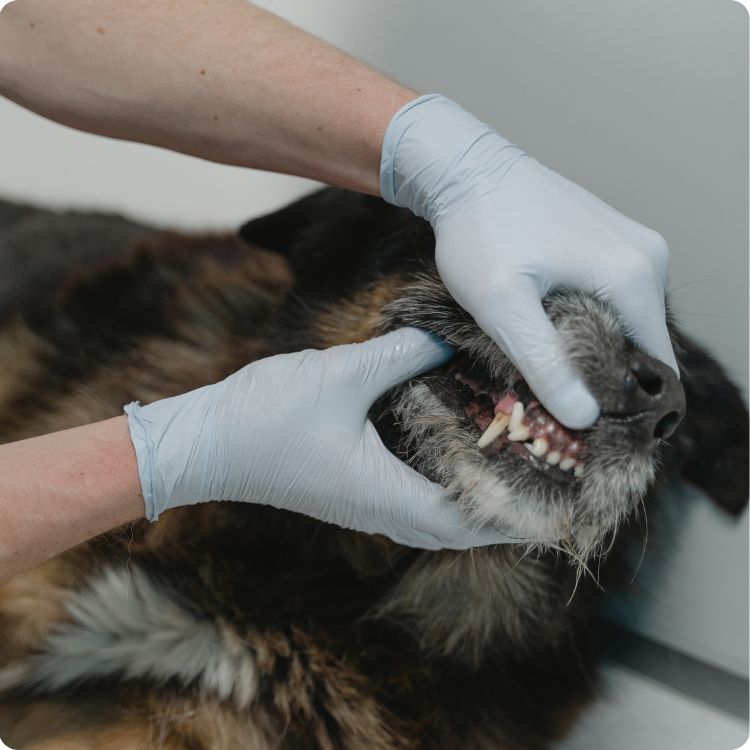
No scaling begins without diagnostics:
-
Conscious oral exam: a visual grade of visible disease to estimate severity.
-
Pre-anaesthetic bloodwork: confirms the liver and kidneys can process the drugs, and checks for anaemia or hidden infection.
-
Tooth-by-tooth probing (under anaesthesia): measures pocket depth to reveal attachment loss invisible on the surface.
-
Full-mouth X-rays: non-negotiable, because much significant pathology (root disease, retained roots, bone loss) sits entirely below the gumline. This is why two mouths that look identical can need completely different treatment.
The myths that lead to under-treatment
| The myth | The clinical fact |
|---|---|
| “Anaesthesia-free dental is a real cleaning.” | It only reaches the visible crown. Active subgingival disease is left untreated. AVDC has opposed it since 2004. |
| “Bad breath is normal in pets.” | Persistent halitosis is a classic early sign of periodontal infection, not a harmless quirk. |
| “Dry kibble keeps teeth clean.” | Diet and chews slow plaque but can’t remove existing tartar or clean below the gumline. |
| “If my pet is still eating, its teeth are fine.” | Animals hide oral pain and eat through significant, painful disease. |
What we actually see once the X-rays are up
A striking number of pets come in for what the owner expects to be a quick scale and polish and once radiographed are found to have advanced root disease needing surgical extraction, disease that can’t be seen or planned without imaging.
A dog came in for a routine clean, the owner certain it was just cosmetic tartar. The X-rays showed a root abscessing below a crown that looked almost fine from above. That tooth had been quietly hurting him, and no surface scrape would have found it.
That’s why we assess and X-ray first, then confirm the plan and cost before proceeding, rather than quoting blind.
Why there’s no single price
Scaling isn’t a flat fee, because the work scales with the disease. The total reflects the pre-anaesthetic bloodwork, the general anaesthetic and monitoring, ultrasonic scaling and polishing, full-mouth X-rays, and any extractions the imaging reveals.
A grade 1 gingivitis clean is far simpler than a grade 4 mouth needing multiple surgical extractions and closures, which is exactly why a firm, honest quote can only follow the assessment, not a phone estimate.
“The question I’m asked most is ‘why anaesthesia just to clean teeth?’ Because the disease we’re treating lives below the gumline, and no conscious animal tolerates a probe and scaler there. Anaesthesia isn’t the risky part of a dental, it’s what makes a genuinely therapeutic one possible. A clean-looking crown on an infected root is not a healthy mouth.” — Dr. Asma Farihah
Red flags worth a dental assessment
-
Persistent bad breath
-
Yellow-brown calculus along the gumline, or red, bleeding gums
-
Dropping food, chewing on one side, pawing at the mouth
-
Facial swelling below an eye
-
Loose or missing teeth
Our hours: Monday, and Wednesday to Sunday, 11:00am–7:00pm. Closed Tuesdays. Bring previous records and prior bloodwork, and any medication details, which can affect anaesthetic planning.
FAQ
How much does dental scaling cost in the Klang Valley?
There’s no fixed price; it depends on the periodontal grade and what the X-rays reveal under anaesthesia. The total covers bloodwork, anaesthesia and monitoring, scaling and polishing, X-rays, and any extractions. A simple preventive clean costs considerably less than a mouth needing multiple extractions, which is why a firm quote follows the assessment.
Is the pre-anaesthetic blood test compulsory?
Yes. Because scaling needs general anaesthesia, we first confirm the liver and kidneys can process the drugs safely. Skipping it removes the check most likely to catch a hidden problem, like early kidney disease, before it becomes an emergency on the table.
How often does my pet need a cleaning?
It varies by breed and home care. Small-breed dogs and many cats are prone to rapid tartar and often need yearly cleaning; some larger dogs go longer. Regular home tooth-brushing is the most powerful way to extend the gap, by disrupting plaque before it mineralises.
Conclusion
A pet’s dental health is never just cosmetic. What looks like ordinary tartar on the crown is usually the visible edge of disease living below the gumline, where it quietly destroys bone, abscesses roots, and leaks bacteria into the bloodstream that burden the heart, liver, and kidneys.
That’s why anaesthesia, X-rays, and pre-anaesthetic bloodwork aren’t the expensive parts to skip, they’re the parts that make the procedure genuinely therapeutic instead of a surface polish that leaves the real problem untouched. And because animals hide oral pain and keep eating through it, a mouth that seems fine from across the room can still be hurting every single day.
Book a dental assessment with our team at ExoCare Vet Medical Centre in Subang Jaya, and we’ll examine, grade, and X-ray your pet’s mouth before giving you a firm, honest quote and a genuinely pain-free, radiograph-guided cleaning that treats the disease at its source.
References
- American Veterinary Dental College (AVDC). Companion Animal Dental Scaling Without Anesthesia (Position Statement). https://afd.avdc.org/pet-periodontal-disease/
- Bellows J, et al. 2019 AAHA Dental Care Guidelines for Dogs and Cats. https://www.aaha.org/wp-content/uploads/globalassets/02-guidelines/dental/aaha_dental_guidelines.pdf
- AVMA. Pet Dental Care. https://www.avma.org/resources-tools/pet-owners/petcare/pet-dental-care
- Malaysian Veterinary Council (MVC). https://www.mvc.gov.my/
- Department of Veterinary Services Malaysia (DVS). https://www.dvs.gov.my/
This article has been medically reviewed based on clinical protocols by:
Dr. Asma Fariha (MVC No. 3362).
Senior Veterinary Specialist, ExoCare Vet Medical Centre, Subang Jaya.
ExoCare is a referral veterinary medical center specializing in the medical, surgical, and critical care of small animals, exotic pets, avian species, reptiles, rodents, and amphibians in Malaysia.