
- A dog blood bank is a screened, blood-typed reserve of canine blood products, whole blood, packed red cells & plasma kept ready for dogs in crisis.
- One large-breed donor can help save the lives of multiple dogs facing trauma, tick fever, or surgical blood loss.
- Canine blood is in short supply across Malaysia, and tick-borne diseases here create a constant demand for transfusions.
- ExoCare runs a structured donor programme with full health screening, DEA blood typing, and crossmatching for safe, compatible transfusions.
- If you have a healthy, calm, large-breed dog, give them a purpose, enrol in ExoCare’s dog blood bank in Subang Jaya today.
In our part of the world, the call we brace for most is tick fever. A dog that was fine last week comes in flat and pale, its red cell count collapsing, and no amount of fluids will fix the problem because the problem is that there simply are not enough red blood cells left to carry oxygen. The same is true after a highway accident or a bout of rat-poison poisoning. When blood loss is severe, what the dog needs is blood.
And blood cannot be manufactured. A working canine blood bank depends entirely on a network of healthy, screened donor dogs. At ExoCare Vet Medical Centre in Subang Jaya, our canine donor programme exists so that typed, crossmatched, compatible blood is ready the moment an emergency walks through the door.
Why Dog Blood Typing Matters: The DEA System
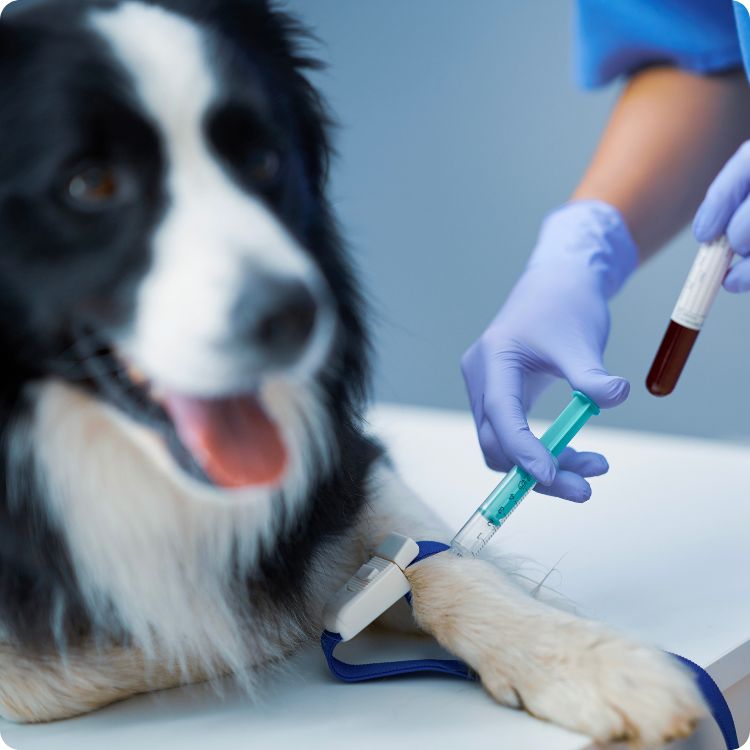
A common assumption is that any healthy dog can give blood to any other dog. The rules are more forgiving than in cats but compatibility is still a firm clinical requirement, not an optional extra.
Canine blood is classified under the Dog Erythrocyte Antigen (DEA) system. There are more than seven recognised blood groups, but the one that matters most clinically is DEA 1.1, roughly 40% of dogs carry it.
- DEA 1.1 negative (the “universal donors”): these dogs lack the main antigen that provokes severe reactions, so provided they are also negative for other significant antigens, their blood can go safely to both negative and positive recipients in a first-time emergency. They are the most valuable dogs in any blood bank.
- DEA 1.1 positive: should donate only to other DEA 1.1 positive recipients.
Here is the catch that makes typing non-negotiable: unlike cats, dogs do not usually carry strong, naturally occurring antibodies against other blood types before their first transfusion. So a first untyped transfusion often passes without drama but it sensitises the dog. Give a mismatched unit a second time, weeks or years later, and the immune reaction can be severe or fatal.
That is why we never skip the pre-transfusion workup. We blood-type both dogs, then crossmatch them: the major crossmatch tests the recipient’s serum against the donor’s red cells (the most important check for a dangerous reaction), and the minor crossmatch tests the donor’s serum against the recipient’s cells. Only a compatible result gets the green light.
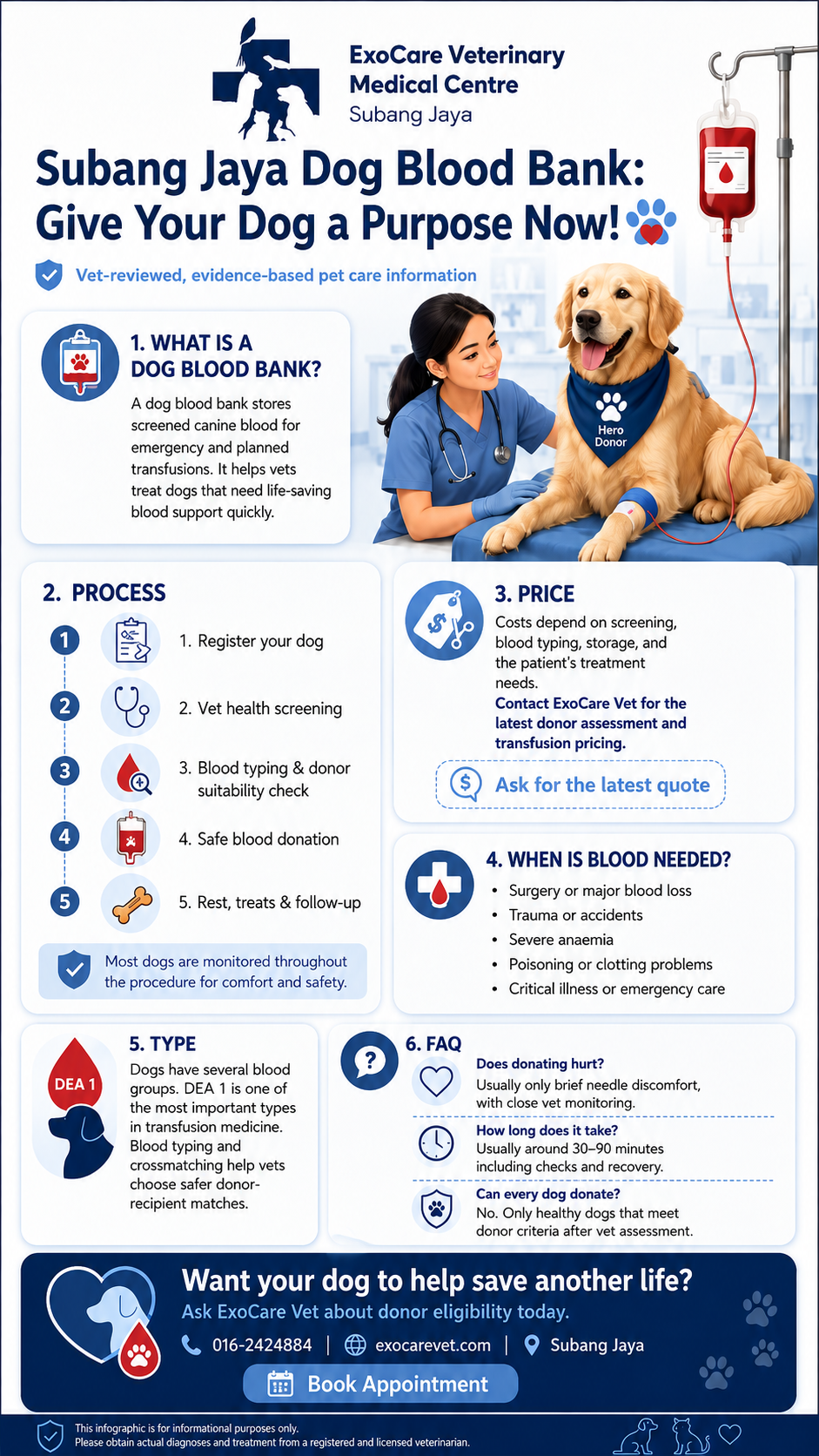
1. Tick-Borne Parasites (Ehrlichiosis & Babesiosis)
Tick fever is the leading cause of severe anaemia in Malaysian dogs. Parasites like Ehrlichia canis and Babesia attack red blood cells and bone marrow, causing a rapid collapse in cell counts that requires immediate packed red blood cell (pRBC) transfusion.
2. Severe Trauma & Internal Haemorrhage
Road traffic accidents, falls from height, or ruptured abdominal tumors (such as splenic hemangiosarcoma) cause massive internal blood loss requiring whole blood or plasma.
3. Rodenticide (Rat Poison) Toxicity
Anticoagulant rodenticides block the body’s ability to recycle Vitamin K, destroying normal blood clotting. Dogs suffering from rat poison toxicity require fresh frozen plasma (FFP) from a blood bank to restore essential clotting factors.
What Makes a Dog Eligible to Join the Blood Bank Programme?

To protect both the donor and the critical patient receiving the unit, every candidate passes strict screening. An ideal canine donor is:
- Transfusion history: no previous blood transfusion.
- Health & lifestyle: fully vaccinated, on regular tick and heartworm prevention, and free of chronic or infectious disease.
- Temperament: calm and cooperative, most donors lie comfortably through the short collection with no general anaesthesia needed.
- Weight & age: at least 25 kg of lean body mass, aged 1 to 8 years. The larger size keeps the volume collected a safe share of total blood volume (usually 10–15%).
Before every collection, donors get a physical exam, a complete blood count (CBC), and a blood-parasite screen, so every unit we store is a safe one.
Recognizing Emergency Signs of Blood Loss in Dogs

If your dog has been involved in an accident or is recovering from tick fever, watch closely for these critical warning signs:
-
Pale, white, or mud-colored gums (instead of healthy pink).
-
Extreme weakness, lethargy, or collapse.
-
Rapid, shallow, or labored breathing.
-
Cold extremities (paws and ears).
If you notice these symptoms, transport your pet immediately to an emergency veterinary facility equipped with transfusion support.
Also Read: 8 Pet Emergency Symptoms You Cannot Ignore (Expert Review)
Common Care Myths
Myths keep good donors away and put patients at risk. Our clinical team corrects these regularly:
“Any dog can give blood to any other dog with no testing.”
While dogs tolerate a first transfusion better than cats, this is not a licence to skip testing. Typing and crossmatching prevent sensitisation and dangerous reactions, especially for repeat transfusions.
“Donating blood will make my dog weak or sick.”
A suitable, healthy large-breed dog donates a volume calculated to its body weight and recovers quickly. Donors are monitored throughout and sent home only once fully stable.
“Only sick or old dogs are part of blood banks.”
The opposite is true. Donors are young to middle-aged, fit, well-vaccinated dogs, the healthiest members of the canine community.
| Common Myth | The Clinical Fact |
|---|---|
| Dogs never need blood typing. | DEA 1.1 typing and crossmatching prevent sensitisation and reactions. |
| Small dogs make ideal donors. | Larger dogs (typically over ~25 kg lean) safely provide a standard unit. |
| Donation is painful and risky. | Weight-calculated collection from screened donors is safe and monitored. |
| Tick fever is minor and self-resolving. | Ehrlichiosis and babesiosis can be fatal and often require transfusion. |
| Indoor dogs are safe from ticks. | Ticks travel indoors easily; donors are still screened regardless. |
Our Experience at ExoCare Vet Medical Centre (Subang Jaya)
According to ExoCare’s medical protocols, canine donors are typically calm, fully vaccinated, large-breed dogs within a healthy weight and age range, screened clear of tick-borne and other infectious diseases.
Donation is usually performed with gentle restraint and reassurance; where light sedation is warranted, we apply precision dosing and continuous cardiac monitoring during anaesthesia, holding donors to the same critical-care standard as any patient.
Our clinical team has observed that owners often discover the need for canine blood only when their own dog is already crashing from tick fever or trauma. Enrolling a healthy dog in advance, and establishing its blood type through baseline health screening at the first visit, means we can respond in minutes when a life is on the line.
A donor dog is not giving something up, it is being given a genuine purpose.
“In Malaysia, tick fever alone keeps our transfusion demand high all year. I have watched a single large, healthy donor turn a collapsed, severely anaemic dog back into a wagging tail within a day. If you have a calm, big-hearted dog, enrolling them is one of the most powerful things you can do, it is bold, it is safe when done properly, and it saves lives.”
— Dr. Asma Farihah (Lead Veterinarian & Co-Founder, ExoCare Vet Medical Centre)
Enrolling Your Dog as a Donor at ExoCare
A well-maintained dog blood bank turns a helpless emergency into a survivable recovery. If you own a large, calm, and healthy dog, enrolling them as a donor builds a vital safety net for dogs across the Klang Valley.
Location: ExoCare Vet Medical Centre, Subang Jaya.
Operating Hours: Monday & Wednesday – Sunday: 11:00 AM – 7:00 PM (Closed Tuesdays).
What to Bring: Vaccination records, tick preventive history, and any prior health records.
Frequently Asked Questions
1. Which dogs can become blood donors at ExoCare?
Ideal donors are healthy, calm, fully vaccinated large-breed dogs (typically over about 25 kg lean) within a suitable age range, with no history of prior transfusion and a clear infectious-disease screen. Final eligibility is confirmed after examination and laboratory testing, including tick-borne disease screening. This step is non-waivable, because it protects both donor and recipient.
2. Is donating blood safe for my dog?
Yes, when properly managed. The volume collected is calculated to the dog’s body weight to stay well within safe limits, donors are monitored throughout, and most walk out comfortably the same day. Screened, healthy donors replace the donated volume naturally over the following weeks.
3. How fast can a transfusion be arranged, and what does it involve?
Speed depends on typing, crossmatching, and donor or stored-product availability which is why an established blood bank matters. Costs cover typing, crossmatching, the blood product, and administration, and diagnostic fees are non-waivable, because giving mismatched or unscreened blood is dangerous. Having your dog’s blood type on record speeds everything up in an emergency.
Conclusion
A dog blood bank converts a desperate emergency into a survivable one. In Malaysia, where tick-borne disease and road trauma keep demand high and donors are scarce, every healthy enrolled dog strengthens a lifeline that any canine family may one day need. ExoCare’s donor programme is built on thorough screening, accurate DEA typing, and careful collection so that when a dog crashes, compatible blood is ready.
If your dog is healthy, calm, and large enough to help, give them a purpose, enrol in ExoCare’s dog blood bank in Subang Jaya today. And if your dog needs urgent care, contact ExoCare Vet Medical Centre now and let our expert clinical team act fast.
References
Merck Veterinary Manual, “Blood Groups and Blood Transfusions in Dogs.” Accessed at: https://www.merckvetmanual.com/dog-owners/blood-disorders-of-dogs/blood-groups-and-blood-transfusions-in-dogs
American Veterinary Medical Association (AVMA), Pet Owner Resources. Accessed at: https://www.avma.org/resources-tools/pet-owners
Today’s Veterinary Practice, “Transfusion Medicine.” Accessed at: https://todaysveterinarypractice.com/
Malaysian Veterinary Council (MVC). Accessed at: https://www.mvc.gov.my/
Department of Veterinary Services Malaysia (DVS / Jabatan Veterinar). Accessed at: https://www.dvs.gov.my/
This article has been medically reviewed based on clinical protocols by:
Dr. Asma Fariha (MVC No. 3362) (Malaysian Veterinary Council).
Senior Veterinary Specialist, ExoCare Vet Medical Centre, Subang Jaya.
ExoCare is a referral veterinary medical center specializing in the medical, surgical, and critical care of small animals, exotic pets, avian species, reptiles, rodents, and amphibians in Malaysia