
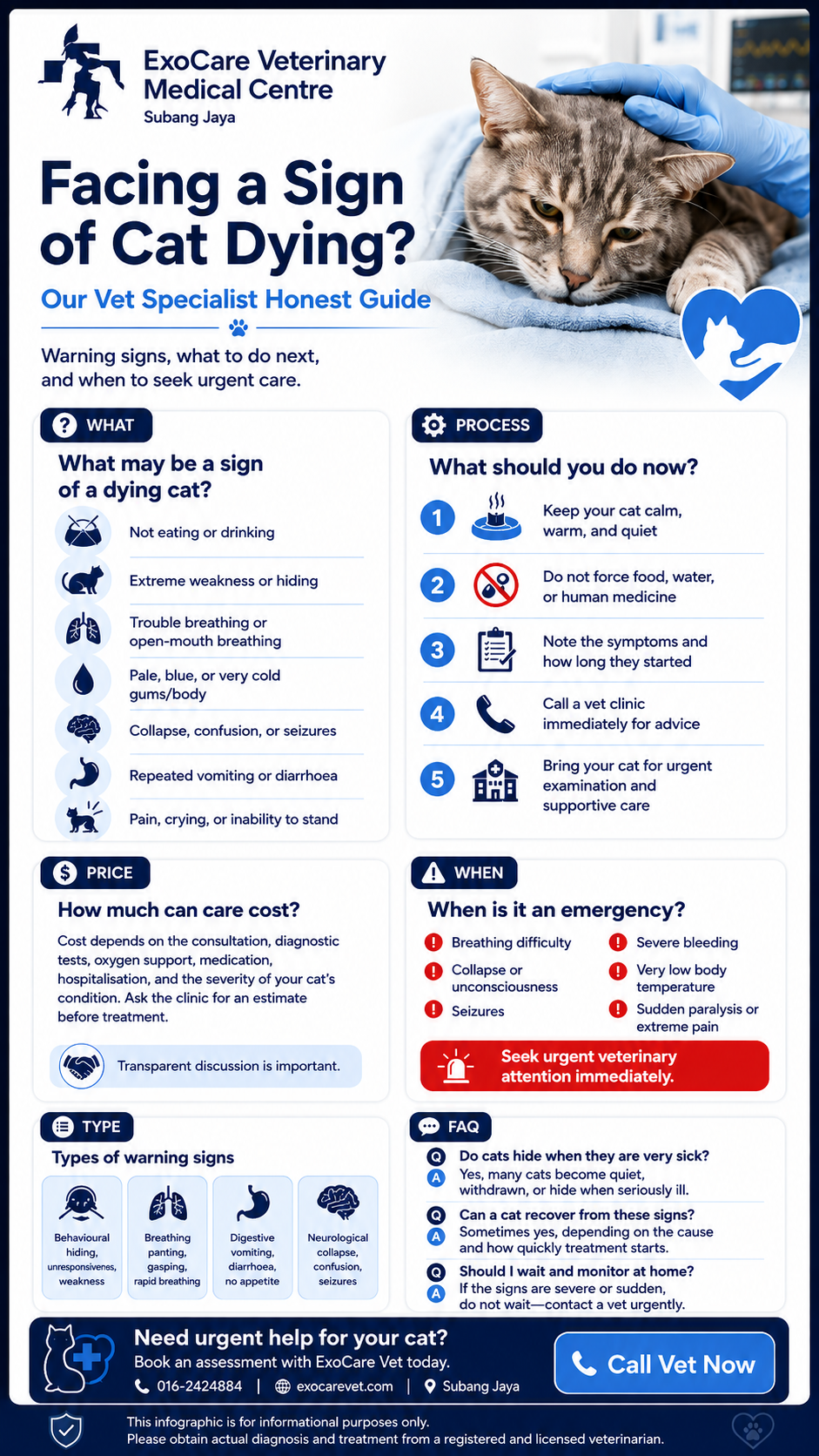
- The signs of a cat dying include profound weakness, hiding, refusing food and water, a drop in body temperature, pale gums & laboured breathing.
- Some of these signs mean a cat is truly at the end of life, but many identical signs are reversible emergencies that a vet can still treat.
- Owners either panic and lose precious time, or assume nothing can be done and let a treatable cat suffer or die needlessly.
- An honest clinical assessment tells you the truth, whether to fight for recovery, or to focus on pain-free passing.
- If your cat is showing these signs, contact ExoCare Vet Medical Centre, Subang Jaya, now.
Noticing a potential sign of cat dying is one of the most heartbreaking experiences any pet owner can face. When a beloved feline suddenly hides in dark corners, refuses food and water, becomes unresponsive, or struggles to breathe, panic and grief naturally set in.
However, as veterinarians, one of our most crucial responsibilities is helping owners distinguish between a cat that is truly in its final stages of life and one experiencing an acute, fully reversible emergency that merely looks like dying.
At ExoCare Vet Medical Centre in Subang Jaya, we provide clear, compassionate, and clinically objective assessments to ensure your cat receives the exact care they need, whether that means fighting for recovery or ensuring a peaceful, pain-free passing.
What Clinical Signs Suggest a Cat Is Declining?
Cats are master disguisers of illness, a natural survival instinct inherited from their wild ancestors. By the time physical symptoms become obvious, their body is often under severe physiological stress.
Recognizing a critical sign of cat dying or medical collapse involves watching for these core physical changes:
- Loss of Mobility or Sudden Paralysis: Inability to stand, unsteadiness, or sudden paralysis of the hind legs.
- Pale, Grey, or Blue-Tinted Gums: Indicating poor oxygenation, severe internal bleeding, or cardiovascular collapse.
- Extreme Lethargy & Unresponsiveness: Lying motionless, failing to react to family members, or hiding deep under furniture.
- Laboured or Open-Mouth Breathing (Dyspnoea): Breathing with an open mouth, heavy abdominal lifting, or rapid, shallow gasps.
- Severe Drop in Body Temperature (Hypothermia): Ears, paws, and tail feel noticeably cold to the touch as blood circulation slows down.
- Total Inappetence & Dehydration: Complete refusal of food and water for more than 24–48 hours, leading to sunken eyes and skin that stays tented when lifted.
Is It End-of-Life, or a Reversible Crisis?
Many acute medical conditions mimic the final stages of life. Before assuming there is no hope, it is vital to rule out treatable conditions:
1. Urethral Obstruction (Blocked Cat)
Common in male cats, a physical plug in the urethra prevents urination. Within 24 hours, toxins and potassium build up in the bloodstream, causing collapse, slow heart rates, and low body temperature. Once unblocked, these cats can make a complete recovery.
2. Acute Heatstroke & Tropical Dehydration
In Malaysia’s hot and humid climate, heat exhaustion can rapidly cause panting, collapse, and weakness. Dehydration thickens the blood, accelerating organ distress in a way that looks like natural decline but responds dramatically to IV fluid therapy and cooling protocols.
3. Feline Hypertrophic Cardiomyopathy (HCM) & Saddle Thrombus
A heart condition can cause a sudden blood clot to lodge in the aortic junction, paralyzing the back legs and causing sudden crying and respiratory distress. Emergency intervention is critical to manage pain and circulation.
4. Severe Anaemia or Diabetic Ketoacidosis
Infections from blood parasites (Mycoplasma haemofelis), retroviruses (FeLV/FIV), or unregulated diabetes can cause a sudden crash that mimics dying, yet stabilizes with blood products, oxygen, and targeted medical care.
Evaluating Quality of Life: The HHHHHMM Scale
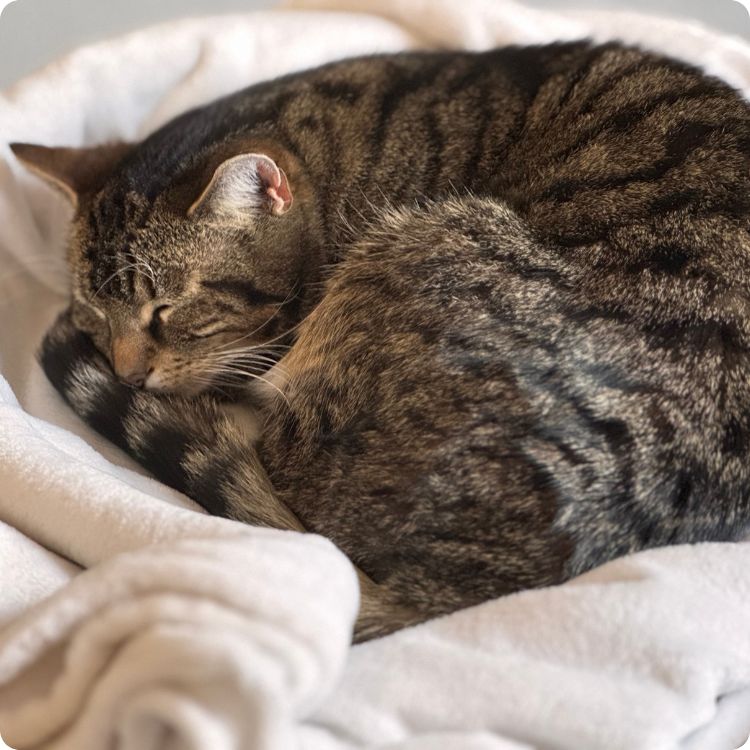
When a cat truly does have an advanced, non-reversible condition, end-stage Chronic Kidney Disease, or terminal cancer, the goal shifts entirely to comfort and dignity. To help families make an unrushed, informed decision, we use the HHHHHMM Quality of Life Scale, developed by veterinary oncologist Dr. Alice Villalobos.
Each of seven factors is scored from 1 to 10; a score above 5 in each, or an overall total above 35, generally suggests quality of life is still acceptable.
- Hurt: is pain well controlled, and is breathing comfortable?
- Hunger: can the cat eat willingly, or accept gentle hand-feeding without nausea?
- Hydration: is dehydration causing sluggishness or discomfort?
- Hygiene: can the cat stay clean and groomed, free of urine or faecal soiling?
- Happiness: does the cat still interact, purr, and respond or seem withdrawn and anxious?
- Mobility: can the cat get up, reach the litter box, and move without distress?
- More good days than bad: when the bad days start to outnumber the good, quality of life is slipping.
Debunking Myths About Cat End-of-Life Care
Myth 1: “My cat is hiding, so it wants to be left alone to die.”
Fact: hiding is a response to pain, weakness and feeling vulnerable not a conscious wish to slip away. Leaving a sick cat tucked away without a vet check simply prolongs unmanaged suffering from dehydration, nausea or pain.
Myth 2: “A natural death at home is always peaceful.”
Fact: without medical support, an unmanaged natural death can involve breathing distress, seizures, or prolonged pain. Palliative veterinary care exists precisely to remove that distress.
Myth 3: “Choosing euthanasia means giving up on my cat.”
Fact: humane euthanasia is a compassionate medical act to prevent terminal suffering when recovery is no longer possible, a peaceful, pain-free passing, given with dignity. It is a final kindness, not a failure.
What to Do If You Notice Critical Symptoms
- Keep them warm and calm. Wrap your cat in a soft, warm blanket. Do not force food or water, it can be aspirated into the lungs.
- Transport safely. Use a secure, padded carrier and keep the car quiet and comfortably cool.
- Get immediate evaluation. Call an emergency veterinary centre ahead so the team can have oxygen, warmth and diagnostics ready before you arrive.
Our Experience at ExoCare Vet Medical Centre (Subang Jaya)
According to ExoCare’s medical protocols, a collapsing cat is triaged immediately, because minutes can decide whether recovery is possible. Our clinical team has observed a painful pattern: many owners wait at home hoping a cat will “pull through,” only to lose a window in which the cat could have been saved or, just as sadly, could have been spared hours of avoidable suffering. Honesty, delivered with compassion, is what we owe every family.
When a cat can be treated, we act decisively with fluids, warmth, pain control, and where sedation or procedures are needed, precision dosing and continuous monitoring during anaesthesia.
When a cat cannot recover, we help families assess quality of life honestly, using structured measures of pain, appetite, hydration, mobility, and the balance of good days versus bad. Our role is not to push a single answer, but to give you the truth clearly enough to choose well for your cat.
“Families do not need false hope, and they do not need to be told to give up too soon. They need the truth, delivered gently. I have seen ‘dying’ cats walk out days later, and I have helped others pass in peace when fighting on would only have meant suffering. Both are acts of care. If you are seeing these signs, please let us look — so your next decision is an informed one, not a guess made in fear.”
— Dr. Asma Farihah (Lead Veterinarian & Co-Founder, ExoCare Vet Medical Centre)
When to See a Vet?
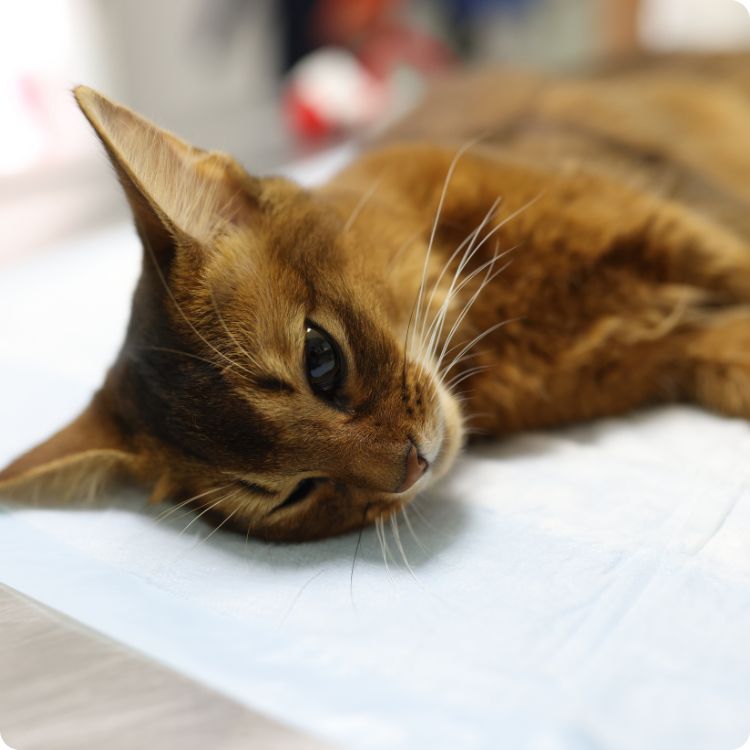
Seek veterinary care without delay if your cat shows any of these:
- Collapse, inability to stand, or sudden paralysis of the back legs
- Pale, white, grey, or bluish gums
- Laboured, open-mouth, or irregular breathing
- A body that feels cold, with total refusal of food and water
- Seizures, unresponsiveness, or crying out in apparent pain
Operating hours: ExoCare Vet Medical Centre is open Monday and Wednesday to Sunday, 11:00 AM – 7:00 PM, and closed on Tuesdays. For guidance on acting fast, see our resources on pet emergency symptoms you cannot ignore and the emergency vet in Subang Jaya.
What to bring: your cat wrapped warmly in a secure carrier, any previous medical records, and a list of current medications. Keep the cat calm, warm, and quiet during transport, and do not force food or water.
Frequently Asked Questions
1. How do I know if my cat is truly dying or just very sick?
Honestly, you often cannot tell at home and that is not a failing. Reversible emergencies such as a urinary blockage, heatstroke, or a heart crisis can look identical to end-of-life decline. A clinical examination with bloodwork and imaging is the only reliable way to know. When in doubt, have your cat assessed rather than assume the worst.
2. How do vets decide it is time for euthanasia?
We assess quality of life across pain, appetite, hydration, hygiene, mobility, and whether the cat still has more good days than bad. When suffering cannot be relieved and comfort is no longer possible, humane euthanasia prevents further pain. It is a shared, unrushed decision made with the family, not imposed on them.
3. What does end-of-life or palliative care for a cat involve?
For cats not being actively treated for cure, palliative care focuses on comfort: effective pain relief, fluids for hydration, warmth, and a calm environment. Diagnostic fees for the initial assessment are non-waivable, because an accurate picture is what allows us to keep your cat genuinely comfortable rather than guessing.
Conclusion
Seeing a sign of your cat dying is one of the hardest moments an owner can face and it deserves the truth, not a guess. Some of these signs mark a genuine end of life, where comfort and a peaceful passing become the kindest path. Many others are reversible emergencies where a cat can still recover. You should not have to carry that uncertainty alone.
If your cat is showing these signs, contact ExoCare Vet Medical Centre in Subang Jaya now. Our expert clinical team will give you an honest, compassionate assessment and whether the answer is treatment or a gentle goodbye, your cat will be cared for with dignity.
References
VCA Animal Hospitals, “Quality of Life at the End of Life for Your Cat.” Accessed at: https://vcahospitals.com/know-your-pet/quality-of-life-at-the-end-of-life-for-your-cat
Villalobos, A. E., “Quality of Life Scale (HHHHHMM Scale).” Accessed at: https://caringpathways.com/wp-content/uploads/2018/02/QualityofLifeScale.pdf
Merck Veterinary Manual, “Providing a Good Death (Euthanasia) / End-of-Life Care.” Accessed at: https://www.merckvetmanual.com/
Malaysian Veterinary Council (MVC). Accessed at: https://www.mvc.gov.my/
Department of Veterinary Services Malaysia (DVS / Jabatan Veterinar). Accessed at: https://www.dvs.gov.my/
This article has been medically reviewed based on clinical protocols by:
Dr. Asma Fariha (MVC No. 3362) (Malaysian Veterinary Council).
Senior Veterinary Specialist, ExoCare Vet Medical Centre, Subang Jaya.
ExoCare is a referral veterinary medical center specializing in the medical, surgical, and critical care of small animals, exotic pets, avian species, reptiles, rodents, and amphibians in Malaysia.