
-
Puppy vaccination introduces antigens that stimulate an immune response against serious infectious diseases, including canine parvovirus, distemper and infectious canine hepatitis.
-
Puppies have developing immune systems and may lose protection from maternal antibodies before their own vaccine-induced immunity is fully established.
-
Missed doses, incomplete primary vaccination and premature exposure to contaminated environments can leave puppies vulnerable to infection.
-
Follow a veterinarian-directed vaccination schedule, complete the primary series and maintain appropriate boosters based on age, vaccine product and risk.
-
Book a puppy health examination with ExoCare Veterinary Medical Centre in Subang Jaya to establish your puppy’s vaccination and parasite-control plan.
Understanding puppy vaccination as pet owner
Puppy vaccination is a preventive veterinary intervention that stimulates adaptive immunity against specific infectious diseases. Vaccines expose the immune system to selected antigens, allowing it to develop immune responses and memory without relying on the puppy experiencing the full disease.
Core canine vaccines commonly protect against canine distemper virus, canine adenovirus and canine parvovirus. Depending on the vaccine product and local disease risk, veterinarians may also recommend protection against leptospirosis, kennel cough and rabies where indicated.
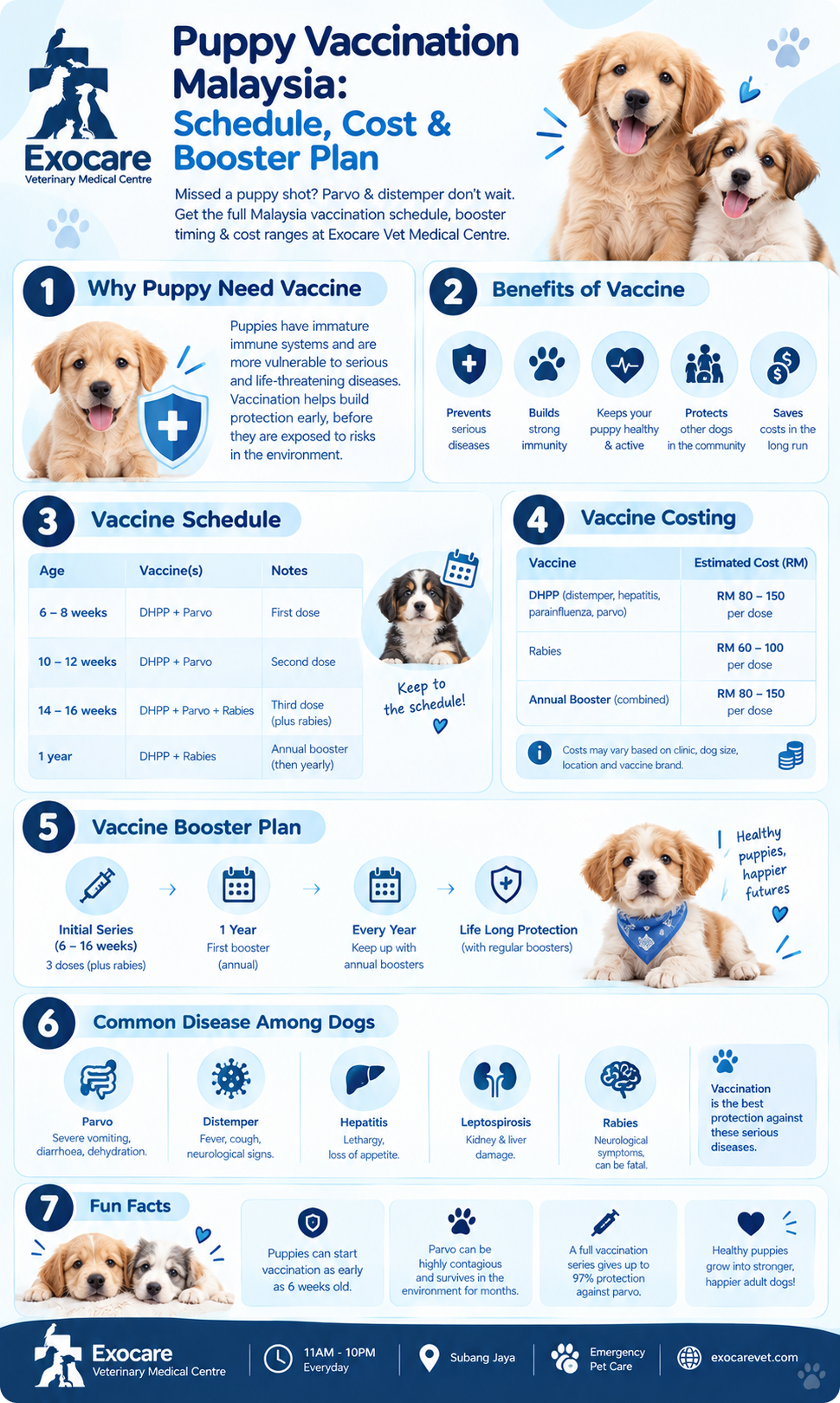
Vaccination does not guarantee complete protection immediately after injection. Maternal antibodies acquired through the mother’s colostrum can interfere with vaccine responses during early life. Because the rate at which these antibodies decline varies between puppies, a series of vaccinations is required rather than relying on a single early injection.
Vaccines are preventive measures, not treatments for an existing infection. A puppy showing signs of illness needs clinical assessment even if it has received one or more vaccine doses.
Puppy vaccination schedule in Malaysia
The following is a general schedule for puppies with no reliable previous vaccination record. The veterinarian must confirm the vaccine product, minimum age, dose intervals and local disease risks.
| Puppy age | Recommended vaccination plan |
|---|---|
| 6–8 weeks | Begin core vaccination against distemper, adenovirus and parvovirus. |
| 10–12 weeks | Repeat core vaccination according to the product label and veterinary schedule. Consider indicated non-core vaccines. |
| 14–16 weeks or older | Give the final puppy core dose at 16 weeks or later to reduce the risk of maternal antibodies interfering with protection. |
| Around 6 months | Discuss an additional core vaccination or antibody testing, following current veterinary guidance. |
| Around 12 months | Review vaccination history and administer due boosters and lifestyle-based vaccines. |
| Adult life | Continue boosters at intervals appropriate to the vaccine, product label and disease risk. |
The 2024 WSAVA vaccination guidelines recommend core vaccination every 3–4 weeks from 6–8 weeks of age until at least 16 weeks. Puppies at particularly high risk may require a different schedule.
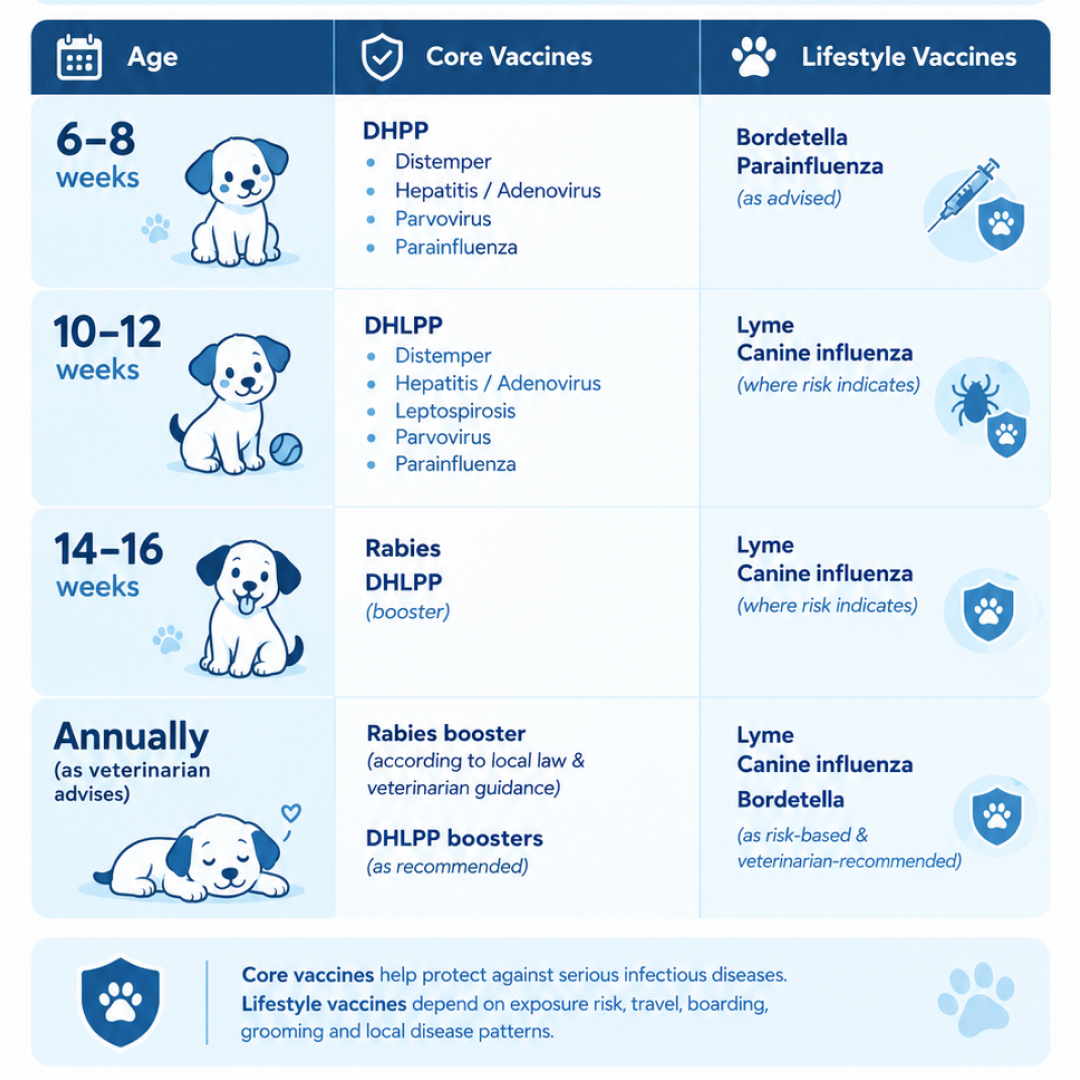
WSAVA also recommends considering revaccination at or after 26 weeks rather than waiting until 12–16 months, because a small number of puppies may not respond adequately to earlier doses. Follow the veterinarian’s advice and locally registered product instructions.
Which vaccines does a puppy need?
-
Core combination vaccine: Protects against canine distemper, adenovirus and parvovirus.
-
Leptospirosis: Consider where the disease is prevalent and suitable vaccines are available; it can cause serious illness and infect humans.
-
Kennel cough: May be recommended for puppies attending boarding facilities, daycare, training classes or other high-contact environments.
-
Rabies: Follow Malaysian veterinary advice, applicable requirements and travel or import rules.
A vaccine appointment should include a health assessment. Vaccination may need to be postponed if a puppy is significantly unwell, depending on the clinical findings.
Risks in Malaysia’s hot and humid climate
Malaysia’s climate does not change the basic vaccine schedule, but local exposure patterns and housing conditions affect infection risk.
Parvovirus is particularly concerning because the virus can persist in contaminated environments. Puppies may encounter infectious material through soil, footwear, shared outdoor spaces or contact with contaminated faeces. Distemper can spread through infected animals and respiratory secretions.
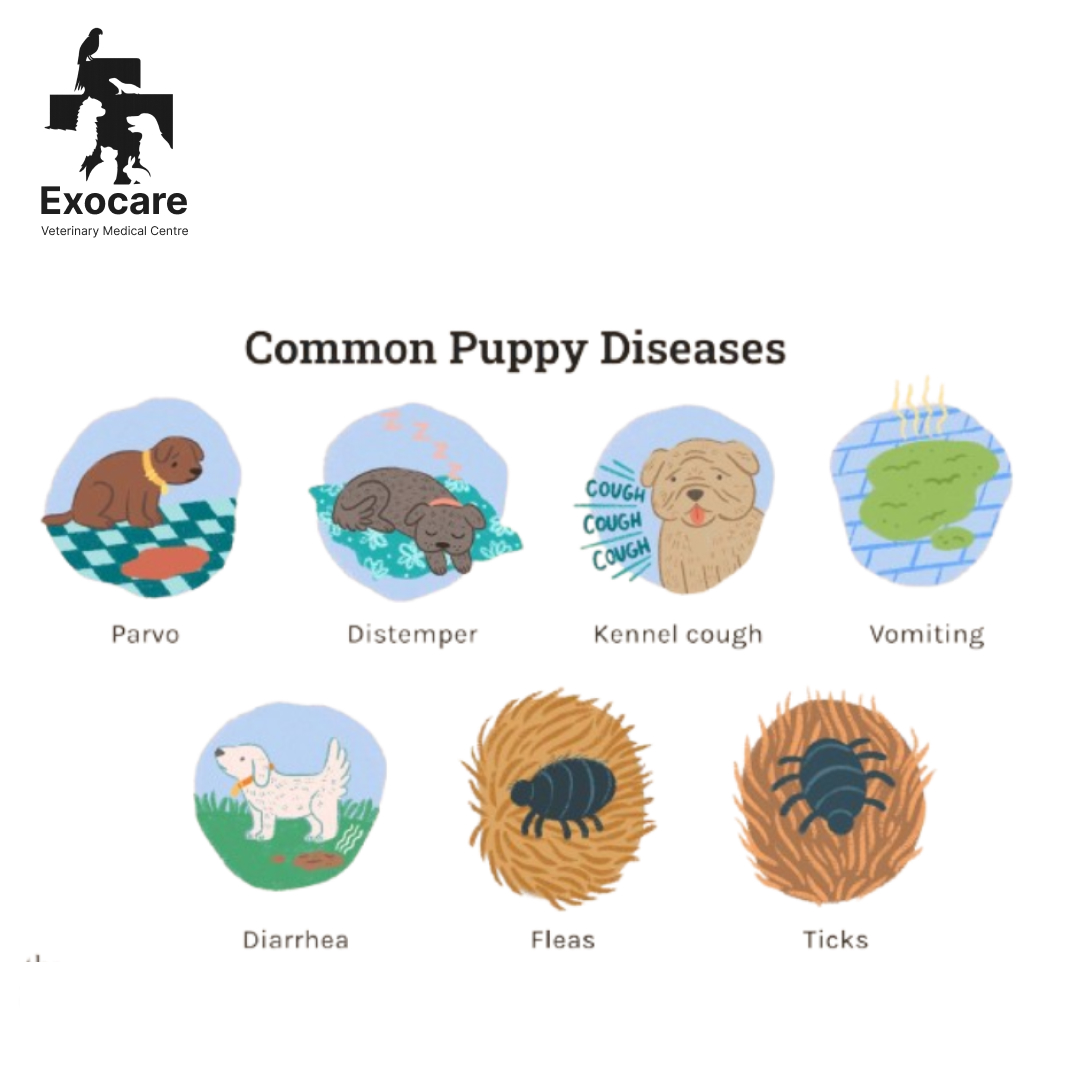
Until the primary series is complete, avoid dog parks, communal toilet areas and contact with dogs of unknown vaccination status.
However, safe early socialisation remains important: use clean, controlled environments and healthy, appropriately vaccinated dogs rather than isolating the puppy completely.
Heat stress is a separate risk. Avoid leaving puppies in hot cars or poorly ventilated spaces, and seek urgent care for collapse, marked weakness or breathing difficulty.
Read : Spay & Neuter Dog Malaysia: Best Age, Cost & Aftercare
Pathophysiology and clinical diagnosis
Maternal antibodies can neutralise vaccine antigens before the puppy develops its own adequate immune response. This creates a temporary period when protection may be incomplete. Repeated doses help increase the chance of successful immunisation as maternal antibody levels decline.
Before vaccination, the veterinarian should review the puppy’s age, previous vaccine certificates, deworming history, appetite, stool quality, activity and exposure to other animals.
A physical examination assesses temperature, hydration, mucous membranes, respiratory status and general condition. Blood tests, faecal testing, imaging or other diagnostics are not routinely required for every healthy puppy receiving a standard vaccine. They may be indicated when symptoms or examination findings suggest disease.
If a puppy has vomiting, diarrhoea, lethargy or poor appetite, the veterinarian may recommend testing for parvovirus and other causes before deciding whether vaccination should proceed. Vaccines do not treat active parvovirus or distemper infection.
Read : 8 Pet Emergency Symptoms You Cannot Ignore (Expert Review)
Puppy vaccination myths vs clinical facts
| Myths | Clinical facts |
|---|---|
| One dose is sufficient | A primary series is needed |
| Complete isolation is safest | Controlled socialisation is possible |
| Deworming prevents viral disease | Parasite control and vaccination serve different purposes |
| Every reaction is dangerous | Mild effects differ from emergency reactions |
Puppy vaccination at ExoCare Vet Medical Centre
ExoCare provides preventive veterinary care, puppy vaccination, health examinations and post-vaccination monitoring. Its published vaccination service includes vaccination certificates and booster reminders. See the vaccination service.
The clinical process includes a health check, selection of appropriate vaccines, administration, observation and guidance on expected reactions. ExoCare also offers a puppy health screening service to establish a baseline health record.
For exotic pets, precision dosing and species-specific husbandry are essential; avian radiography and in-house cytology may support other clinical investigations when indicated, but they are not routine requirements for puppy vaccination.
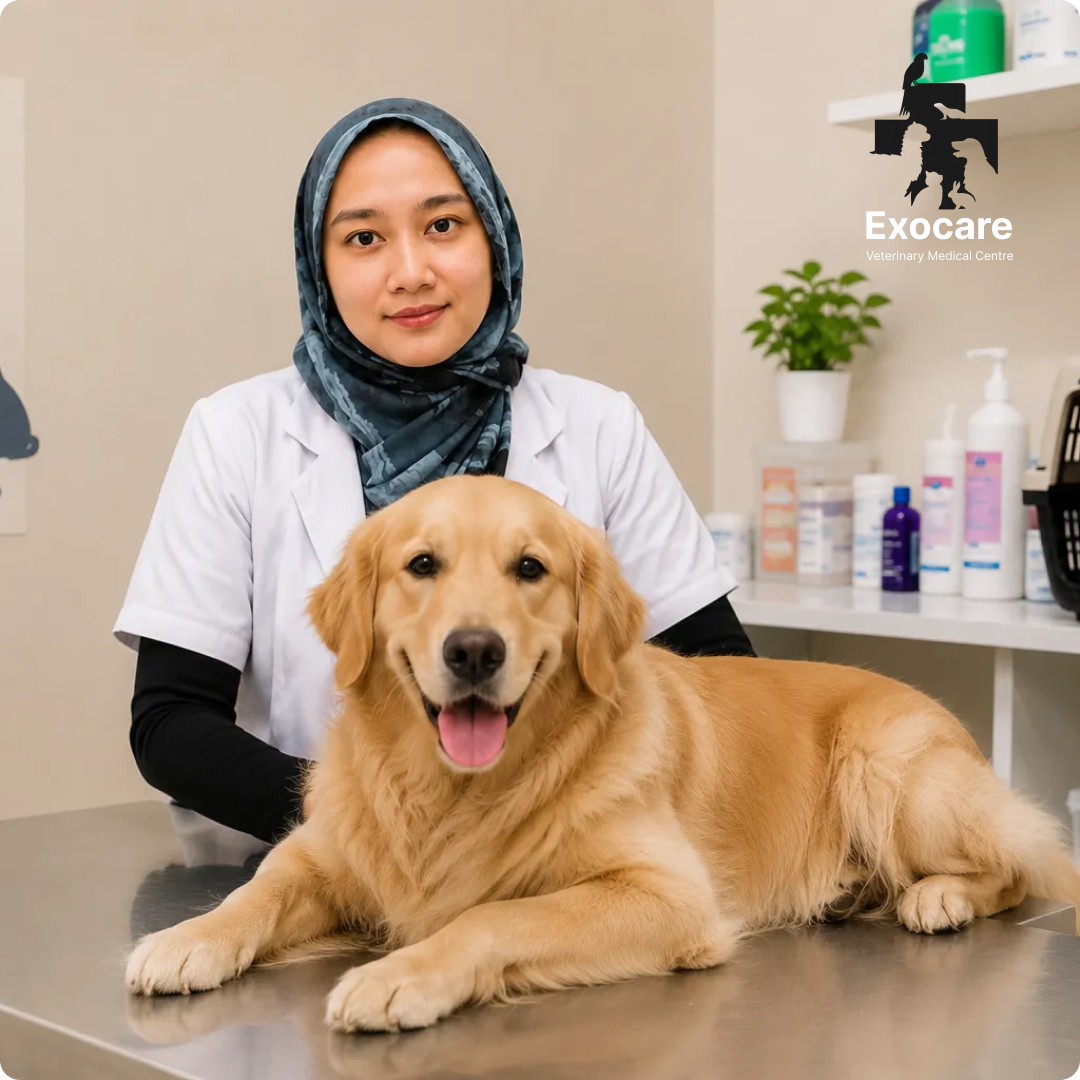
“Puppy vaccination is most effective when doses are scheduled around the puppy’s age, maternal antibody interference and exposure risk. Owners should bring existing vaccination records to the first consultation so we can identify missed doses and establish an appropriate booster plan.”
— Dr. Asma Farihah (Lead Vet, ExoCare Vet Medical Centre)
When to see a vet?
Seek urgent veterinary attention if your puppy develops repeated vomiting, bloody diarrhoea, severe lethargy, refusal to drink, collapse or breathing difficulty. These signs may indicate serious illness, including parvovirus, and should not be attributed to normal post-vaccination effects without assessment.
After vaccination, facial swelling, breathing difficulty or collapse may indicate a serious allergic reaction.
ExoCare Veterinary Medical Centre, Subang Jaya
- Hours: 11:00 AM–10:00PM Everyday
- Telephone: +60 16-242 4884.
- Appointments: Book online.

Read : Dog Skin Allergy Malaysia : Tropical Causes & Treatment Cost
Bring previous vaccination records, medication details and any relevant medical history. Transport your puppy in a secure carrier or on a secure leash, depending on its size. A fresh faecal sample is useful if requested for parasite or gastrointestinal investigation, but is not routinely required for vaccination.
ExoCare’s published emergency service operates during clinic hours. For emergencies outside those hours, contact a veterinary facility that confirms 24-hour availability.
Read : Subang Jaya Dog Blood Bank : Give Your Dog a Purpose Now!
Frequently asked questions
How much does puppy vaccination cost in Malaysia?
The total depends on the vaccine product, number of doses, consultation and any additional tests. ExoCare does not publish a confirmed fixed price for every puppy vaccination combination. Contact the clinic for its current fee schedule and ask whether consultation charges are separate.
What if I miss my puppy’s booster appointment?
Contact your veterinarian with the puppy’s age and vaccination record. The next step depends on the previous vaccine, the interval since the missed dose and the product instructions. Do not assume the entire series must restart or that one additional injection will always be sufficient.
Can my puppy go outside after its first vaccination?
Avoid dog parks, contaminated communal areas and contact with dogs of unknown vaccination status until your veterinarian considers exposure risk acceptable. Controlled socialisation may still be appropriate before the series is complete. The timing of unrestricted public exposure depends on the puppy’s vaccination progress and local disease risk.
Conclusion
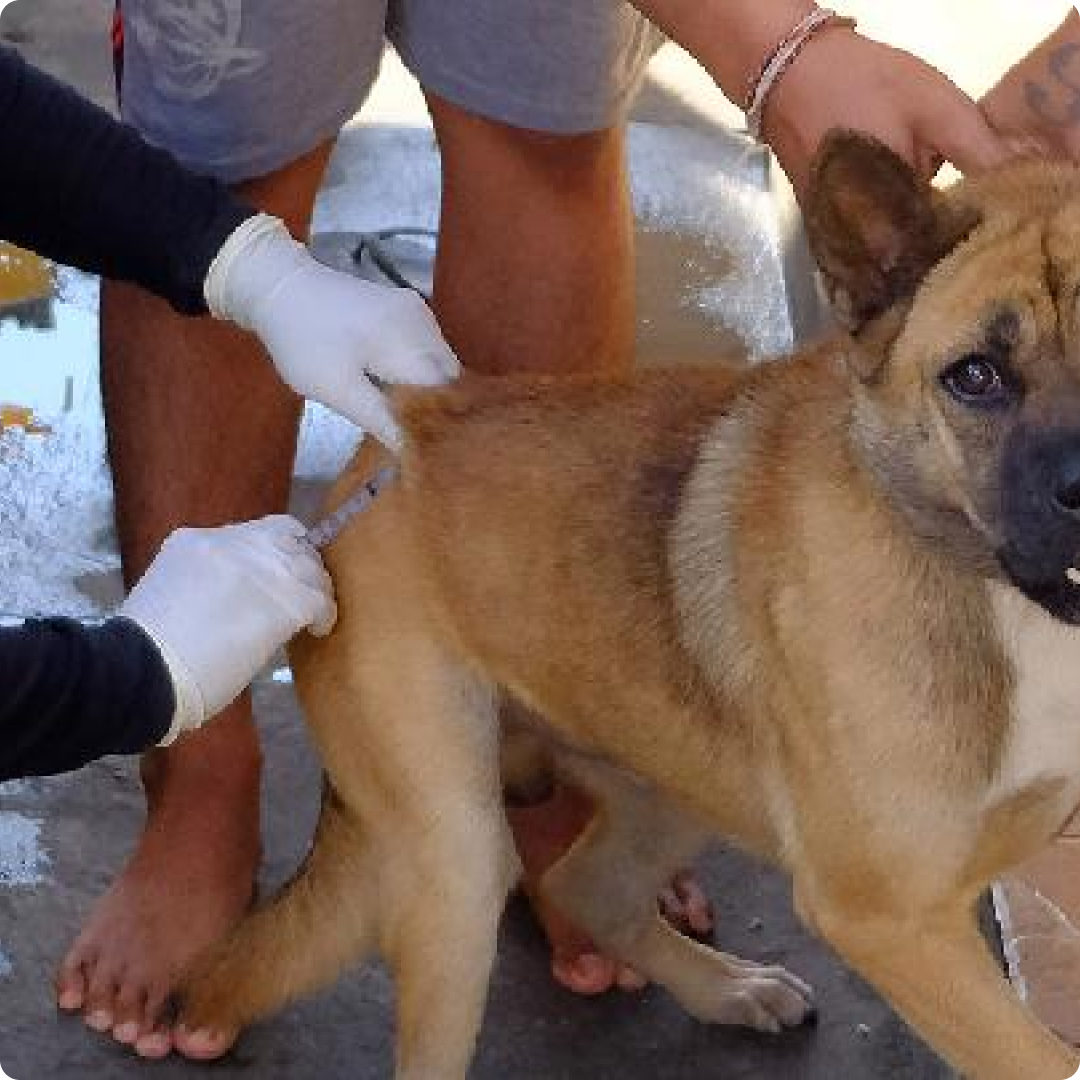
Puppy vaccination is a planned series, not a one-off injection. Correct timing, health assessment and appropriate boosters help protect against potentially life-threatening infections, especially parvovirus and distemper.
Book a consultation with ExoCare Veterinary Medical Centre to review your puppy’s vaccination record, establish the next due date and obtain a clear cost estimate. You can also use the contact option on the official website or call during clinic hours. Walk-ins are subject to availability.
References :
- World Small Animal Veterinary Association (WSAVA), 2024 Guidelines for the Vaccination of Dogs and Cats, published 3 April 2024. Accessed at: https://doi.org/10.1111/jsap.13718
- Department of Veterinary Services Malaysia, Animal Passport: Canine Vaccination Guidance. Accessed at: https://animalpassport.dvs.gov.my/portal-main/article-content?id=71a65cc2-1742-11ef-ba49-fa163eda1aa9
- Department of Veterinary Services Malaysia, Registration of Veterinary Vaccines. Accessed at: https://www.dvs.gov.my/index.php/pages/view/380
This article has been medically reviewed based on clinical protocols by:
Dr. Asma Farihah (MVC No. 3362).
Lead Veterinarian & Co-Founder, ExoCare Vet Medical Centre, Subang Jaya. ExoCare is a referral veterinary medical center specializing in the medical, surgical, and critical care of small animals, exotic pets, avian species, reptiles, rodents, and amphibians in Malaysia.