
- Incorrect timing, undiagnosed disease and inadequate postoperative care can increase complications.
- A veterinary examination helps determine appropriate timing, anaesthetic fitness and preoperative screening requirements.
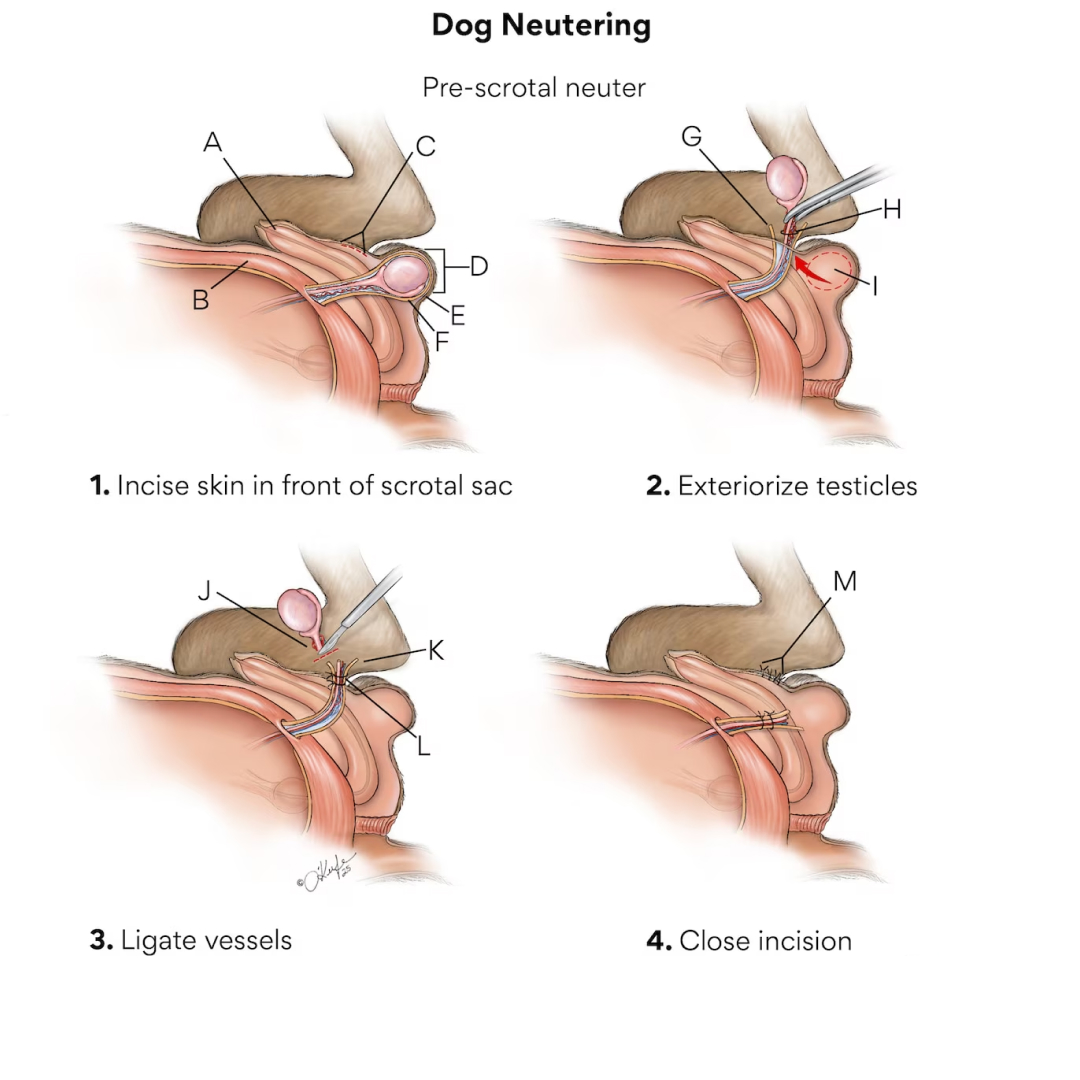
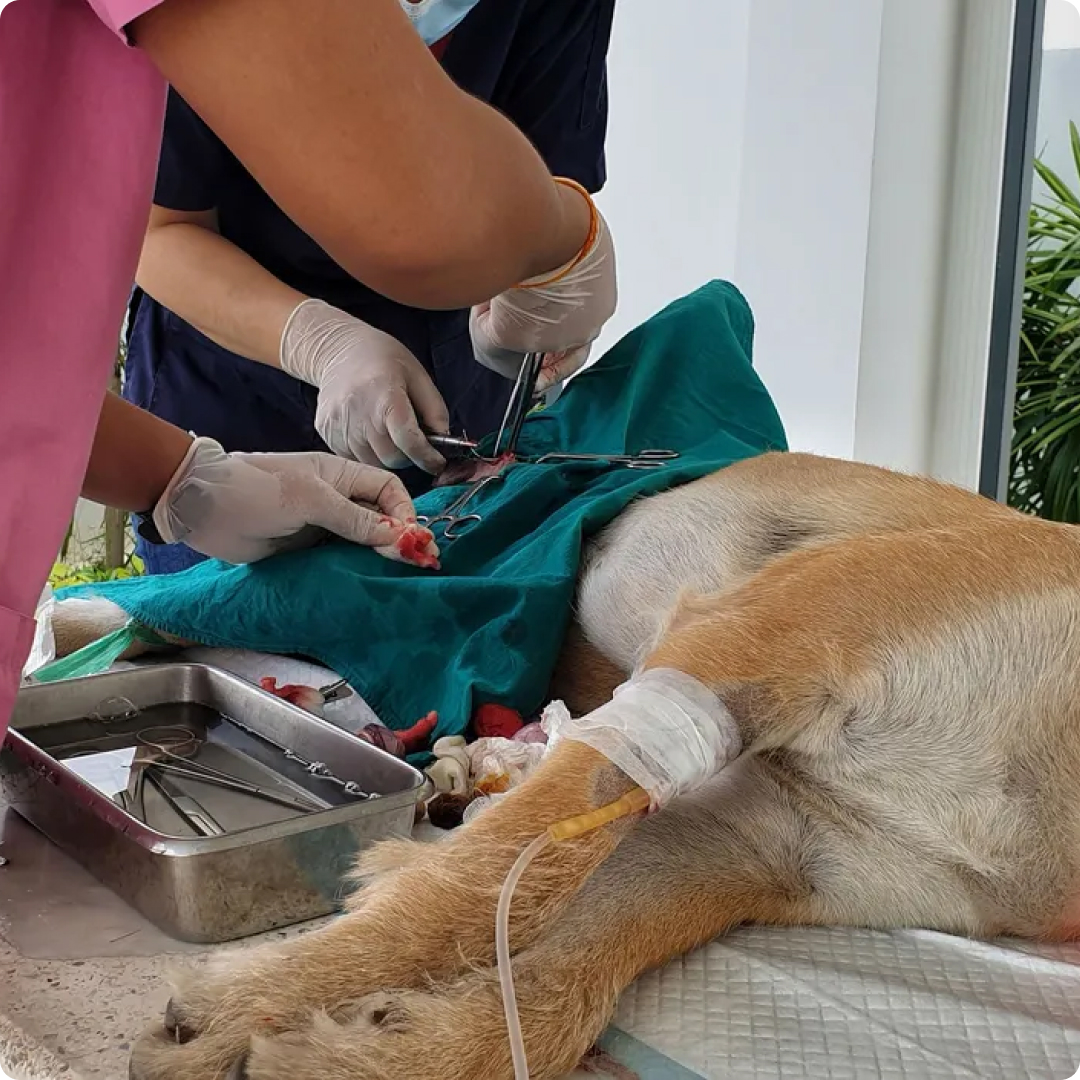
- Neutering is the surgical sterilisation of male dogs through removal of both testes. Spaying sterilises female dogs by removing the ovaries, with or without the uterus.
- Sterilisation prevents reproduction and reduces specific reproductive health risks. Castration may also reduce testosterone-dependent behaviours.
- Contact ExoCare Veterinary Medical Centre in Subang Jaya to discuss your dog’s surgical options, estimated costs and recovery plan.
Undetstanding Dog Neutering
Male dog neutering, or bilateral orchiectomy, involves removing both testes under general anaesthesia. It prevents sperm production and substantially reduces testosterone levels.
Potential benefits include permanent sterilisation, elimination of testicular disease risk and reduced risk of benign prostatic hyperplasia.
Roaming, mounting and urine marking may decrease when these behaviours are hormonally influenced. However, neutering does not reliably eliminate aggression, anxiety or learned behaviours.

Female dog spaying involves removing both ovaries (ovariectomy) or both ovaries and the uterus (ovariohysterectomy). It prevents pregnancy and ovarian cycling.
Removing the uterus prevents uterine pyometra, a potentially life-threatening infection. Removing both ovaries also prevents most hormone-dependent cases when no functional ovarian tissue remains.
Spaying before the first heat may reduce mammary tumour risk, although the magnitude of protection and the balance of long-term risks vary between studies and individual dogs.
Read : Subang Jaya Dog Blood Bank : Give Your Dog a Purpose Now!
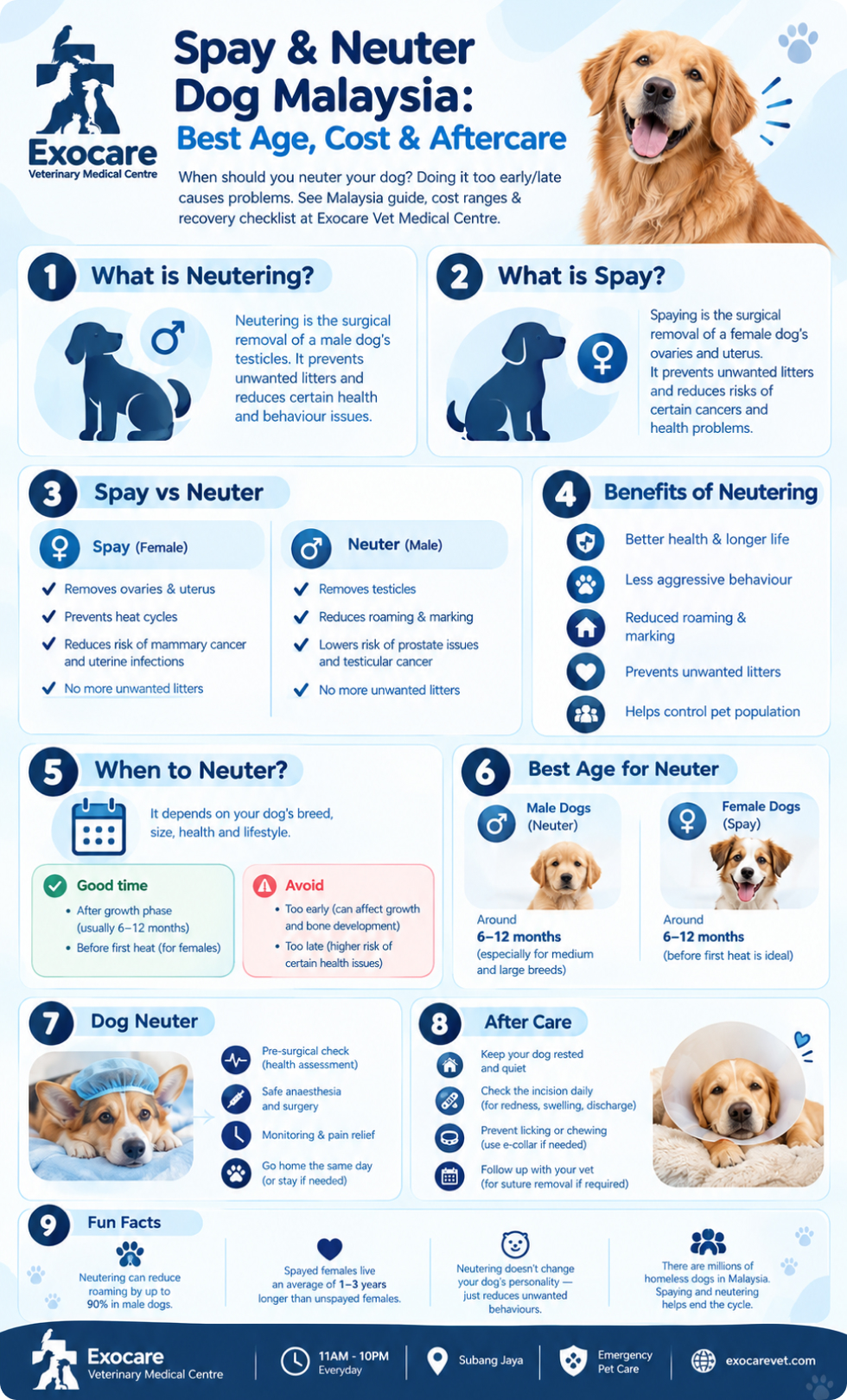
Best Age to Neuter a Dog in Malaysia
There is no universal age that suits every dog. Breed, expected adult size, sex, health status and reproductive circumstances influence the decision.
- Small-breed male dogs: Around six months is a common starting recommendation.
- Large- and giant-breed male dogs: Some may benefit from waiting until skeletal growth is substantially complete, often around 9–15 months or later.
- Female dogs: Spaying around 5–6 months may be appropriate for many small breeds. Larger breeds may require an individualised discussion balancing mammary tumour prevention against orthopaedic and other health considerations.
- Adult and senior dogs: Age alone does not automatically prevent surgery. Medical conditions and anaesthetic risks must be assessed.
Early gonadectomy has been associated with increased risks of selected orthopaedic disorders and certain cancers in some breed and sex groups. These associations are not consistent across all dogs.
Delaying surgery maintains pregnancy risk in females and may allow testosterone-dependent conditions to develop in males. Discuss timing with your veterinarian rather than following a fixed age rule.
Risks & Impact with Malaysian Climate
Malaysia’s hot, humid climate makes temperature management and postoperative care particularly important. Dogs depend heavily on panting to dissipate heat, and high humidity reduces evaporative cooling efficiency.
After anaesthesia, temporary changes in alertness and thermoregulation may occur. Appropriate temperature monitoring, controlled recovery conditions and observation before discharge are important.

During recovery:
- Keep your dog indoors in a cool, ventilated environment.
- Avoid strenuous activity and midday heat.
- Keep the incision clean and dry.
- Prevent licking with a suitable recovery collar.
- Follow the veterinarian’s instructions on food, water and medication.
Heavy panting accompanied by weakness, vomiting, confusion or collapse after heat exposure may indicate heatstroke and requires immediate veterinary attention.
Read : Dog Skin Allergy Malaysia : Tropical Causes & Treatment Cost
Pathophysiology and Health Assessment
Removing the testes reduces testosterone production, while removing the ovaries stops ovarian cycling. These hormonal changes influence reproductive health, behaviour and potentially body composition.
Weight gain can occur after sterilisation if energy intake exceeds the dog’s changing requirements. Monitor body weight, adjust food portions when appropriate and maintain regular exercise.
Before surgery, the veterinarian should conduct a physical examination covering medical history, current medication, body condition, heart and lung sounds, hydration and reproductive status. Male dogs should be checked for retained testicles (cryptorchidism), which may require a more complex surgical approach.
Depending on the patient’s age, history and examination, pre-anaesthetic investigations may include:
- Serum biochemistry: Assesses relevant organ-function markers & electrolytes.
- Complete blood count (CBC): Evaluates red blood cells, white blood cells & platelets.
- Additional tests: Urinalysis, coagulation testing, imaging or cardiac assessment when clinically indicated.
Radiography and ultrasound are not automatically required for every healthy dog undergoing routine neutering. The veterinarian should select investigations that could change the surgical or anaesthetic plan.
Common Dog Neutering Myths
Myth 1: A male dog must mate before neutering.
Reality: There is no medical requirement for a dog to mate before castration. Breeding is not necessary for health.
Myth 2: Every dog should be neutered at six months.
Reality: Timing depends on breed, adult size, sex, physical maturity and individual medical risks.
Myth 3: Neutering automatically makes dogs fat.
Reality: Energy requirements may change after sterilisation, but appropriate portion control and exercise can reduce obesity risk.
Myth 4: Neutering eliminates aggression.
Reality: Castration may influence hormone-dependent behaviours but does not reliably resolve aggression caused by fear, pain, anxiety or learned responses.
Myth 5: Healthy-looking dogs do not need preoperative screening.
Reality: Physical examination and risk-based laboratory testing can identify abnormalities that are not obvious at home. Normal test results cannot guarantee complication-free anaesthesia.
Myth 6: Surgery is unsafe during Malaysian hot weather.
Reality: Ambient heat does not automatically prohibit surgery. Appropriate anaesthesia, temperature management and recovery monitoring are essential.
| Myth | Clinical reality |
|---|---|
| Dogs must mate first | No such requirement |
| All dogs at six months | Timing must be individualised |
| Neutering guarantees weight gain | Weight management reduces risk |
| Neutering cures aggression | Behavioural causes need assessment |
| Screening is unnecessary | Testing depends on clinical risk |
Our Experience at ExoCare Vet Medical Centre
ExoCare Veterinary Medical Centre in Subang Jaya provides veterinary surgical services, diagnostic screening and species-specific care. For canine neutering, the clinical priorities are assessing surgical fitness, planning anaesthesia, managing pain and monitoring recovery.
The process generally involves:
- Reviewing the dog’s history and confirming the surgical indication.
- Performing a physical examination and arranging appropriate investigations.
- Selecting a suitable surgical and anaesthetic protocol.
- Monitoring vital signs and recovery before discharge.
- Providing written aftercare instructions and follow-up recommendations.
Exotic animals require different anaesthetic approaches. Precision dosing and temperature management are particularly important for birds, reptiles and small mammals, but these protocols should not be confused with routine canine surgery.
A baseline health assessment also helps identify underlying disease before elective procedures. The objective is to select appropriate tests, not to order every available investigation.
“There is no single neutering age suitable for every dog. Malaysian owners should consider breed, expected adult size, health status and the ability to prevent unwanted mating while waiting for surgery. A preoperative examination helps identify relevant risks and establish an appropriate recovery plan.”
— Dr. Asma Farihah (Lead Vet, Exocare Vet Med Centre)
Dog Neutering Cost in Malaysia (2026)
An indicative planning range for private-clinic canine spaying and neutering is RM400–RM1,500. This is not a confirmed ExoCare quotation.
Costs vary according to the dog’s size, sex, anaesthetic requirements, surgical complexity and included services.
Potential additional charges include:
- Consultation and pre-anaesthetic blood tests.
- Imaging or other investigations when indicated.
- Medication and postoperative pain relief.
- Hospitalisation and follow-up.
- Additional surgery for a retained testicle or reproductive disease.
Female spaying generally involves abdominal surgery, while routine male castration usually involves a smaller surgical field. Request an itemised estimate before consenting to surgery.
ExoCare lists pre-surgical screening separately from its surgical services. Confirm current fees, required tests and what the quoted package includes directly with the clinic.
Read : Complete Dog Care From Puppy to Senior
Aftercare: The First 14 Days
First 24 hours: Mild sleepiness or reduced appetite may occur after anaesthesia. Provide a quiet resting area and follow discharge instructions. Difficulty waking, breathing problems or rapid deterioration require urgent veterinary attention.
Days 2–3: Check the incision daily, prevent licking and allow only short, controlled toilet breaks.
Days 4–7: Continue restricting running, jumping, rough play, swimming and bathing. Contact your veterinarian if redness, swelling, discharge or pain increases.
Days 10–14: Many uncomplicated incisions are substantially healed, but recovery varies. Attend the recommended follow-up and do not remove sutures or discontinue restrictions without veterinary approval.
Never administer human painkillers such as ibuprofen or paracetamol unless a veterinarian has specifically prescribed an appropriate product and dose.
When to See a Vet?
Seek urgent veterinary attention for breathing difficulty, collapse, seizures, uncontrolled bleeding, pale or blue gums, severe pain, repeated vomiting, an opening incision or inability to urinate.
ExoCare Veterinary Medical Centre
- Location: G3, Lot 15, Jalan SS 16/1, SS 16, 47500 Subang Jaya, Selangor.
- Published hours: Monday and Wednesday–Sunday, 11:00 AM–7:00 PM. Closed Tuesdays.
- Telephone: +60 3-5145 8989.
- Appointment: https://exocarevet.com/appointment/
Bring previous medical records, vaccination history, current medication details and relevant test results. A fresh faecal sample is only necessary if requested for a specific diagnostic purpose.
Call ahead to confirm availability, particularly for urgent cases. Do not assume the clinic offers emergency coverage until 10 PM or 24-hour service without direct confirmation.
Read : 8 Pet Emergency Symptoms You Cannot Ignore (Expert Review)
Frequently Asked Questions
How much does dog neutering cost in Malaysia?
A broad indicative range is RM400–RM1,500, depending on the procedure and included services. This is not ExoCare’s confirmed price. Ask whether consultation, blood tests, medication, hospitalisation and follow-up are included.
Is six months the best age to neuter a male dog?
Six months is a common starting point for many small breeds. Large and giant breeds may require a later timeline, depending on skeletal maturity and breed-associated risks. A veterinary examination helps determine appropriate timing.
How long does recovery take, and are blood tests compulsory?
Many dogs require approximately 10–14 days of restricted activity, although healing varies. Pre-anaesthetic tests are selected according to the dog’s medical history, examination and anaesthetic risk.
Confirm which tests ExoCare requires and their current fees; the published information does not establish one universal test panel or fixed diagnostic charge for every dog.
Conclusion
Choosing the right time to neuter a dog requires balancing reproductive health, breed-specific risks, anaesthetic fitness and recovery requirements. Six months may be suitable for some dogs, while others benefit from a different timeline.
Contact ExoCare Veterinary Medical Centre to discuss your dog’s age, breed, weight and medical history before arranging surgery.

- Online booking: https://exocarevet.com/appointment/
- WhatsApp: Use the contact option on https://exocarevet.com/.
- Telephone: +60 3-5145 8989 during published operating hours.
- Walk-in: Subject to availability; call ahead to confirm.
Obtain a clear surgical plan, itemised estimate and postoperative instructions before proceeding.
References :
- Hart et al., Assisting Decision-Making on Age of Neutering for 35 Breeds of Dogs, Frontiers in Veterinary Science, 2020. https://doi.org/10.3389/fvets.2020.00388
- Hart et al., Assisting Decision-Making on Recommended Age of Spay/Neuter for a Specific Dog, Veterinary Clinics of North America: Small Animal Practice, 2023. https://pubmed.ncbi.nlm.nih.gov/37330274/
- British Small Animal Veterinary Association, Neutering of Dogs, Cats, Rabbits and Ferrets. https://www.bsava.com/position-statement/neutering-of-dogs-cats-rabbits-and-ferrets/
- American Animal Hospital Association, Canine Life Stage Guidelines. https://www.aaha.org/resources/life-stage-canine-2019/
This article has been medically reviewed based on clinical protocols by:
Dr. Asma Farihah (MVC No. 3362).
Lead Veterinarian & Co-Founder, ExoCare Vet Medical Centre, Subang Jaya. ExoCare is a referral veterinary medical center specializing in the medical, surgical, and critical care of small animals, exotic pets, avian species, reptiles, rodents, and amphibians in Malaysia.