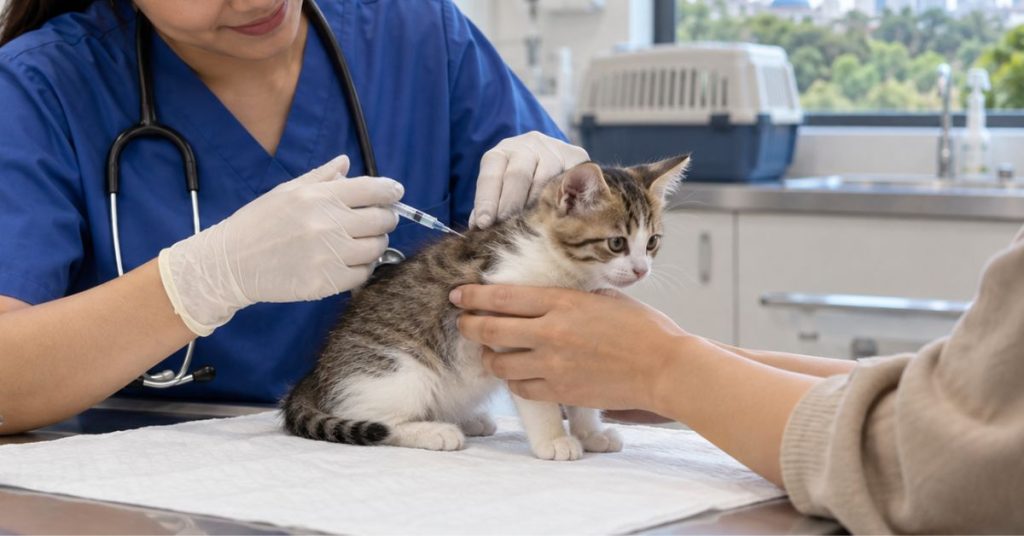

- Blood in cat urine is visible pink, red, or brown urine or blood detected only under the microscope & it is a clinical sign.
- This is most often signals Feline Lower Urinary Tract Disease (FLUTD) & in male cats it can precede a fatal urethral obstruction within 24–48 hours.
- Owners frequently wait, assume it is a simple “infection,” or try human remedies.
- Rapid clinical assessment with in-house urinalysis, digital radiography & ultrasound pinpoints the true cause.
- If your cat is straining, crying in the litter box, or passing bloody urine, contact us immediately
Few things send a cat owner into a panic faster than spotting blood in the litter box. I see it in the waiting room almost every week, someone holding a scoop of clumped litter with a pink stain, or describing dark reddish-brown drops they found on the cool bathroom tiles that morning.
Whatever the shade, whether it is a faint tint or an actual clot, the message from your cat’s body is the same: something along the urinary tract is inflamed, irritated, or bleeding and it needs to be looked at properly.
At ExoCare Vet Medical Centre in Subang Jaya, bloody urine is one of the most common reasons cats are rushed to us. Many owners arrive convinced their cat has a simple “urinary tract infection”, the way a person might. In cats, the reality is usually quite different and getting the diagnosis right is what separates a cat that recovers in days from one that ends up in an emergency.
What Does Blood in Cat Urine Actually Mean?
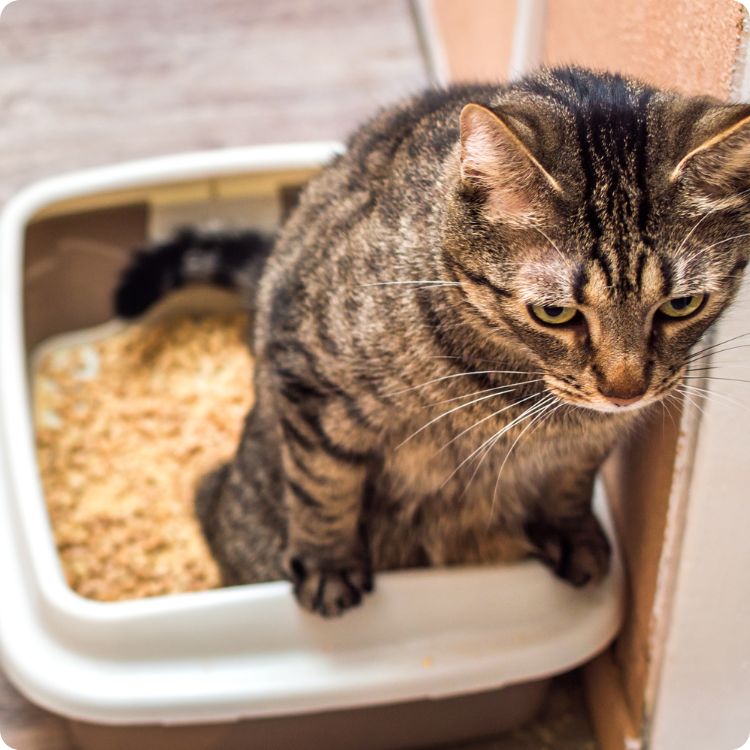
In veterinary medicine we call blood in the urine haematuria. It is a symptom, not a diagnosis. It tells us there is a problem somewhere along the urinary tract, the bladder and urethra most often, but on its own it does not tell us why.
In most cats, bloody urine shows up alongside a cluster of other lower urinary tract signs. When I take a history, these are the ones I ask about specifically:
- Frequent tiny trips (pollakiuria): in and out of the box, passing only a few drops each time.
- Vocalising or over-grooming: crying while trying to pass urine, or licking the genital area raw.
- Straining to urinate (stranguria): long, uncomfortable sessions in the box with little to show for it.
- Going outside the box (periuria): seeking out cool, smooth surfaces likes tiles, the bathtub, a laundry basket.
When these signs travel together, we group them under an umbrella term: Feline Lower Urinary Tract Disease (FLUTD). FLUTD is not one disease, it is a family of distinct bladder and urethral conditions that happen to look alike from the outside. That is exactly why we investigate rather than reach straight for antibiotics.
Common Causes of Bloody Urine in Cats

To treat the problem, we first have to find what is irritating the bladder wall or urethra. These are the causes I see most often, roughly in order of frequency.
1. Feline Idiopathic Cystitis (FIC)
In cats under ten, FIC is the single most common cause of bloody urine, it accounts for well over half of all FLUTD cases in this age group. “Idiopathic” means the bladder is inflamed with no bacterial infection and no stone to blame.
What we do know is that FIC is tightly linked to stress: a new pet, a house move, renovations, tension between cats in a shared home, or simply a cat that does not drink enough. In Malaysia, I often see flare-ups after the family travels for the holidays and the cat’s routine is upended.
2. Bladder Stones (Urolithiasis)

Microscopic crystals in the urine can clump together over time into stones. The two we see most are struvite and calcium oxalate, together they make up the large majority of feline bladder stones. As these stones shift around inside the bladder, they scrape the delicate lining, and that abrasion is what turns the urine bloody.
3. Urethral Obstruction
This is the one that keeps vets up at night, and it is almost always male cats. Their urethra is long and narrow, so crystals, mucus and inflammatory protein can weld together into a plug that blocks the flow completely. Once a cat is truly blocked, urine has nowhere to go.
Waste products and potassium climb in the bloodstream, the kidneys begin to fail, and dangerously high potassium can throw the heart into a fatal rhythm.
4. Bacterial Urinary Tract Infections (UTIs)
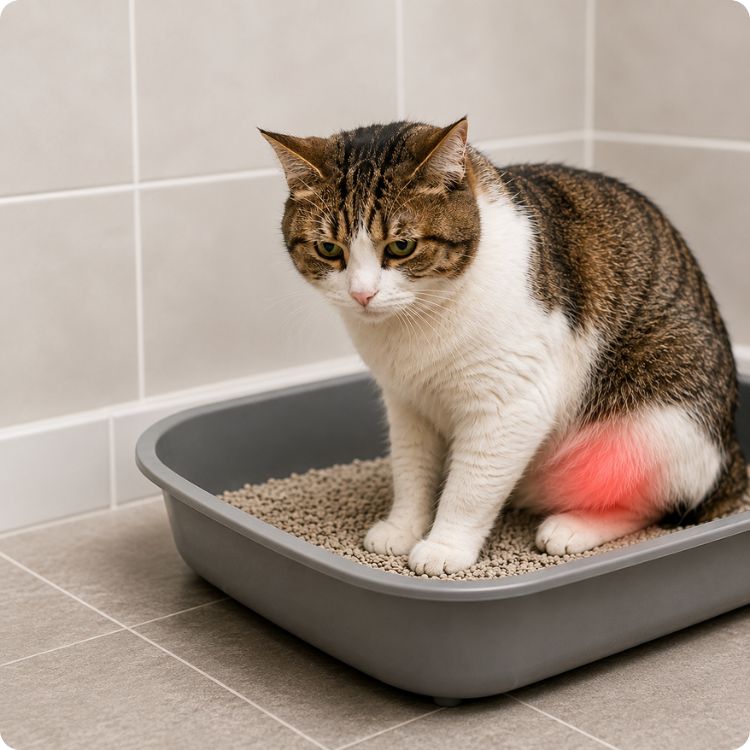
Here is where cats surprise people. A true, primary bacterial UTI is actually uncommon in young, otherwise healthy cats, it accounts for only a small fraction of FLUTD cases in that group.
Bacterial infections become far more likely in senior cats (ten years and older) and in those with an underlying condition such as chronic kidney disease, diabetes, or hyperthyroidism. This is precisely why we do not hand out antibiotics on assumption: in a young cat, they usually treat nothing.
How We Diagnose the Root Cause
Because antibiotics will not calm a sterile inflammation or dissolve a stone, the diagnosis has to come first. Our workup is systematic, and we usually stage it based on how the cat presents on the day.
Urinalysis and In-House Cytology
We measure urine concentration (specific gravity) and pH, then put the sediment under the microscope to look for crystals, red blood cells and bacteria. This single test often points us in the right direction within minutes.
Digital Radiography (X-rays)
X-rays reveal dense bladder stones and let us assess the size and position of the bladder, important information if we suspect a blockage.
Abdominal Ultrasound
Ultrasound gives us a live view of the bladder wall thickness, blood clots, and any soft-tissue mass that an X-ray might miss entirely.
Blood Biochemistry
If a urethral obstruction is on the table, bloodwork is non-negotiable. It tells us how the kidneys are coping and, critically, whether potassium has risen to a level that threatens the heart.
Prevention Care That Actually Work
Active bleeding always needs a vet. But once your cat is stable, long-term care is mostly about protecting the bladder and a lot of it happens at home.
- Get more water into them. Cats have a famously low thirst drive. Wet food and a pet water fountain both encourage drinking, which dilutes the urine and gives crystals less chance to form, especially useful in our hot, humid climate.
- Lower the household stress. Keep routines predictable, provide enough scratching posts and hiding spots, and follow the litter-box rule: one more box than the number of cats (three boxes for two cats).
- Do not self-medicate. Please skip the human urinary supplements and cranberry products. They do nothing for feline stones or blockages, and worse, they can delay the care your cat actually needs.
Common Care Myths
“Blood in the urine is always a urinary tract infection.”
In young cats, true bacterial UTI is actually rare. The majority of cases are sterile idiopathic cystitis, meaning antibiotics alone will not resolve the problem and may delay correct treatment.
“My cat is just constipated, he keeps straining but nothing comes out.”
A male cat straining with little or no urine is a medical emergency until proven otherwise. This is often urethral obstruction, not constipation, and it is fatal if untreated.
“Only male cats get urinary problems.”
Both sexes develop FLUTD and haematuria. Males are at higher risk of obstruction due to their narrower urethra, but females absolutely still develop cystitis and stones.
| Common Myth | The Clinical Fact |
|---|---|
| Blood in urine will clear up on its own. | Underlying stones or obstruction worsen without treatment; delay can be fatal. |
| A UTI is the usual cause. | Sterile Feline Idiopathic Cystitis is the leading cause in cats under 10. |
| Human cranberry or urinary supplements will fix it. | These do not treat feline stones or obstruction and can mask worsening signs. |
| Straining with no urine means constipation. | In male cats this is often a life-threatening urethral blockage. |
| Only overweight, older cats are affected. | Stress-linked FIC frequently strikes young, indoor cats. |
Our Experience at ExoCare Vet Medical Centre (Subang Jaya)
According to ExoCare’s medical protocols, a cat presenting with blood in the urine is triaged as urgent on arrival, and any male cat suspected of obstruction is treated as a critical emergency.
Our clinical team has observed a recurring pattern: many owners wait until the cat has stopped urinating entirely and become lethargic before seeking help to the point at which kidney values and potassium are already dangerously high.
Where obstruction is confirmed, we prioritise gentle decompression, intravenous fluid therapy to correct electrolyte imbalances, and pain management. For patients requiring sedation to place a urinary catheter, we use precision dosing and continuous cardiac monitoring during anaesthesia, because a compromised kidney patient tolerates far less margin for error.
For recurrent idiopathic cystitis, our approach extends beyond the emergency, we build a long-term plan around hydration, diet, and stress reduction. This is also why we emphasise baseline health screening at a cat’s first visit: knowing a patient’s normal kidney values before a crisis lets us act decisively during one.
“In Malaysia’s heat, I regularly see cats whose bloody urine was dismissed for days as a minor infection. By the time they reach us, a simple case of cystitis has sometimes become a blocked, azotaemic patient fighting for its life. Blood in the urine is your cat’s clearest cry for help and with a male cat straining to pass even a drop, you are counting hours, not days. Please do not wait it out.”
— Dr. Asma Farihah (Lead Veterinarian & Co-Founder, ExoCare Vet Medical Centre)
When to See a Vet?
Treat the following as emergency red flags and seek care immediately:
- Straining in the litter box with little or no urine produced (especially male cats)
- Crying or vocalising while attempting to urinate
- Frequent trips to the litter box producing only drops of bloody urine
- A firm, painful abdomen or a distended bladder
- Lethargy, vomiting, refusing food, or hiding : signs the problem has become systemic (see our guide to pet emergency symptoms you cannot ignore)
Operating hours: ExoCare Vet Medical Centre is open Monday and Wednesday to Sunday, 11:00 AM – 7:00 PM, and closed on Tuesdays.
What to bring: your cat’s previous medical records, a secure carrier, and if you can safely collect one without delaying travel, a fresh urine sample. Do not withhold water from a cat you suspect is blocked.
Frequently Asked Questions
Is blood in cat urine always a medical emergency?
Any blood in the urine warrants a prompt vet check. It becomes a same-day, life-threatening emergency when your cat particularly a male, is straining but unable to pass any urine, because that points to a urethral blockage.
Can blood in cat urine clear up on its own?
The signs of FIC can settle for a while, which is why owners sometimes think the problem has resolved. But the underlying inflammation or crystals are still there. Without addressing the root cause, flare-ups tend to return — often worse, and sometimes progressing to a dangerous blockage.
My cat is drinking normally but there is still blood. Should I still come in?
Yes. A cat that is still eating, drinking and passing urine is reassuring, but blood means the bladder or urethra is inflamed and we should find out why. Early evaluation is also the best way to catch a stone before it becomes a blockage.
Conclusion
Blood in your cat’s urine is one of the clearest warnings in feline medicine. It is never “just an infection” to wait out, and in Malaysia’s climate the risks compound quickly. The good news is that with sharp, on-site diagnostics such as urinalysis, digital radiography, ultrasound, and full bloodwork, the true cause can be identified fast, and your cat’s pain stopped safely.
If you have spotted blood in your cat’s urine, or your cat is straining to urinate, do not wait for it to pass. Contact ExoCare Vet Medical Centre in Subang Jaya today and let our expert clinical team give your cat the precise, decisive care it needs.
References
Merck Veterinary Manual, “Lower Urinary Tract Disease in Cats.” Accessed at: https://www.merckvetmanual.com/urinary-system/noninfectious-diseases-of-the-urinary-system-in-small-animals/lower-urinary-tract-disease-in-cats
American Veterinary Medical Association (AVMA), “Feline Lower Urinary Tract Disease (FLUTD).” Accessed at: https://www.avma.org/resources-tools/pet-owners/petcare/feline-lower-urinary-tract-disease
Today’s Veterinary Practice, “Diagnosing and Managing Feline Lower Urinary Tract Disease.” Accessed at: https://todaysveterinarypractice.com/urology-renal-medicine/diagnosing-and-managing-feline-lower-urinary-tract-disease/
Today’s Veterinary Practice, “Current Thoughts on Pathophysiology and Treatment of Feline Idiopathic Cystitis.” Accessed at: https://todaysveterinarypractice.com/urology-renal-medicine/current-thoughts-on-pathophysiology-treatment-of-feline-idiopathic-cystitis/
Malaysian Veterinary Council (MVC). Accessed at: https://www.mvc.gov.my/
Department of Veterinary Services Malaysia (DVS / Jabatan Veterinar). Accessed at: https://www.dvs.gov.my/
This article has been medically reviewed based on clinical protocols by:
Dr. Asma Fariha (MVC No. 3362) (Malaysian Veterinary Council).
Senior Veterinary Specialist, ExoCare Vet Medical Centre, Subang Jaya.
ExoCare is a referral veterinary medical center specializing in the medical, surgical, and critical care of small animals, exotic pets, avian species, reptiles, rodents, and amphibians in Malaysia.