Most owners are surprised to learn that a local pet blood bank even exists. Their immediate reaction is often worry: “Won’t taking blood harm my healthy dog or cat?”
It is a completely natural concern. However, this misconception causes donor registers at any pet blood bank to stay dangerously low, leaving emergency clinics struggling when a critical patient urgently needs a life-saving transfusion. Below is a clear, step-by-step breakdown of how a professional pet blood bank operates and what actually happens during a pet blood donation.
How a Pet Blood Bank Works
-
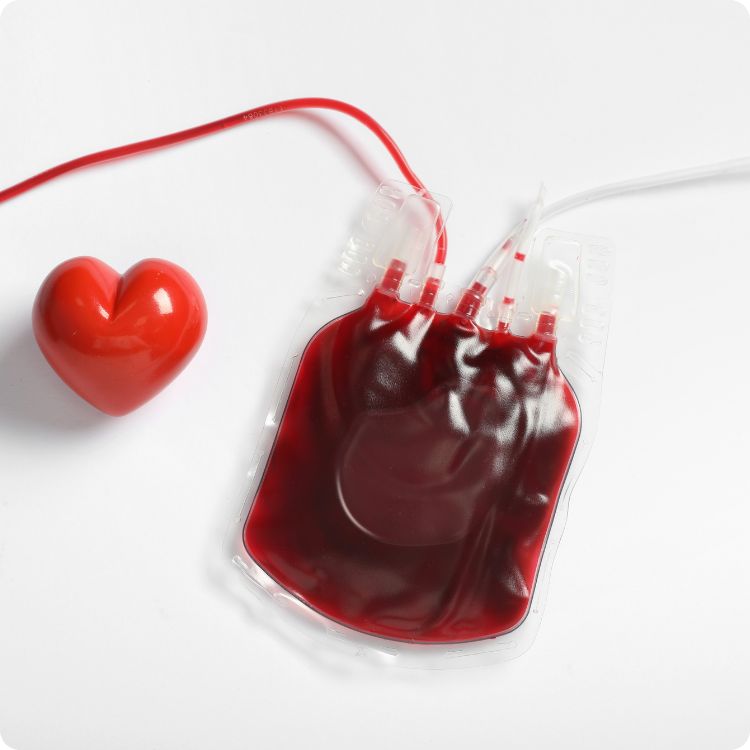
What a Pet Blood Bank Does: Screens, blood-types, collects and stores red blood cells and plasma from healthy dogs and cats for trauma, poisoning, or severe anaemia cases.
-
Donating blood takes only a safe fraction of the pet’s blood volume (≈10–20%), which the body naturally replenishes within days.
-
Most calm donors remain fully awake and relaxed throughout the collection process.
-
In Malaysia’s climate, tick-borne diseases like Ehrlichiosis cause severe anaemia, making a well-stocked pet blood bank a vital lifeline in the Klang Valley.
Why Local Pet Blood Bank Supplies Are Critical in Malaysia
Our warm, humid climate sustains a heavy burden of tick-borne pathogens, specifically Ehrlichiosis and Babesiosis. These infections aggressively destroy red blood cells, causing acute, life-threatening anaemia that can only be corrected through a transfusion.
Because blood cannot be manufactured artificially and has a limited shelf life, a pet blood bank relies entirely on living donors. Having matched blood ready at a local pet blood bank means a critically ill animal is stabilized immediately rather than waiting hours for a donor, a delay that is often fatal.
Who Qualifies as a Donor for a Pet Blood Bank?
Before entering the pet blood bank register, donors must meet strict safety criteria to protect both the donor and the recipient:
-
Body Weight & Age: Dogs must weigh 25 kg and cats 4.5 kg. Donors should be young to middle-aged adults so the volume collected remains a safe fraction of total blood.
-
Health & Temperament: Must be in good health, current on vaccinations/preventative care, free of infectious diseases, and calm enough to donate without heavy sedation.
-
Exclusions: Pets receiving long-term medications, animals with a history of receiving blood transfusions, or pregnant pets are generally ineligible.
Step-by-Step: What Happens During a Pet Blood Donation

When you bring your dog or cat to a pet blood bank facility, the process is structured to ensure maximum comfort and safety:
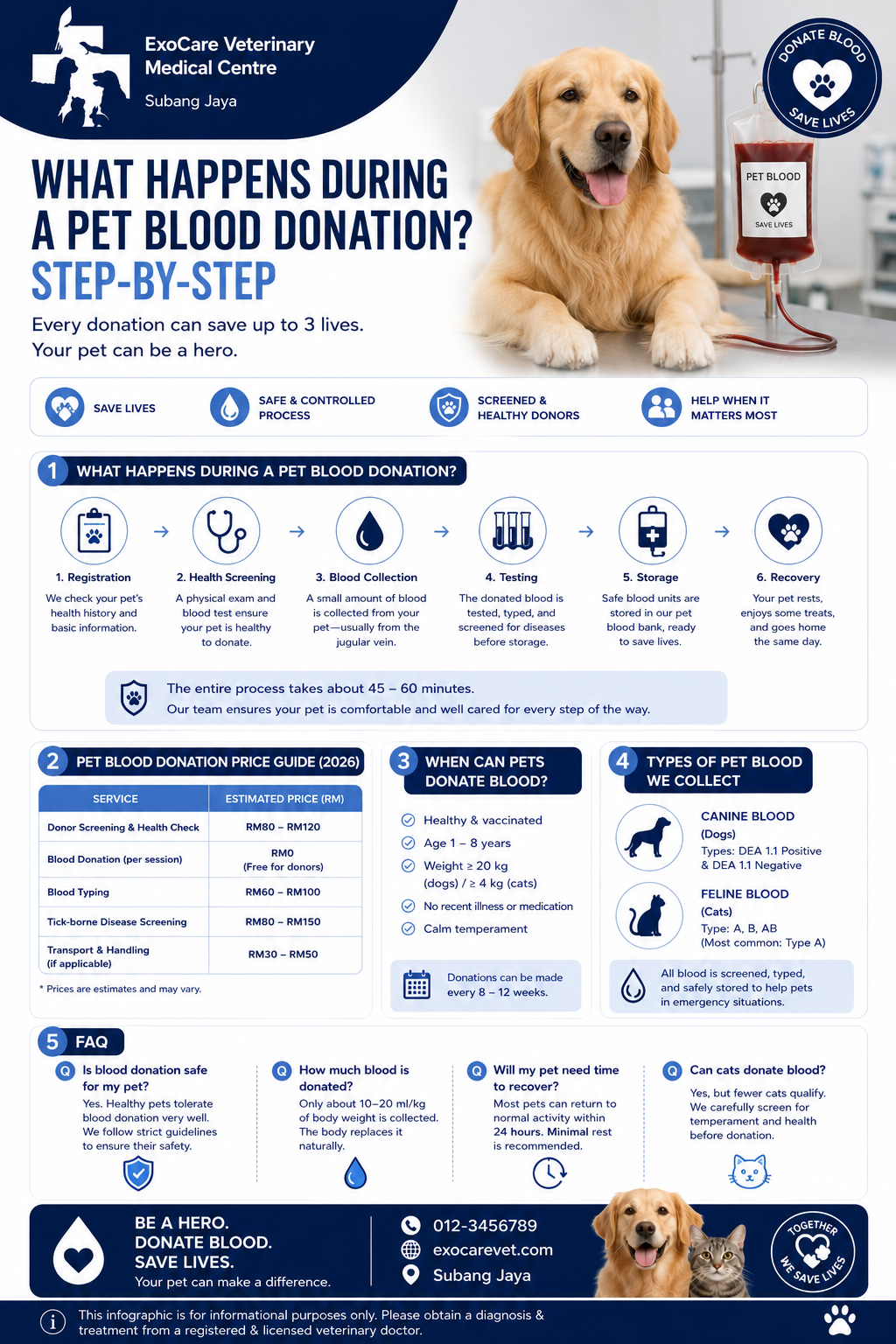
Step 1: Health Registration & History Check
The clinical team confirms your pet’s identity, vaccination records, preventive treatment history, and verifies that the required recovery interval since their last donation has passed.
Step 2: Physical Exam & Pre-Donation Screening
A veterinarian performs a hands-on examination (temperature, pulse, respiration, weight) and draws a tiny sample for a Complete Blood Count (CBC). This guarantees the pet is 100% fit to donate that day.
Step 3: Blood Typing & Cross-Matching
The donor’s blood group is identified:
-
Dogs: Typed primarily for DEA 1.1 (DEA 1.1-negative dogs act as universal donors).
-
Cats: Typed for A, B, or AB (cats have no universal donor, making accurate typing a strict clinical requirement).
Step 4: Sterile Collection Process
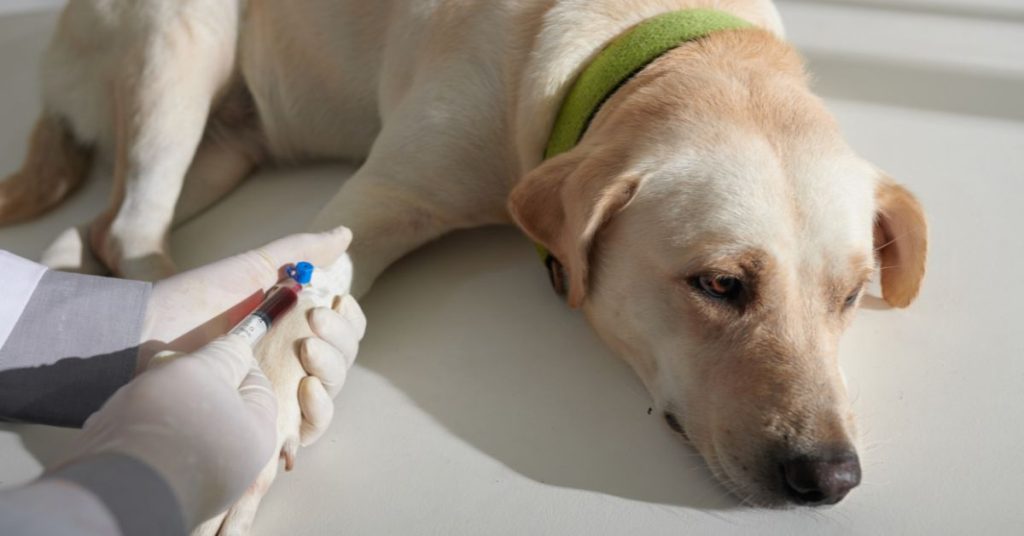
Your pet is settled comfortably on a cushioned table. A small patch of fur over the jugular vein is gently clipped and sanitized to sterile surgical standards. Blood is drawn smoothly over a few minutes while vital signs and stress levels are continuously monitored.
Step 5: Recovery, Fluid Hydration & Rewards
Once collection is complete, the donor rests for a brief period, receives hydration fluids or treats, and goes home the same day. Owners are advised to keep activities calm for the next 24 hours.
Also Read: Emergency Vet in Subang Jaya: What to Do During & After Hours
Common Pet Blood Bank Myths vs. Clinical Reality
| Common Misconception | Clinical Reality at a Pet Blood Bank |
| “Donating harms my healthy pet.” |
Only a safe fraction (≈10–20%) is drawn; the body replaces it within days. |
| “Any blood type works for any pet.” |
Blood typing is essential. Giving an incompatible blood type to a cat or dog can trigger fatal reactions. |
| “Donation requires heavy general anesthesia.” |
Most calm pets are simply held gently and remain fully awake throughout. |
| “Clinics can order pet blood anytime.” |
Synthetic blood does not exist. Pet blood bank supplies depend entirely on registered community donors. |
Conclusion
Blood can’t be manufactured, only donated, and in a climate where tick-borne anaemia and road trauma are everyday realities, a strong local donor register is one of the quiet foundations holding up emergency care. Understood properly, donation isn’t a risk to fear, it’s a screened, gently monitored, few-minute process that collects only a safe fraction of blood the body quickly replaces.
If you have a calm, healthy adult dog (around 25kg or more) or cat (around 4.5kg or more) who’s current on preventive care and free of chronic illness, your pet could help make sure matched, life-saving blood is ready the next time an emergency comes through our doors. Ask our team at ExoCare Vet Medical Centre in Subang Jaya about donor eligibility, and bring your pet’s vaccination and preventive-care records when you come.
Frequently Asked Questions (FAQ)
How much blood does a pet blood bank collect?
A maximum of roughly 10% to 20% of total blood volume is taken during a single visit, strictly from screened, adequately sized animals. This safe volume is quickly restored by the pet’s bone marrow.
How often can my dog or cat donate to a pet blood bank?
Healthy registered donors can typically donate a few times a year, provided a mandatory recovery window passes and a fresh health screen is cleared before each session.
Is there a fee to register my pet as a blood donor?
Initial screening involves real laboratory tests (CBC, blood typing, infectious disease panels). Many veterinary facilities and pet blood bank programs cover these screening costs or offer complimentary health checks and preventative benefits for donor families.
References
-
MSD Veterinary Manual: Blood Groups and Blood Transfusions in Dogs and Cats. https://www.msdvetmanual.com/
-
Davidow B, et al.: Update on Canine and Feline Blood Donor Screening for Blood-Borne Pathogens. PMC. https://pmc.ncbi.nlm.nih.gov/
-
Purdue University College of Veterinary Medicine: Blood Donor Program. https://vet.purdue.edu/
-
Malaysian Veterinary Council (MVC): https://www.mvc.gov.my/
-
Department of Veterinary Services Malaysia (DVS): https://www.dvs.gov.my/
This article has been medically reviewed based on clinical protocols by:
Dr. Asma Farihah (MVC No. 3362).
Lead Veterinarian & Co-Founder, ExoCare Vet Medical Centre, Subang Jaya.
ExoCare is a referral veterinary medical center specializing in the medical, surgical, and critical care of small animals, exotic pets, avian species, reptiles, rodents, and amphibians in Malaysia.