
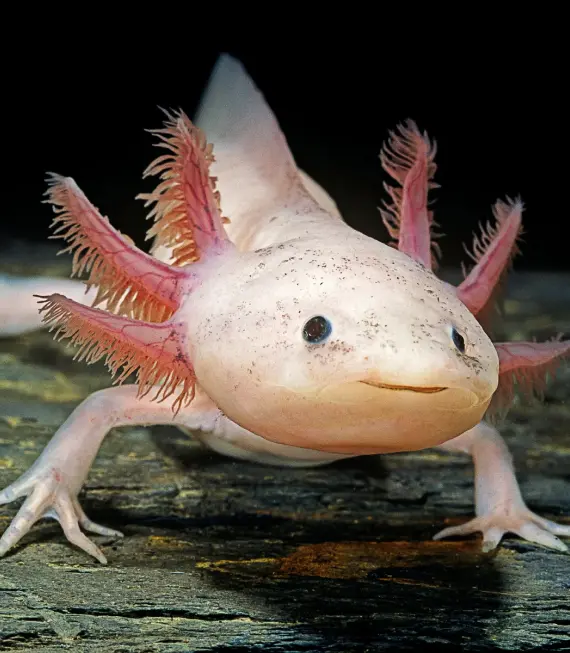
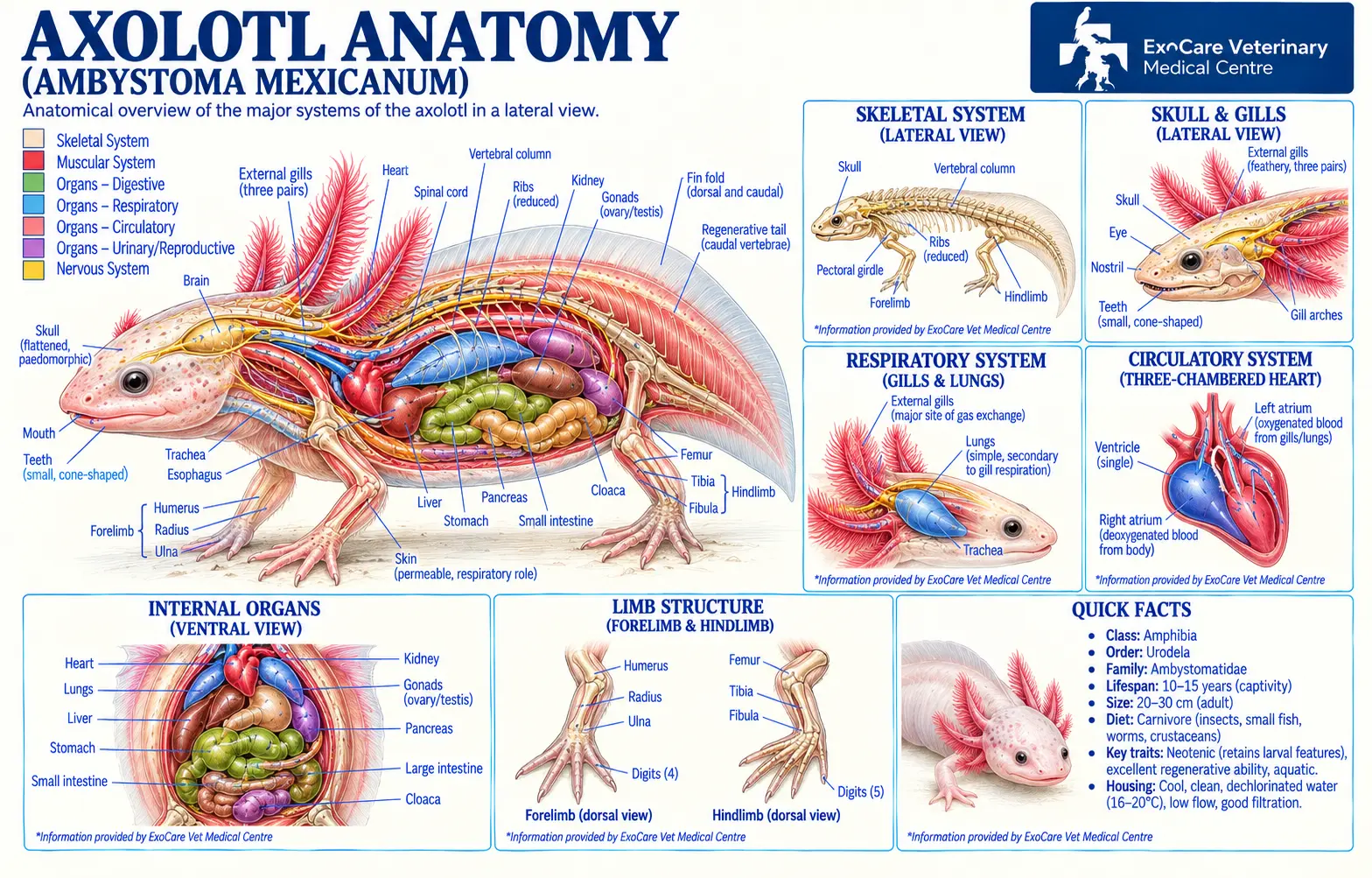
Most axolotl problems start with the water, so treatment usually means fixing the tank as well as treating the axolotl. These are common problems in pet axolotls and the signs to watch for.
Axolotls need cool water. Tanks without cooling often run too warm in our climate, which weakens the immune system and opens the door to other illness.
Book a Check →Cotton-like white patches on the skin or gills, often linked to stress or poor water quality. Early treatment stops it spreading.
Book a Check →Shrinking, pale or forward-curled gills can point to warm water, poor water quality or infection, and are worth checking early.
Book a Check →Swallowed gravel or oversized food can block the gut. Watch for not eating, floating and a swollen belly.
Book a Check →Red patches, wounds or ulcers on the skin or limbs need prompt care to stop infection setting in.
Book a Check →Constant floating or tilting can come from trapped air, constipation or impaction, and needs a proper check.
Book a Check →Each service is adapted for an aquatic amphibian, from how we handle your axolotl to how we assess its water.
A full check of gills, skin, limbs, body condition and behaviour, plus a review of your tank set-up and feeding.
Learn More →Bring a water sample and your latest test results. We go through temperature, water quality and set-up with you, because that is where most problems begin.
Learn More →X-ray can help confirm suspected impaction or swallowed gravel, rather than guessing from symptoms alone.
Learn More →Medication or treatment baths where needed, with a clear plan you can follow at home.
Learn More →

Dr. Asma Fariha
Veterinary Surgeon · MVC Reg. No. 3362
Dr. Asma treats exotic species that most general practices are not equipped for, including aquatic pets like axolotls. Every axolotl visit includes a look at water and tank conditions, because that is where most problems begin.
 Trustindex verifies that the original source of the review is Google.

 Trustindex verifies that the original source of the review is Google.
 Trustindex verifies that the original source of the review is Google.
 Trustindex verifies that the original source of the review is Google.
 Trustindex verifies that the original source of the review is Google.
 Trustindex verifies that the original source of the review is Google.
 Trustindex verifies that the original source of the review is Google.
 Trustindex verifies that the original source of the review is Google.
 Trustindex verifies that the original source of the review is Google.

ExoCare Veterinary Medical Centre is at G3, Lot 15, Jalan SS 16/1, Subang Jaya, Selangor. We have one clinic, and all appointments are seen there.
Yes, during clinic hours (open daily, 11am to 10pm). WhatsApp or call us at +60162424884 and we will advise you based on urgency. We are not a 24-hour clinic, so outside these hours please go to your nearest 24-hour emergency vet.
We are open every day, 11am to 10pm. After hours, please contact a 24-hour emergency veterinary facility.
You can book in three ways:
Online: Use our booking form
WhatsApp or phone: +60162424884 during clinic hours
Walk-in: Subject to availability
We recommend booking in advance. For urgent cases, WhatsApp us first so we can advise you.
We accept QR Pay, SPayLater, online transfer, and debit or credit card. Payment is made at the clinic at the end of your visit.
Yes. All our vets are registered with the Malaysian Veterinary Council (MVC). Our lead vet, Dr. Asma Fariha (MVC Reg. No. 3362), holds a Doctor of Veterinary Medicine from Universiti Putra Malaysia and completed exotic animal training at EAVSI in Shanghai.
Yes. Axolotls are seen alongside our other exotic patients. WhatsApp us before your visit so we can advise how to bring your axolotl in safely.
Use a clean, secure container filled with water from its own tank. Keep it cool and out of direct sun during the trip, and bring a separate water sample from the tank.
Axolotls do best in cool water, roughly 16°C to 20°C. Most Malaysian homes are warmer than this, so many tanks need a chiller or other cooling.
Forward-curled gills are usually a sign of stress, often from water that is too warm, poor water quality or strong water flow. Check your tank and contact us if it does not improve.
A water sample from the tank, your latest water test results if you have them, photos of the tank set-up, and details of what and how often you feed.