
- A clear decision guide for Malaysian cat owners on when vomiting can be safely monitored at home and when it demands a vet visit.
- Occasional vomiting can be minor, but repeated or severe vomiting causes rapid dehydration.
- Owners often either panic over a single hairball or dangerously ignore genuine emergency signs like repeated vomiting, blood, or a cat that won’t eat.
- Use the frequency, contents and accompanying signs to decide; know the short home-fast rule and the non-negotiable red flags.
- If your cat is vomiting repeatedly, can’t keep water down, or seems unwell, contact ExoCare Vet Medical Centre, Subang Jaya.
It is a familiar scenario for many cat owners: you walk into the living room and find your cat throwing up on the rug. While an occasional hairball is completely normal, persistent cat vomiting can quickly turn into a serious medical situation.
Knowing how to differentiate between a mild, temporary stomach upset and a critical emergency helps you take the right steps without unnecessary panic.
Understanding Cat Vomiting vs. Regurgitation
To help your veterinarian pinpoint the issue, it is helpful to understand what happens when your cat throws up:
-
Vomiting (Active Process): Involves noticeable abdominal effort, retching, and heaving before releasing partially digested food, yellow bile, or clear fluid from the stomach.
-
Regurgitation (Passive Process): Food or fluid slides out smoothly from the esophagus without abdominal heaving, usually right after eating.
Occasional cat vomiting can stem from simple triggers like eating too quickly, a minor hairball, or a sudden change in diet. However, frequent vomiting can indicate underlying issues such as dietary intolerances, intestinal parasites, ingestion of string or foreign objects, kidney disease, or pancreatitis.
Also Read: Emergency Vet in Subang Jaya: What to Do During & After Hours
Why Climate and Food Spoilage Matter in Malaysia
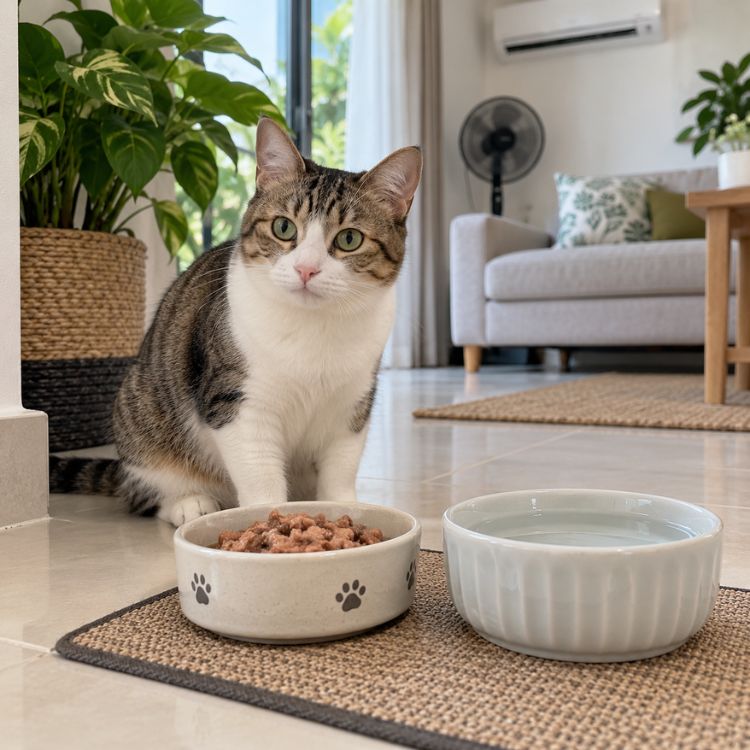
In Malaysia’s hot and humid weather, managing digestive health requires extra vigilance:
-
Rapid Dehydration: When a cat vomits repeatedly, they lose essential body fluids and electrolytes. In a warm tropical climate, dehydration sets in much faster than in cooler regions, making prompt care essential.
-
Spoiled Wet Food: High humidity accelerates bacterial growth in canned or fresh wet food. Leaving wet food out at room temperature for more than two to three hours can cause food spoilage, triggering sudden vomiting.
-
Indoor and Outdoor Parasites: Year-round warm weather supports intestinal parasites, which are a common cause of chronic stomach upset in free-roaming or multi-cat environments.
Home Care vs. Seeking Veterinary Care
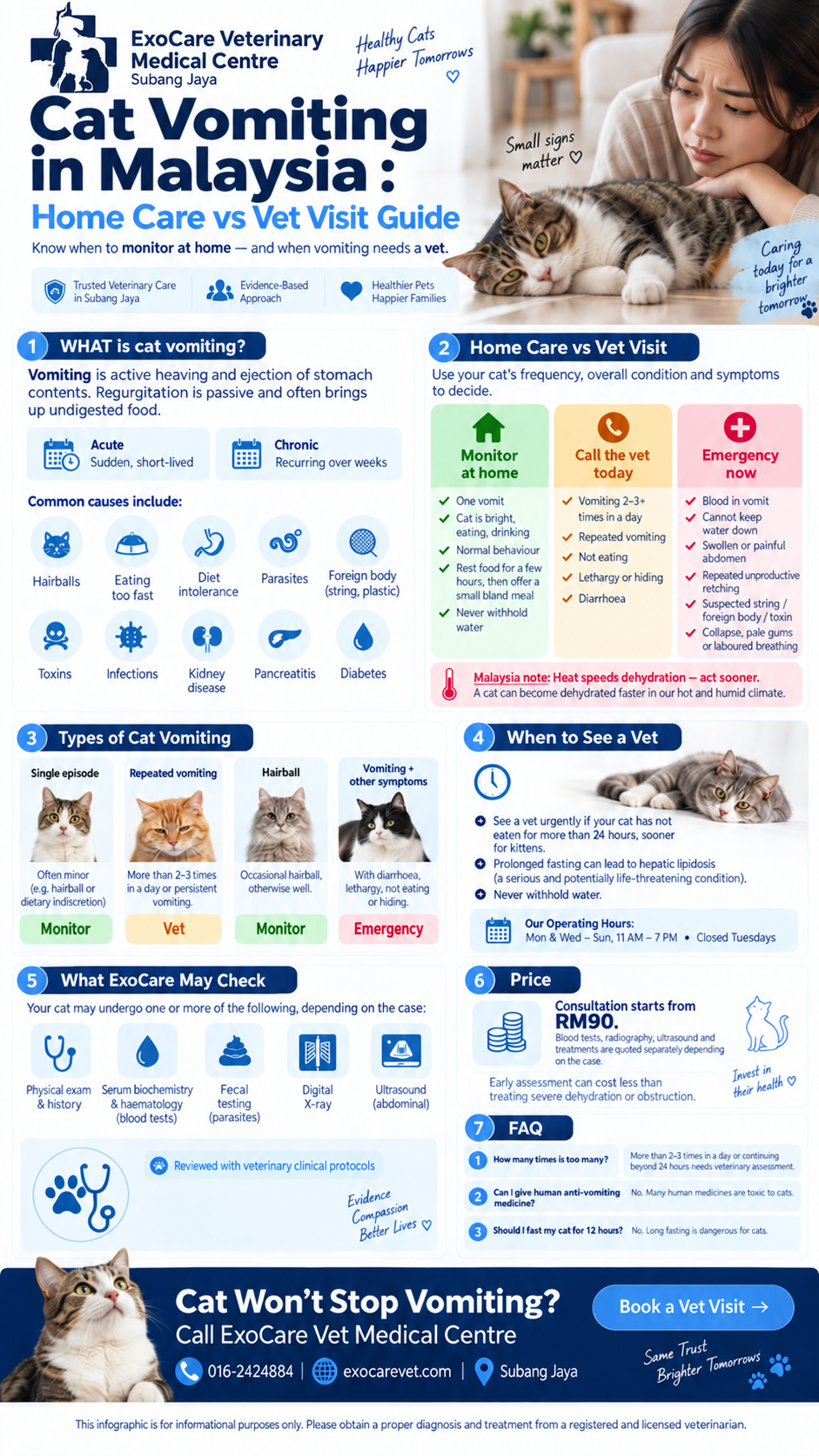
You can decide whether to monitor your pet at home or visit a clinic based on their symptoms:
When Home Monitoring Is Safe
-
Single Episode: Your cat vomited once, but remains energetic, alert, and willing to eat or play normally.
-
Occasional Hairball: Hairball vomiting occurs occasionally without loss of appetite or lethargy.
-
Action Steps: Pause food (not water) for 2 to 4 hours to let their stomach rest, then offer a small portion of plain, easily digestible food (such as plain boiled chicken).
When to Schedule a Veterinary Visit
-
Vomiting Multiple Times a Day: Throwing up 2 to 3 or more times within 24 hours.
-
Loss of Appetite and Lethargy: Refusing food for more than 24 hours, hiding in dark corners, or appearing weak.
-
Diarrhea and Fever: Vomiting accompanied by soft stools, diarrhea, or elevated body temperature.
Emergency Warning Signs
Seek immediate emergency veterinary care if you observe any of the following critical red flags:
-
Blood in the Vomit: Seeing bright red blood, blood clots, or dark specks that resemble coffee grounds.
-
Inability to Keep Water Down: Throwing up immediately after drinking water.
-
Swollen or Painful Abdomen: Crying out when touched around the stomach area or repeated, unproductive retching.
-
Suspected Foreign Object or Toxin: Ingestion of string, thread, rubber bands, toxic plants (like lilies), or household chemicals.
The Danger of Prolonged Fasting (Hepatic Lipidosis)

While withholding food for a few hours helps calm a mild stomach upset, never force a cat to fast for more than 24 to 48 hours.
When a cat stops eating, their body rapidly mobilizes fat stores to the liver for energy. Because a feline liver is not equipped to process large fat volumes efficiently, fat accumulates inside liver cells, leading to a life-threatening condition called Hepatic Lipidosis (Fatty Liver Disease).
Important: Never withhold fresh drinking water, and never fast young kittens, senior cats, or cats with existing health conditions.
Also Read: 8 Pet Emergency Symptoms You Cannot Ignore (Expert Review)
Debunking Common Myths About Cat Vomiting
Myth 1: “Vomiting is completely normal for cats.”
Fact: Occasional hairballs happen, but frequent or weekly throwing up is not normal. Chronic cat vomiting often signals food allergies, intestinal parasites, or early organ disease.
Myth 2: “Giving cow’s milk will help soothe an upset stomach.”
Fact: Most adult cats are lactose intolerant. Offering cow’s milk usually causes worse stomach cramps, gas, and severe diarrhea. Stick to fresh, clean water.
Myth 3: “If my cat acts okay between vomits, I don’t need to worry.”
Fact: Cats are experts at hiding discomfort. Repeated vomiting still causes fluid loss and electrolyte imbalances, even if your pet tries to appear normal in between episodes.
What to Expect During a Veterinary Visit
If your cat’s symptoms require investigation, your veterinarian will run targeted diagnostics to find the root cause:
-
Physical Examination: Assessing hydration levels, body temperature, and palpating the abdomen for pain or masses.
-
In-House Bloodwork: Checking kidney and liver function, blood sugar, and electrolytes.
-
Digital Imaging (X-Rays & Ultrasound): Evaluating the stomach and intestines to rule out foreign body blockages or organ inflammation.
“A cat that vomits once but is still eating and bright usually just needs watching. A cat that has stopped eating for more than a day, vomiting or not is heading toward hepatic lipidosis, and in our climate dehydration stacks on top of that quickly. When in doubt, it is always cheaper and safer to call us early than to treat a collapsed, dehydrated cat two days later.”
— Dr. Asma Farihah (Senior Veterinary Specialist, ExoCare Vet Medical Centre)
When to Seek Veterinary Care in Subang Jaya
If you notice persistent throwing up, unresponsiveness, or an inability to keep fluids down, having your pet evaluated early prevents severe dehydration and complications.
ExoCare Vet Medical Centre (Subang Jaya)
-
Operating Hours: Monday & Wednesday – Sunday: 11:00 AM – 7:00 PM (Closed Tuesdays).
-
Location: Subang Jaya, Selangor.
-
What to Bring: Transport your cat safely in a secure carrier. Note how many times they have thrown up, bring photos of the vomit if available, and bring any packaging if you suspect toxin exposure.
Frequently Asked Questions
How many times is too many for a cat to vomit?
As a practical rule, more than two to three times in a day, or vomiting that continues beyond 24 hours, is beyond home monitoring and should be assessed by a vet. Even a “normal-seeming” cat that vomits repeatedly is losing fluid and in Malaysia’s heat, dehydration develops faster.
Should I give my cat medicine for vomiting at home?
Do not give human anti-nausea or anti-inflammatory medicines — many are toxic to cats. Anti-vomiting medication should only be given when prescribed by a vet after the cause is assessed, because suppressing vomiting without knowing why (for example, with an obstruction present) can be dangerous.
What will a vet visit for vomiting cost in Malaysia?
It depends on what’s needed. A straightforward consultation is modest; if diagnostics such as blood work, radiography or ultrasound are required to find the cause, these carry additional, non-waivable fees because they involve equipment and laboratory processing. Early assessment often costs far less than treating an advanced, dehydrated case. Ask ExoCare reception for current ranges.
Conclusion
A single vomit from a bright, hungry cat is usually nothing to fear. Briefly rest the stomach, then offer a small bland meal. But repeated vomiting, blood, an inability to keep water down, or a cat that stops eating are signals to act, and Malaysia’s heat means acting sooner rather than later. Trust the pattern, not the panic: monitor the trivial, and call us for the serious. When you’re unsure which is which, a quick call to our team is always the safer choice.
References
Merck Veterinary Manual, “Vomiting in Cats”. Accessed at: https://www.merckvetmanual.com/cat-owners/digestive-disorders-of-cats/vomiting-in-cats
VCA Animal Hospitals, “Vomiting in Cats”. Accessed at: https://vcahospitals.com/know-your-pet/vomiting-in-cats
MedVet, “Understanding Vomiting in Dogs and Cats: Recognizing When It’s Serious (and When It’s Not)”. Accessed at: https://www.medvet.com/vomiting-in-dogs-and-cats/
Malaysian Veterinary Council (MVC). Accessed at: https://www.mvc.gov.my/
This article has been medically reviewed based on clinical protocols by:
Dr. Asma Fariha (MVC No. 3362).
Senior Veterinary Specialist, ExoCare Vet Medical Centre, Subang Jaya.
ExoCare is a referral veterinary medical center specializing in the medical, surgical, and critical care of small animals, exotic pets, avian species, reptiles, rodents, and amphibians in Malaysia.